


ILOILO – Ten individuals who were in close contact with a 58-year-old man from Miag-ao town who died from a suspected case of meningococcemia have remained asymptomatic, according to the Iloilo Provincial Health Office (IPHO), prompting health officials to intensify surveillance and monitoring efforts across the province.
While no symptoms have been reported so far among the contacts, health authorities are not taking any chances.
The IPHO confirmed that all identified close contacts were immediately given antibiotic prophylaxis to prevent the onset of symptoms and the possible spread of the highly contagious and potentially fatal bacterial disease.
“They conducted contact tracing, and for all the close contacts, they were given antibiotic prophylaxis to protect them from the illness. Among those who handled the patient in the LGU, there were ten close contacts,” said Dr. Rodney Labis, chief of the Health Service Delivery Division of the IPHO.
Dr. Labis noted that the individuals were observed for at least 24 hours before being allowed to resume normal activities, but emphasized they will continue to be monitored by health workers.
“The close contacts were monitored for 24 hours. After 24 hours, they returned to their usual activities, but health workers will continue to monitor them for their health status. So far, based on our coordination with Miag-ao, all of them are still not showing any symptoms,” he said.
Despite the absence of symptoms, the Miag-ao local government has launched an information drive to raise public awareness about meningococcemia and to encourage community cooperation in disease prevention efforts.
“Meningococcemia is a contagious bacterial infection caused by bacteria. It is transmitted through respiratory droplets when an infected person coughs or sneezes, or through close contact such as kissing, sharing utensils, or staying in the same room with an infected person. Symptoms usually appear 2 to 10 days after exposure,” Labis explained.
He warned that if not treated immediately, the infection can lead to a rapid decline in a patient’s condition due to bleeding, low blood pressure, multiple organ failure, and potentially meningitis. In severe cases, it can result in death.
“Meningococcemia is a medical emergency. Patients should be admitted immediately and started on appropriate antibiotics along with other supportive care,” Labis stressed.
He added, “Those who had close contact with the patient should be given antibiotic prophylaxis right away to prevent the development of symptoms. After receiving the antibiotics, they are monitored for 24 hours for any signs of illness. If no symptoms appear, they can return to their daily activities and continue cooperating with health monitoring.”
The IPHO has also reminded the public to rely on credible information from the Department of Health (DOH), provincial and local government units, and verified media sources to avoid panic and misinformation.
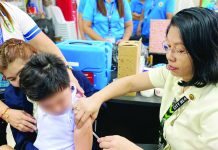
“There is an available vaccine for meningococcemia in the market, but it is not yet part of the National Immunization Program of the DOH. You can access it through private clinics for both adults and children,” said Labis.
He also emphasized the continued importance of practicing minimum public health standards to prevent infections. “We must still rely on public health standards to protect ourselves — observe safe physical distancing, especially from sick individuals, wear face masks in crowded places or when around people who are ill, and wash hands with soap and water or use hand sanitizer or alcohol,” Labis said.
The IPHO urges anyone experiencing symptoms of illness to seek immediate medical attention at the nearest hospital or health center, where trained professionals can assess and treat their condition.
As of this writing, the IPHO is still finalizing the list of household, community, and healthcare contacts of the deceased patient. Nonetheless, health monitoring and surveillance efforts have been significantly heightened throughout Iloilo to ensure the public’s safety./PN