

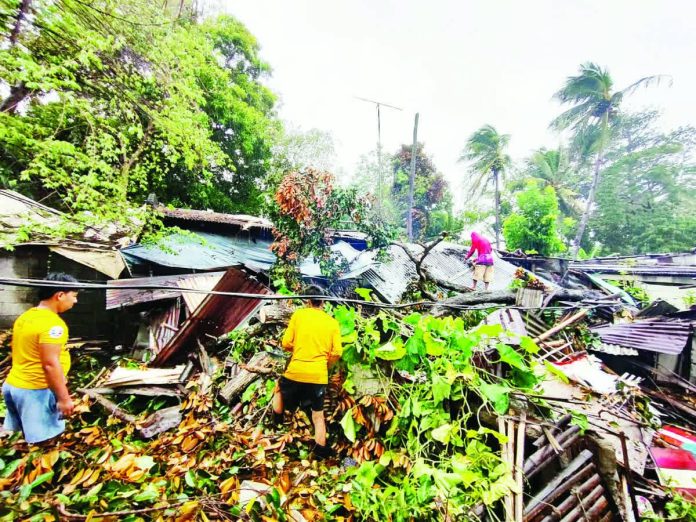
ILOILO – The provincial government of Iloilo has intensified post-disaster recovery efforts following Typhoon “Tino,” which left a trail of destruction across 41 municipalities, damaging 1,199 houses and displacing more than 46,000 families.
Based on the latest report from the Provincial Disaster Risk Reduction and Management Office (PDRRMO) as of November 6, at least 51 houses were totally destroyed while 1,148 others sustained partial damage in 14 municipalities, including Barotac Viejo, Lambunao, Maasin, San Joaquin, Barotac Nuevo, San Enrique, Batad, Cabatuan, Janiuay Lemery, New Lucena, Pavia, Pototan , Leganes, Mina, and Leon.
The disaster affected 46,138 families or 140,024 individuals in 825 barangays.
“Sa pag-verify naton sa mga MDDRMOs, out of 47,000 plus nga individuals nga gin pre-emptive evacuate naton, subong gin-verify naton, tatlo pa ka municipalities ang may ara pa nga evacuees pero gagmay na lang man ‘ni sila,” said PDRRMO spokesperson Mia Resano, citing evacuees in Leganes, Oton, and Zarraga who have yet to return home due to partially damaged houses.
One fatality was confirmed in Dumangas due to drowning, while another individual was rescued during the storm’s peak.
Agriculture was also hit hard, with 223 farmers and fisherfolk affected, including 159 rice and 50 corn farmers, and 9 high-value crop producers. Estimated production losses reached P4.23 million, covering 193.24 hectares of farmland.
“Minimal lang ang impact sang aton infrastructure as of this moment… amo pa lang ‘ni ang aton sa agriculture nga na-collect,” Resano added.
To ease the suffering of displaced residents, the provincial government has deployed relief teams distributing food packs consisting of noodles, canned goods, sausages, coffee, milk, and rice. Special attention is being given to the sick and elderly staying in evacuation centers.
PDRRMO head Cornelio Salinas, who conducted inspections in the First District, proposed a wristband system for the sick and elderly to ensure they receive priority medical attention. He also urged the improvement of water systems, toilets, and sanitary facilities to prevent disease outbreaks in evacuation centers.
“The restoration of electricity and the maintenance of hygiene are both crucial for the comfort and safety of evacuees,” Salinas stressed, appealing to electric cooperatives to fast-track power restoration efforts.
The PDRRMO continues to monitor hard-hit areas such as Oton, Tigbauan, and Guimbal, where local disaster teams and volunteers are conducting clearing operations and distributing aid./PN