



CAPIZ — About 250 farmers in Maayon, Capiz benefited from free soil testing services and technical advisory support provided by the Department of Agriculture – Western Visayas through its Mobile Soil Laboratory (DA-MSL).
A total of 320 soil samples were collected and analyzed during the activity conducted from March 3 to 6 as part of the agency’s effort to improve soil health and increase crop productivity in the area.
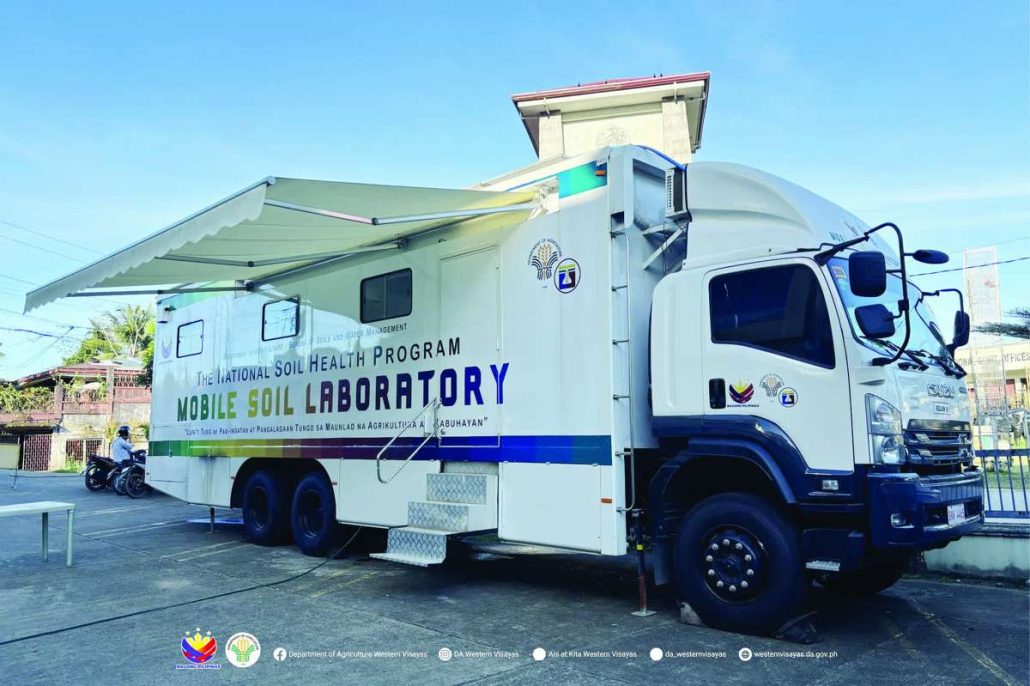
The MSL is a customized 10-wheeler truck equipped with advanced laboratory instruments capable of conducting up to 44 chemical, physical, and microbiological soil tests.
According to the Department of Agriculture, these analyses provide reliable data that guide farmers in applying the right nutrients, in the right amount, and at the proper time to promote more efficient and productive farming practices.
The mobile laboratory was deployed in Maayon under the leadership of Regional Executive Director Dennis Arpia to assist farmers—mostly from rice and corn clusters—in assessing the nutrient condition of their soil.
To ensure accurate results, farmers were instructed to submit half to one kilogram of pulverized soil samples ready for analysis. Ideally, samples should be collected from fields without standing crops. If crops are already present, the area should not have been fertilized within the last two months to maintain testing accuracy.
Farmers were also advised to determine the exact coordinates of their farms using the DA GeoCamera Advanced mobile application available on the Google Play Store. The geotagged data helps ensure proper mapping and enables the DA to provide precise, location-specific fertilizer and soil management recommendations.
Maayon Mayor Raymond Malapajo expressed support for the initiative, emphasizing the importance of soil analysis in improving farm productivity.
He noted that farmers invest considerable time, effort, and resources in crop production, but low yields often prevent them from recovering their production costs. Through soil testing, farmers can identify nutrient deficiencies, excess elements, and appropriate interventions for their fields.
“Through this initiative, we can match the right inputs to the actual needs of the soil. Excessive fertilizer can damage crops and degrade soil health, while insufficient application can limit plant growth,” Malapajo said.
Meanwhile, Integrated Laboratories Division chief Dr. Lerisa Balopeños said the MSL deployment forms part of the government’s continuing implementation of the National Soil Health Program led by the Bureau of Soils and Water Management.
The program aims to provide farmers with site-specific, science-based fertilizer recommendations to improve crop productivity and reduce production costs.
“We regularly collect and analyze soil samples so the DA can generate updated recommendations that help farmers lower production costs and adapt to changing climate conditions,” Balopeños said.
Aside from soil testing services, farmers also attended a one-day technical briefing and advisory session on soil management and climate-resilient farming practices.
DA technical staff discussed climate-resilient farming strategies, proper soil sampling procedures, and effective fertilizer and nutrient management. They also highlighted how balanced soil nutrition can help improve crop resistance to pests and diseases.
The briefing also covered adaptive balanced fertilization, the role of water, soil, and farm machinery in crop production, and the use of Trichoderma to enhance soil health. Key principles of organic agriculture were likewise introduced to promote more sustainable farming practices.
Mylene Buendia, a farmer-member of the TQB Multi-Purpose Cooperative who cultivates two hectares of corn and one hectare of rice, said she hopes the soil testing initiative will help improve her harvest.
She said her previous corn and rice yields were affected by unfavorable weather and heavy rains, but the soil analysis and fertilizer recommendations would help guide her in applying the proper nutrients to her crops./PN