



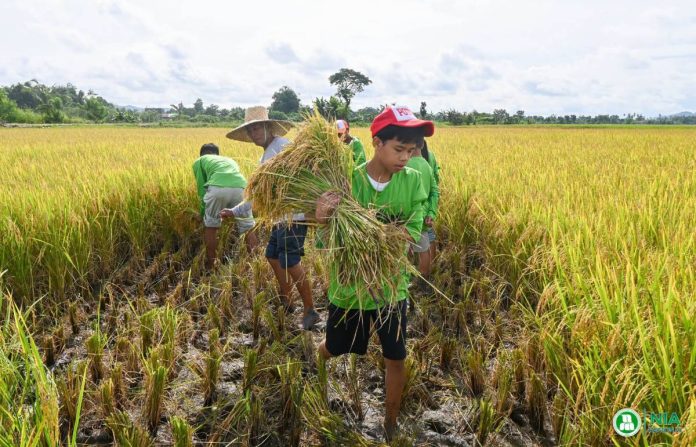
ILOILO – Falling water levels in three major river irrigation systems serving thousands of farmers and several municipalities in Iloilo have raised concerns over water security, prompting the provincial government to intensify monitoring and prepare emergency water rationing should supplies reach critical levels.
The National Irrigation Administration (NIA) Region 6 reported declining water levels in the Sibalom, Aganan and Tigum river irrigation systems as of November 5, 2026, with the Aganan system recording the sharpest drop.
Monitoring data furnished to the Provincial Government Environment and Natural Resources Office (PGENRO) showed that the Aganan River Irrigation System in Barangay Igtambo, San Miguel, had dropped to just 1.5 meters from its normal level of 2.6 meters — a decline of 1.1 meters, or approximately 42 percent.
The irrigation system serves 2,137 farmer-beneficiaries across 2,828.99 hectares in 28 barangays in San Miguel, Oton, Pavia and Santa Barbara.
The Sibalom River Irrigation System in Barangay Anonang, Leon, meanwhile, registered a water level of 1.85 meters, down from its normal 2.2 meters.
The system irrigates approximately 2,283 hectares of agricultural land in Leon, Alimodian and Tigbauan.
The Tigum River Irrigation System in Barangay Tungay, Santa Barbara, also recorded a decline, although less pronounced, with its water level slipping to 1.77 meters from the normal 1.8 meters.
The system has a service area ranging from 3,000 to 3,438 hectares and provides water and ecosystem services to portions of Santa Barbara, Cabatuan, Pavia, Leganes and Iloilo City.
Combined, the three irrigation systems serve approximately 8,112 to 8,550 hectares, underscoring the potential implications of further water-level declines for agricultural production and water availability.
P48.75-M water security plan
Mitzi S. Peñaflorida, supervising environmental management specialist of PGENRO, said the provincial government is closely monitoring the irrigation systems to determine how long they can continue supplying water to their respective service areas.
She said warnings would be issued immediately should water levels reach alarming conditions, allowing affected communities to prepare for possible shortages.
The monitoring forms part of a province-wide inventory of water sources being undertaken by PGENRO in coordination with 43 local government units and partner agencies.
The inventory covers deep wells, hand pumps, springs and other water sources to assess their functionality and determine whether they can continue meeting the needs of communities.
Peñaflorida said the provincial government has also prepared contingency measures, including emergency water rationing using trucks from the Provincial Engineering Office (PEO), should communities experience severe water shortages.
The emergency response is part of the provincial government’s P48.75-million water security plan.
PGENRO and PEO have already identified potential water sources where trucks could obtain supplies for distribution to affected communities.
Some towns report dwindling supplies
Although several municipalities have reported that their existing water sources remain sufficient, Peñaflorida acknowledged that others are already experiencing gradual declines in water availability.
She cautioned local governments against becoming complacent, particularly amid uncertainties in weather conditions that could further affect water supplies.
The provincial government is maintaining close coordination with municipalities to assess water availability and identify communities that may require assistance if conditions deteriorate./PN