
[av_one_full first min_height=” vertical_alignment=” space=” custom_margin=” margin=’0px’ padding=’0px’ border=” border_color=” radius=’0px’ background_color=” src=” background_position=’top left’ background_repeat=’no-repeat’ animation=”]
[av_heading heading=’5,324 barangays drug-free – PDEA’ tag=’h3′ style=’blockquote modern-quote’ size=’30’ subheading_active=’subheading_below’ subheading_size=’18’ padding=’10’ color=” custom_font=” av-medium-font-size-title=” av-small-font-size-title=” av-mini-font-size-title=” av-medium-font-size=” av-small-font-size=” av-mini-font-size=” admin_preview_bg=”][/av_heading]
[av_textblock size=” font_color=” color=” av-medium-font-size=” av-small-font-size=” av-mini-font-size=” admin_preview_bg=”]
Saturday, March 3, 2018
[/av_textblock]
[av_textblock size=’18’ font_color=” color=” av-medium-font-size=” av-small-font-size=” av-mini-font-size=” admin_preview_bg=”]
MANILA – A total of 5,324 barangays in the country out of 42,036 or 12.6 percent have been cleared of illegal drugs, according to the Philippine Drug Enforcement Agency (PDEA).
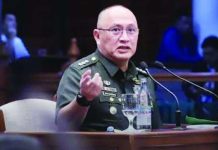
Director General Aaron Aquino said the drug-clearing covered the period July 2016 to December 2017.
For 2018, the agency targets to clear 7,328 barangays or a projected average of 617 villages each month.
“PDEA has committed itself to clear the remaining 24,424 drug-affected barangays nationwide by 2022. These barangays represent 58.10 percent out of 42,036 barangays in the country that are still plagued by the drug menace,” said Aquino.
Of the 24,424 drug-affected barangays, 15,290 are classified as “slightly affected”, 9,089 “moderately affected” and 45 “seriously affected.”
“PDEA is setting the bar high. We intend to clear an average of 6,000 drug-affected barangays every year for the next four years. If we can sustain the pace, we can rid the country’s drug problem by 2022,” said Aquino.
Barangays are considered “slightly affected” if there is a reported presence of drug user(s); “moderately affected” if there is a reported presence of drug pusher/s and/or user/s; and “seriously affected” if there is a reported presence of any of the following: clandestine drug laboratory, warehouse, marijuana plantation, and drug den/tiangge, drug trafficking or smuggling activities, and drug personalities such as users, pushers, financiers, protectors, cultivators, and manufacturers.
The National Capital Region has the highest rate of barangay drug-affectation with 95.37 percent, followed by Region 9 (Zamboanga Peninsula) at 93.47 percent, Region 7 (Central Visayas) at 88.78 percent, Region 3 (Central Luzon) at 84.01 percent, and Region 8 (Caraga) at 82.38 percent.
The regions least affected by illegal drugs are Region 5 (Bicol) at 16.59 percent, and the Cordillera Administrative Region at 0.68 percent.
The 5,324 barangays have reached drug-cleared status after the issuance of a certification by members of the Oversight Committee on Barangay Drug-Clearing Program.
The Oversight Committee, which is chaired by PDEA, is composed of provincial representatives of the Department of Interior and Local Government, Philippine National Police, Department of Health, and local government units.
Before declaring that a barangay is free from illegal drug activities, the committee must convene and validate the non-availability of drug supply in the area and the absence of drug transit activity, clandestine drug laboratory and chemical warehouse, marijuana cultivation site, drug den, drug pusher and user.
“Once cleared, we must ensure that drug-free barangays will maintain their status. All our efforts will go to waste if we allow the resurgence of illegal drug activities in these areas,” said Aquino.
“To accelerate efforts against the proliferation of illegal drugs in drug-affected barangays, the government has adopted an integrated approach in securing the assistance of the local government units in drug-clearing operations,” the PDEA chief said, citing Dangerous Drugs Board Regulation No. 3 Series of 2017, otherwise known as “Strengthening the Implementation of the Barangay Drug-Clearing Program.”
“PDEA is faced with many challenges. Thousands of villages have yet to activate their Barangay Anti-Drug Abuse Councils (BADAC) while almost the same rate of local government units have inactive municipal and local anti-drug abuse councils,” Aquino added.
PDEA has tapped the Philippine National Police, local health and social welfare offices in the ongoing anti-drugs campaign.
“We are happy that the DILG, particularly the Office of Assistant Secretary Rico Judge Echiverri, is in constant cooperation with us and committed that they will help in the activation of all BADACs and ADACs in the whole country,” said Aquino. (PNA)
[/av_textblock]
[/av_one_full]