
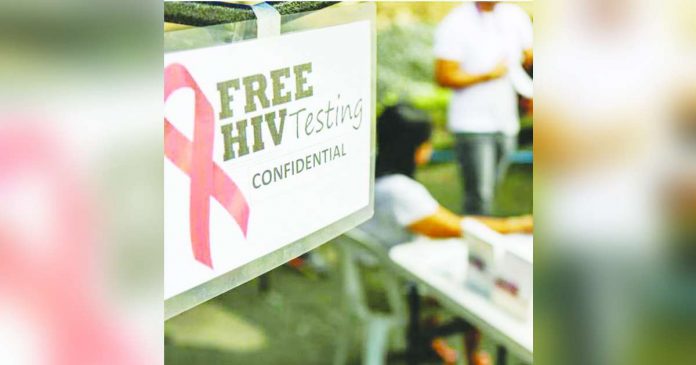
BACOLOD City – Negros Occidental has the third highest number of human immunodeficiency virus (HIV) cases in Western Visayas.
The province recorded 14 HIV cases this year, based on the latest data presented during the stakeholders’ meeting convened by the Provincial Health Office (PHO) at the Hospital Operations Department conference hall.
Meanwhile, the region ranked fifth for the most number of new HIV cases in the country, with 107 as of June this year.
Data from the HIV/AIDS Registry of the Philippines showed that from January 1984 to June 2023, there were a total of 117,946 confirmed HIV infections in the country, with 1,518 new cases recorded this year.
From one case per day in 2008, the country now reports an average of 49 cases per day in 2023, the data further showed.
According to the World Health Organization (WHO), HIV targets the immune system, and its most advanced stage of infection is AIDS.
HIV can be transmitted through the exchange of body fluids from infected people, such as blood, breast milk, semen, and vaginal secretions. It can also be transmitted from a mother to her child during pregnancy and delivery.
Edjohn Javellana of the PHO said HIV in the country is the fastest-growing epidemic in the Asia-Pacific region. He pointed out that the virus has invaded the group of educated and working or employed individuals, adding that 94 percent of those infected are males and six percent are females.
Adrian Hort Ramos of the Department of Health (DOH) Region 6 discussed the importance of Republic Act 11166 during the meeting, which strengthens comprehensive policies for HIV/AIDS prevention, treatment, and care.
Ramos also said new HIV laws aim to provide better access, education, care, and partnerships to address the virus.
At present, there is only one HIV treatment center in Negros Occidental – the AMLIG Health Clinic located inside the Corazon Locsin Montelibano Memorial Regional Hospital in this city.
The province also has an HIV-AIDS Core Team based in Cadiz District Hospital and the HAPLOS Clinic at the Lorenzo D. Zayco District Hospital in Kabankalan City.
Moreover, the PHO has an HIV, AIDS, and STI Prevention and Control Program. It supports training for the most at-risk populations, peer education, and behavior change communication training. (Watchmen Daily Journal)/PN