


ILOILO — A rare but potentially deadly eye cancer is threatening Western Visayas’ youngest children, with the government-run Western Visayas Medical Center (WVMC) already recording six retinoblastoma cases in the first half of 2026 — equal to the hospital’s total for the entire previous year.
The figures have heightened concern among eye specialists at WVMC, who are urging parents to watch closely for signs of retinoblastoma while also calling for early screening of premature babies vulnerable to another sight-threatening condition, retinopathy of prematurity (ROP).
Both conditions can cause permanent blindness when detected too late, while advanced retinoblastoma can spread beyond the eye and become fatal.
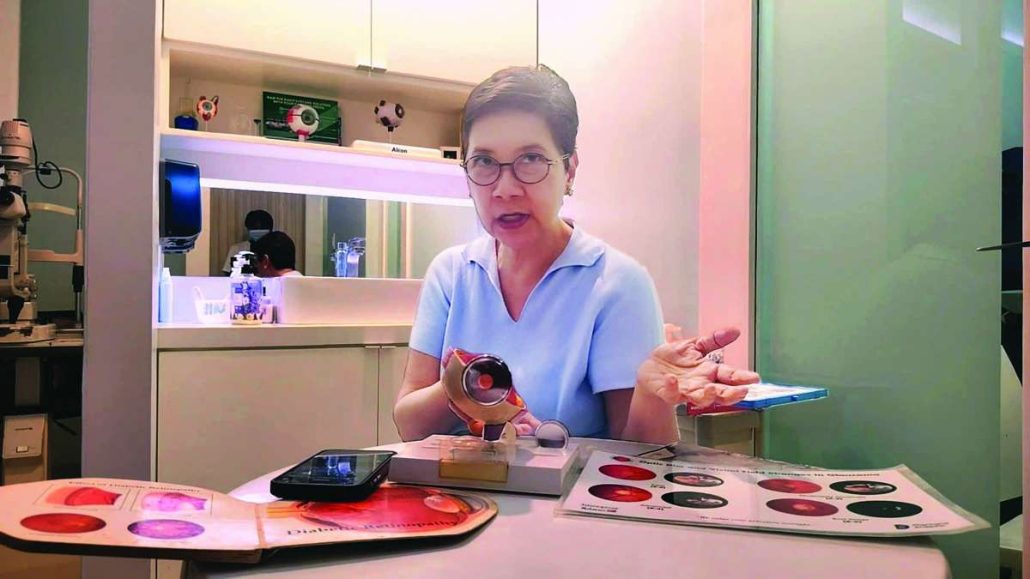
Dr. Mary Katherine Francia, head of WVMC’s Department of Ophthalmology, said retinoblastoma is a rare and aggressive cancer originating in the retina, the light-sensitive tissue at the back of the eye.
The disease primarily affects children below five years old and usually develops during infancy due to congenital factors or mutations involving the retinoblastoma gene.
WHITE PUPIL A WARNING
One of the most important warning signs parents can detect is an unusual white reflection in a child’s pupil, particularly in photographs taken with a flash.
“In a typical photo with a strong camera flash, you see a red reflex in the pupil,” explained Dr. Francia.
“However, in reality, if a child has retinoblastoma, a white tumor or spot grows on the retina. Parents will see a white glow in the pupil — what we call a ‘white pupil’ or leukocoria,” she added.
Early detection often depends on parents because infants and toddlers cannot explain changes in their vision.
Aside from the visible white spot, early retinoblastoma may produce few obvious symptoms.
If untreated, however, the tumor can rapidly consume structures inside the eye, causing severe swelling, facial disfigurement and permanent loss of vision.
More dangerously, the cancer can escape the eye and spread to other parts of the body.
“If the tumor travels along the optic nerve, it spreads directly into the child’s brain,” warned Dr. Francia.
“If it breaks into the blood vessels, the cancer cells metastasize throughout the entire body,” she added.
Francia said retinoblastoma may be caused by a congenital or sporadic gene mutation. Children carrying the gene face an increased risk of developing cancer in both eyes and require continuous monitoring.
She recalled treating a child whose affected eye had to be removed, only for the disease to later emerge in the other eye.
“I cannot remember the survival rate in WVMC, but I can still remember one of my private patients. Gin-remove na namon ang isa ka mata sang bata, kag ginabantayan ang other eye. Ginpadala ko siya sa Manila to follow up for a while sa Ophthalmic Oncologist. Then, for a while, nag-appear naman sa pihak nga mata,” she stressed.
EARLY DETECTION CAN SAVE EYE
How early the cancer is discovered can determine whether doctors can save the child’s eye.
When retinoblastoma is detected while the tumor is still a tiny spot, specialists may destroy it through targeted laser treatment, potentially preserving both the eye and vision.
But once the tumor has grown significantly, doctors may have to perform enucleation, or surgical removal of the affected eye, to prevent the cancer from reaching the brain or spreading elsewhere in the body.
A shortage of specialists remains a challenge. Francia said the Philippines, which previously had only one ophthalmic oncologist, now has around five or six.
WVMC can perform surgery to remove an affected eye, while complicated early-stage cases requiring specialized laser procedures or newer therapies may be referred to specialists in Manila.
“If the eye must be removed due to advanced cancer, we can perform the surgery directly here at WVMC,” Dr. Francia said.
They co-manage these cases alongside pediatric oncologists to oversee the child’s overall recovery and strictly monitor the remaining eye.
Even after treatment, Francia stressed that parents must not abandon follow-up examinations simply because the tumor is no longer visible.
“When a small tumor spot is treated, it becomes invisible to the naked eye, and parents sometimes assume the child is cured and skip hospital visits,” Dr. Francia emphasized.
Continuous monitoring is the only way to safeguard the other eye and ensure the cancer does not return, she stressed.
Parents who notice a white reflection in their child’s pupil, crossed eyes or sudden changes in vision are advised to immediately consult an ophthalmologist.
SILENT THREAT TO PREMATURE BABIES
WVMC specialists are also sounding the alarm over ROP, a developmental eye disorder affecting premature infants that can lead to preventable childhood blindness.
Unlike retinoblastoma, ROP involves abnormal blood vessel growth in the retina.
Because the retina normally completes its development during the final weeks of pregnancy, premature birth can disrupt the process. Abnormal blood vessels may leak and scar, eventually pulling the retina away from the back of the eye.
“These babies are typically born at less than 32 weeks age of gestation and weigh under 1,500 grams,” Dr. Jewel Faith Flores-Anotado, Pediatric Ophthalmologist at WVMC told Panay News.
“Infants who suffered from sepsis, required prolonged oxygen therapy, or underwent blood transfusions face an even higher risk due to a complicated delivery course,” Dr. Flores-Anotado said.
ROP is particularly dangerous because affected infants may show no early outward symptoms and cannot communicate that something is wrong with their vision.
“If we fail to monitor these infants, they can develop retinal detachment, internal eye bleeding, and ultimately, permanent blindness,” she warned. “Because the baby cannot tell us something is wrong, it takes proactive pediatrician initiatives to refer high-risk newborns directly to an ophthalmologist.”
SCREENING KEY TO SAVING SIGHT
When ROP is detected early, doctors can use anti-vascular endothelial growth factor injections to stop abnormal blood vessel growth. Patients may require one to three doses.
If injections are insufficient, laser therapy can be used on the peripheral retina to prevent retinal detachment.
Local anesthetics are administered during eye injections, while older or larger infants undergoing laser treatment may be placed under general anesthesia.
“Many of our infant patients show significant improvement after injection or laser therapy, but even more babies simply require close monitoring without any invasive treatment at all,” said Dr. Flores-Anotado.
When caught early — at just one or two months of age — babies often recover quickly. While complex cases can take 9 to 10 months of active treatment, early intervention drastically changes the outcome, she added.
WVMC specialists particularly urged parents of premature infants born in outside clinics or regional hospitals to ask their pediatricians for referral to an ophthalmologist.
“Yes, damo kita babies nga nag-improve after injection, after laser, and mas damo sa ila nga gina monitor lang, ‘di kinahanglan bulungon. The key point is ma-screen sila early para mabal-an naton what to do with them earlier,” said Dr. Flores-Anotado.
Early eye screening takes only minutes but can determine whether a child retains sight for life.
Screening tests and surgical procedures at WVMC are provided free of charge./PN