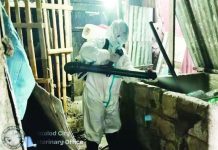


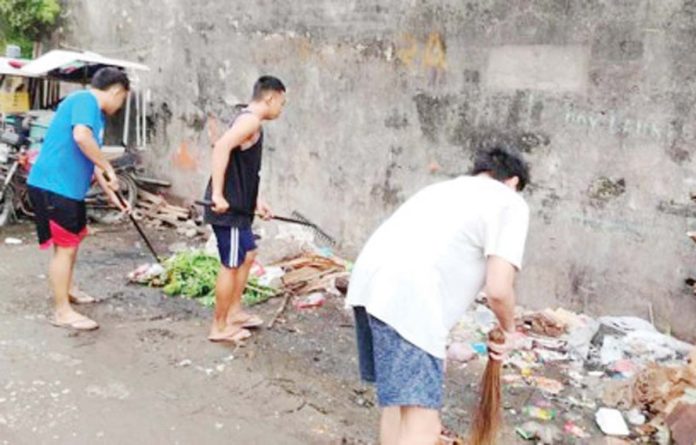
ILOILO – Collective efforts by local government units (LGUs), national agencies, schools, business establishments, and communities in Iloilo Province to combat dengue are showing promising results, with the number of dengue cases significantly declining in recent weeks.
Data from the Iloilo Provincial Health Office (IPHO) show that the two-week growth rate of dengue cases in the province dropped to -47%, a notable decrease compared to the -6% recorded three to four weeks prior.
Based on reported cases:
* 5 to 6 weeks ago – 222 cases
* 3 to 4 weeks ago – 209 cases
* most recent 1 to 2 weeks – 111 cases
“We are grateful to all schools, agencies, barangays, and communities for their participation. Thanks to your efforts, the numbers are now going down,” said IPHO head Dr. Maria Socorro Colmenares-Quiñon.
The number of municipalities and barangays with clustering of cases has also dropped by 25%, based on Morbidity Week 13 (January 1 to March 29) data. Only 11 municipalities or 15 barangays were listed, down from 13 municipalities or 20 barangays in Morbidity Week 12 (January 1 to March 22).
A “clustering of cases” is defined as three or more cases within four consecutive weeks.
“This means that our continued efforts, including the ‘Limpyo Iloilo, Kada Lunes nga Lihok Kontra Lamok’ campaign, are starting to yield results,” Quiñon added.
However, she reminded the public not to be complacent, especially during the summer when water storage becomes common and can lead to more mosquito breeding grounds.
“Let us cover all water containers to prevent dengue-carrying mosquitoes from breeding,” Quiñon urged.
She also reiterated the importance of Executive Order No. 29, Series of 2025, issued by Gov. Arthur Defensor Jr. last March 17, which institutionalizes the “Limpyo Iloilo, Kada Lunes nga Lihok Kontra Lamok” campaign. The directive strengthens the search and destroy strategy against mosquito breeding sites and mandates the following:
* province-wide clean-up every Monday at 4 p.m.
* use of sirens or church bells to signal start of activity
* mandatory participation from all government offices, workplaces, schools, establishments, and households
* targeting and elimination of water-holding containers such as buckets, tires, flower pots, vases, bottles, gutters, and drums
* oversight by C/MENRO under the Solid Waste Management program
* community awareness campaigns led by City/Municipal Health Offices (C/MHOs) and Health Education and Promotions Officers (HEPOs)
* school participation ensured by the Provincial School Board in coordination with local anti-dengue task forces
Despite the recent decline, the province has still logged a total of 1,223 dengue cases and seven deaths from January 1 to March 29, an 83% increase compared to 668 cases and two deaths recorded in the same period last year.
The municipalities with the highest dengue cases are San Joaquin – 95; Oton – 72 (with 1 death); Leon – 70; Cabatuan – 56; Dumangas – 56; San Dionisio – 52; Lambunao – 44; Banate – 43; Janiuay – 42; and Ajuy – 37.
The rest of the province also reported cases ranging from six to 33 – Sara (33), Pavia (33), Concepcion (32), Barotac Viejo (32), Pototan (31 with two deaths), Estancia (29), Tigbauan (29 cases with one death), Maasin (28), Calinog (27), Passi City (27), Guimbal (26), Barotac Nuevo (26), Carles (24 cases with two deaths), Santa Barbara (24), Miag-ao (23), Batad (21), Sa Miguel (20), Dingle (18), Badiangan (16), Anilao (15), Balasan (14 cases with one death), Leganes (14), Tubungan (14), Dueñas (14), San Rafael (13), Alimodian (12), Lemery (12), Mina (10), Zarraga (nine), San Enrique (nine), Igbaras (eight), New Lucena (seven), and Bingawan (six).
The IPHO continues to urge all sectors to sustain their efforts as part of a province-wide strategy to mitigate the threat of dengue./PN