

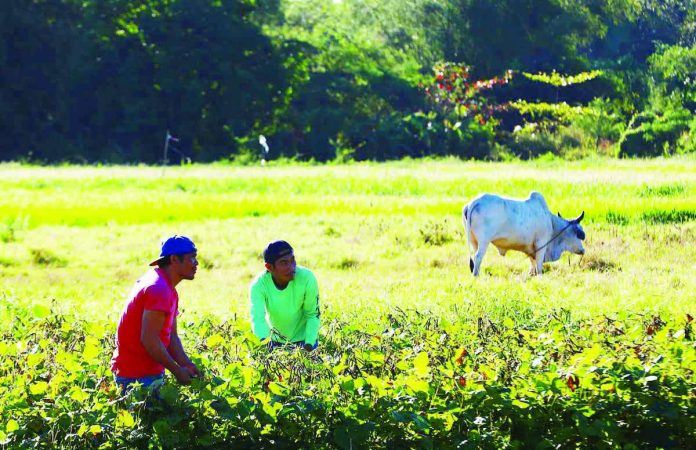
AGRICULTURE Secretary Francisco Tiu Laurel Jr. announced he has ordered state-owned Food Terminal Inc. (FTI) to allocate funds to buy large volumes of chili pepper or sili and mung beans or monggo directly from local farmers to stabilize prices and reduce the country’s reliance on imports.
The DA identified sili and monggo as priority high-value crops this year.
For chili pepper, he said the focus is on dampening sharp price swings that regularly hit consumers; while for monggo beans, the goal is to boost domestic output to achieve self-sufficiency and preserve foreign exchange now spent on imports.
“We import significant volumes of monggo beans, mostly from Argentina, even though local production already reaches about 45,000 metric tons,” Tiu Laurel said.
The Agriculture chief said FTI should initially purchase up to 80% of domestic output — equivalent to around 3,000 metric tons a month — to incentivize growers by providing them with a reliable buyer and shielding them from volatile market prices.
For sili, Tiu Laurel said that “prices rise because supply tightens due to crop damage caused by increased rain.”
“By buying, processing, and distributing these crops, FTI will be fulfilling its real mandate,” he said.
Earlier this month, DA said it is pushing a plan to ramp up sili production, harden farms against extreme weather, and bring more predictability to supply and prices of this popular Filipino kitchen staple.
Chili pepper prices routinely jump when heavy rains and typhoons damage crops, disrupting supply just as demand holds firm. In September 2025, a kilo of the local siling labuyo sold for as high as P800 due to weather disturbances.
Tiu Laurel wants to change that cycle by pairing better data with climate-resilient production.
“We need to know how much we consume, how much we produce, and where the gaps are,” he said, adding the figures will guide how many hectares should be planted and how fast production can scale.
The DA concluded that chili peppers are not a regional niche crop. Officials stressed that they can be grown in most parts of the country, not just in Bicol, widening the pool of potential growers under the DA’s High Value Crops (HVC) program. (GMA Integrated News)