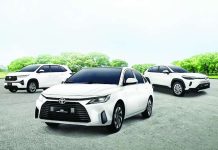


THE COUNTRY’S leading electric vehicle (EV) industry group is urging the government to extend its zero-tariff policy for imported EVs and parts until 2040 to sustain the growing momentum behind electrified mobility.
The zero-tariff policy is currently in effect until 2028 following an extension in 2024. The Philippines had imposed duties of up to 30 percent on imported EVs before the policy took effect.
Carla Buencamino, the vice president of the Electric Vehicle Association of the Philippines (EVAP), emphasized that the government must continue to provide support to keep prices competitive and motivate more Filipinos to switch to electric vehicles.
“For the industry, hopefully the incentives extend until 2040 so that it continues to grow and people can adapt to electric vehicles,” Buencamino told reporters. “We have to sustain, if not even further improve, what these incentives are.”
The 2040 timeline aligns incentives with the Department of Energy’s longer-term EV targets, under which the government aims to have half of vehicles on Philippine roads electrified. EVAP itself is targeting the deployment of at least 2.5 million EVs by 2040.
But EVAP said achieving these targets would require more than incentives for private buyers. The group is also pushing the government to lead the transition by accelerating the electrification of its own vehicle fleet.
“What we are asking in EVAP is that the government does its share, for the government to be the first to do the adoption itself, because it is a large procurement body,” Buencamino said.
Buencamino, who also heads mobility infrastructure at AC Mobility, said expanding charging infrastructure would be crucial as more EVs hit Philippine roads.
She said varying permitting requirements among local governments, however, have delayed some charging station deployments, prompting AC Mobility to work with the DOE on efforts to streamline the process. (Logan Kal-El M. Zapanta © Philippine Daily Inquirer)