


THE DEPARTMENT of Agriculture (DA) is closely monitoring retail movements in the prices of vegetables and fish following recent weather disturbances.
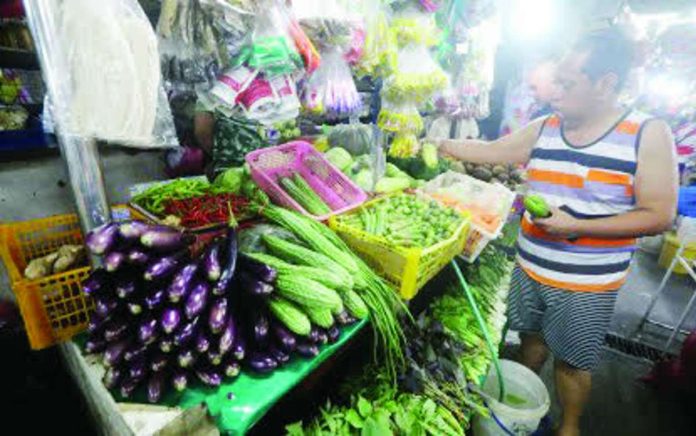
Agriculture Secretary Francisco Tiu Laurel said continuous rains and flooding caused by the southwest monsoon or habagat and recent typhoons could bring temporary upward adjustments to some commodity prices.
“The bigger near-term concern is food inflation in high-value crops and fishery products, as flooding has damaged farms and fish ponds and disrupted the flow of goods to markets,” he said.
As of September 3, losses in high-value crops hit 4,869 hectares of farm lands across eight regions, resulting in 22,415 metric tons (MT) of volume loss worth P1.03 billion, according to the DA-Disaster Risk Reduction and Management Operations Center.
Production loss in fisheries and damage to fishing boats, gears, tanks, fish pond dikes, and office buildings, were also logged, amounting to P412.84 million.
Tiu Laurel also cited the effects of higher fuel prices in freight cost, adding inflationary pressures.
“And habagat and the weaker peso are definitely not helping the DA’s effort to stabilize food prices,” he said.
Tiu Laurel’s assessment comes even as the country saw a welcome slowdown in both headline and food inflation for the month of August.
Food inflation eased to 4.6 percent last month, slower from 5.3 percent in July.
Inflation for vegetables, tubers, plantains, cooking bananas, and pulses swung to a 3.4 percent decline from an 8.4 percent.
Rice inflation, however, accelerated to 19.4 percent from 17.1 percent in July, while fish inflation slowed to 6.6 percent from 7.8 percent.
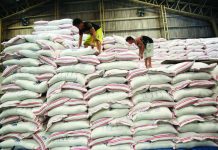
Meanwhile, Tiu Laurel maintained that the Philippines has sufficient rice supply.
“We have sufficient rice stocks because of the harvest and the front-loading of imports as we prepare for the impact of El Niño,” he said.
The rice sector incurred the largest damage thus far, suffering 59,872 MT in losses worth P1.90 billion.
This volume loss is 0.30 percent of the total annual production target volume at 20.29 million MT.
The DA earlier assured intervention to cushion the impact of agricultural damage to Filipino farmers and fishers. (PNA)