


Photos by Lyndie Defacto, Neljoy Galigao & AJ Palcullo
ALONG the sun-baked shores of Barangay Mambatad in Miag-ao, Iloilo, where land meets sea, each grain of salt tells a story of endurance, heritage, and quiet revival.
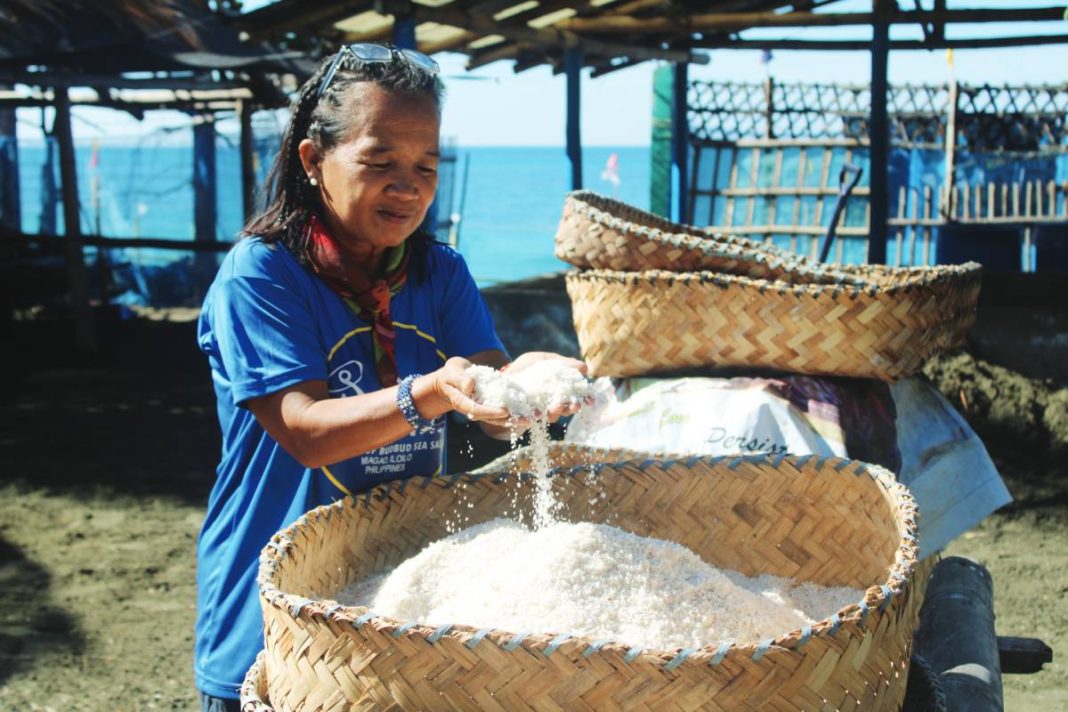
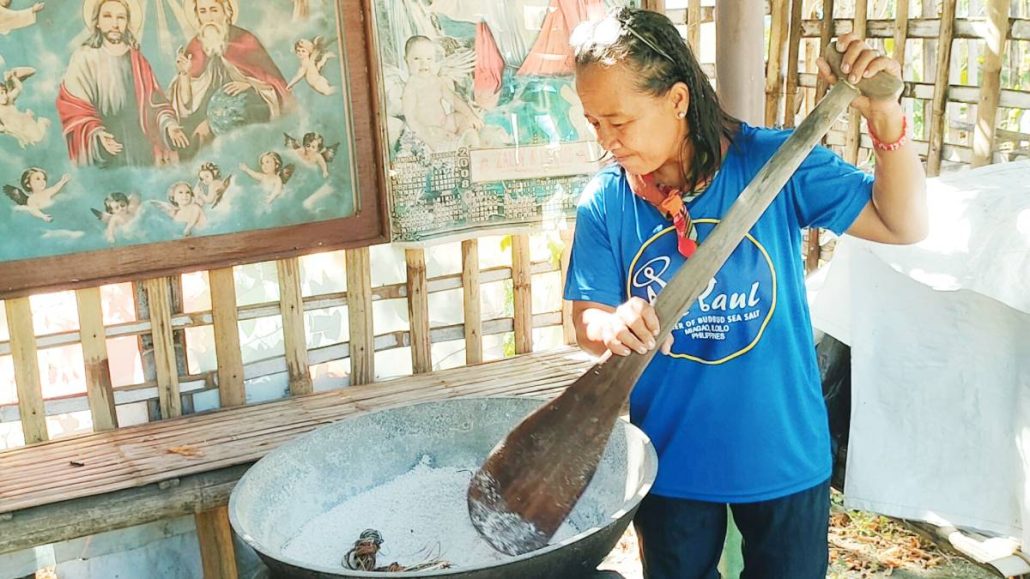
For Lorlie Paguntalan Noblezada, a 50-year-old registered social worker and owner of De Paul Artisanal Salt Manufacturing, that story is deeply personal. Known locally as the asindera sang Miag-ao, she now leads efforts to revive a centuries-old craft once central to the town’s identity but now at risk of disappearing.
A Tradition Born by the Sea
Budbud, from the Kiniray-a word meaning “to sprinkle,” is a traditional salt-making method unique to Panay. It involves filtering seawater through sand beds and drying it under the sun, using balunos—an extract from a native vine—to enhance its texture and character. Historical accounts trace the practice back to 1823, when Miag-ao produced up to 10,000 sacks annually, sustaining generations of salt farmers.
But time, tide, and change have not been kind.
From Decline to Determination
By the early 2000s, the industry declined due to climate change, shrinking shorelines, and waning interest among younger generations.
Noblezada herself did not grow up making salt. The tradition came from her husband’s lineage—now in its fourth generation. What began as a livelihood initiative for women and elderly residents in Barangay Mambatad gradually evolved into something more profound.
In the early 2000s, her proposal to revive salt-making as a community livelihood was initially rejected. But what seemed like a setback became a turning point. She continued her studies, became a registered social worker, and in 2018, was given another opportunity—this time with support from University of the Philippines Visayas, through its Coastline 5023 program.
“In 2018, with the help of the UPV we were able to revive Budbud salt-making,” she shared. “I realized that as a social worker, I am not limited to the office. This can be my way of serving the community.”
The Art and Science of Salt
Producing Budbud salt is both a craft and a test of patience.
The process begins months ahead, preparing the sugkayan or salt fields—clearing debris and shaping sand into grooves using a big rake. Seawater is then sprinkled over the sand, traditionally using bamboo poles called bayong carried across the shore. Today, however, with the help of her marine engineer friends, Noblezada has introduced innovations such as motor pumps to sprinkle the water directly on salt fields, easing the burden while maintaining the integrity of the craft.
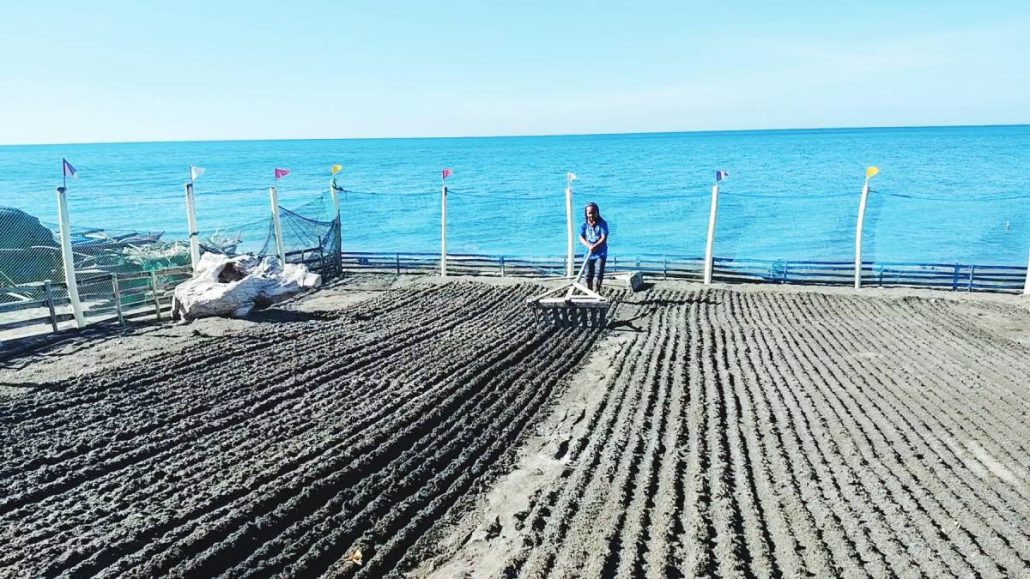
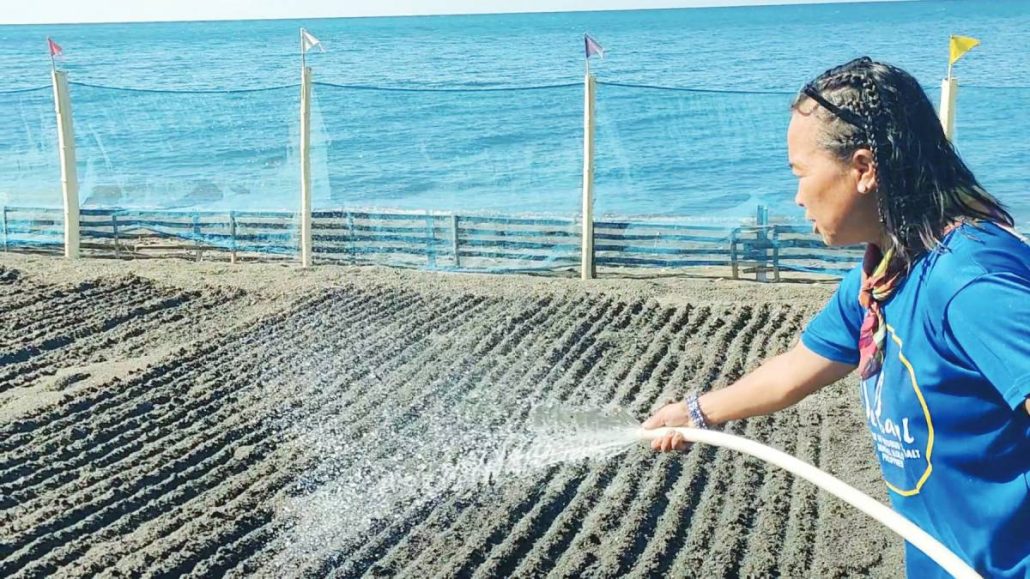
After a week, the salt-laden sand is brought to the pasabakan or filtration house, where it is washed using seawater to extract brine. With recent innovations, a faucet system has been installed to make the process more efficient.
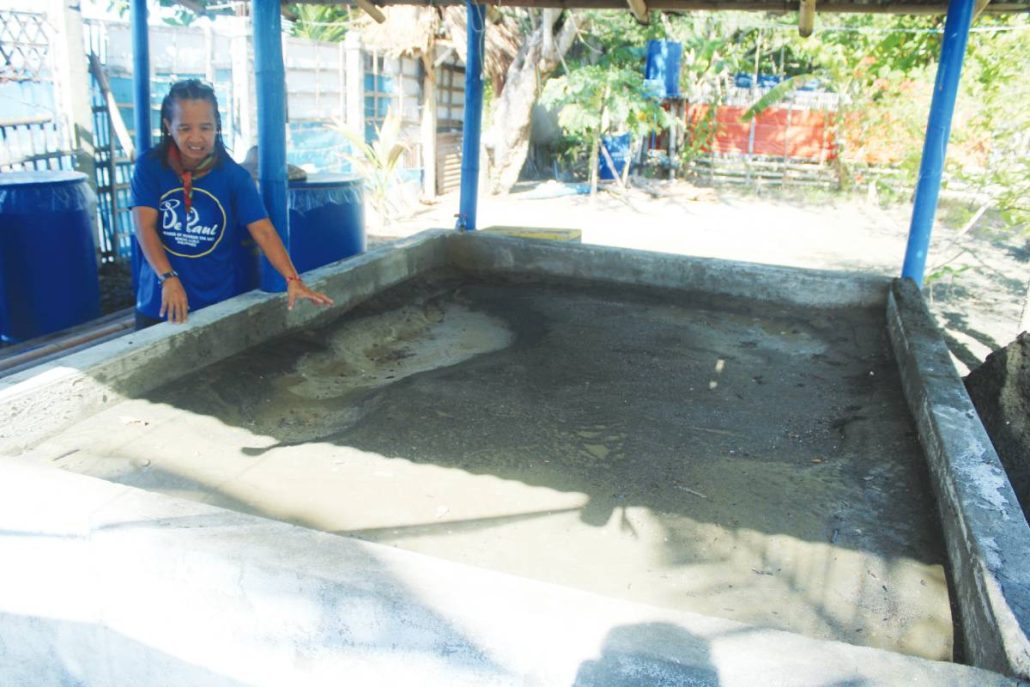
The filtered brine is then collected in a depository called the kam-aw, where it is mixed with balunos and stored in blue drums before being transferred to bamboo drying beds known as duyduyan. There, under ideal weather—hot sun and northern winds—salt crystals begin to form for two to four days.
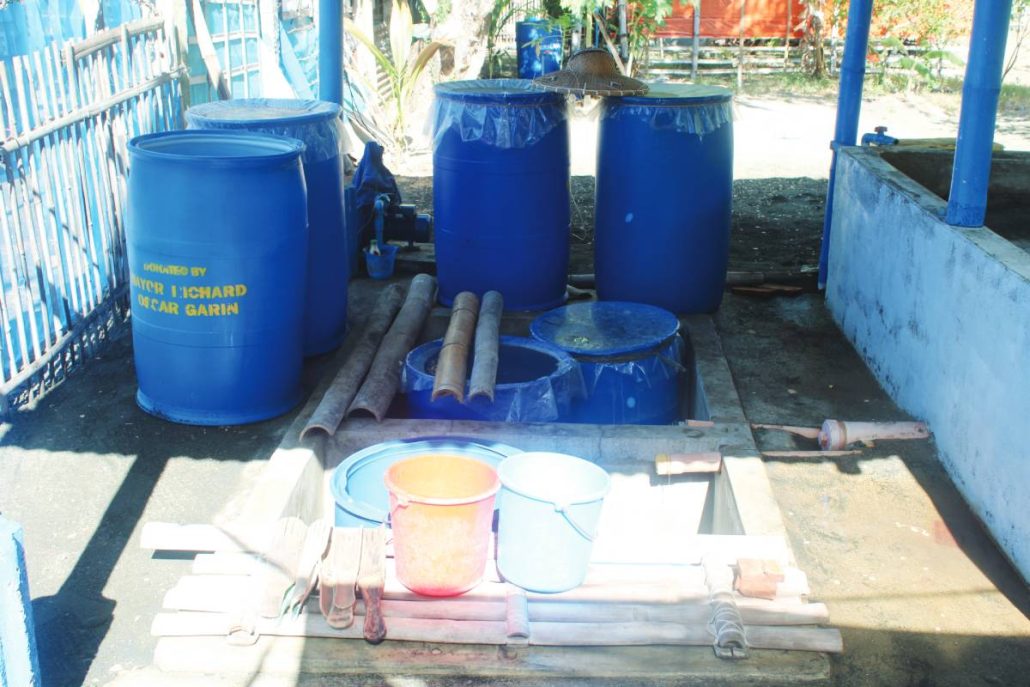
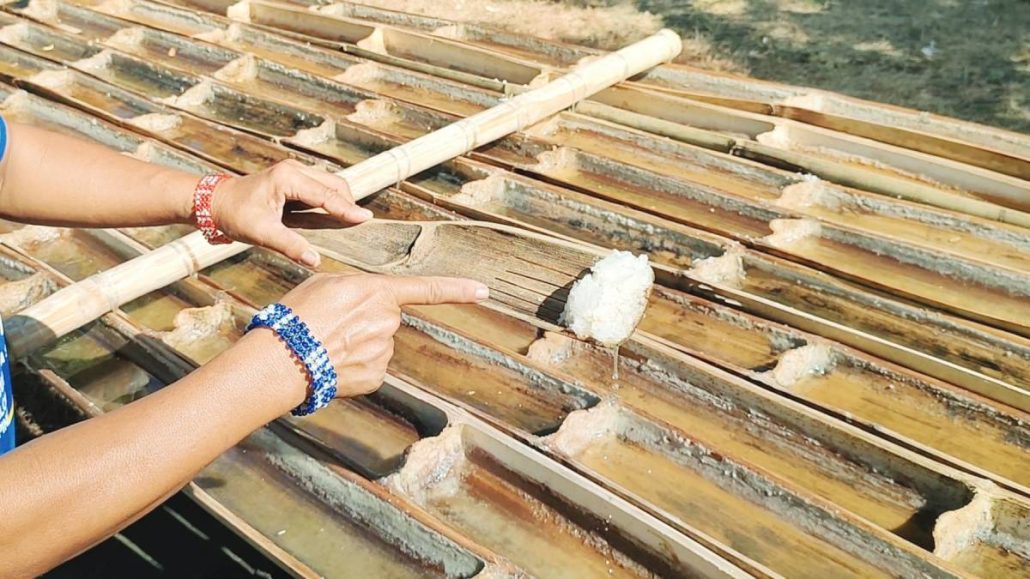
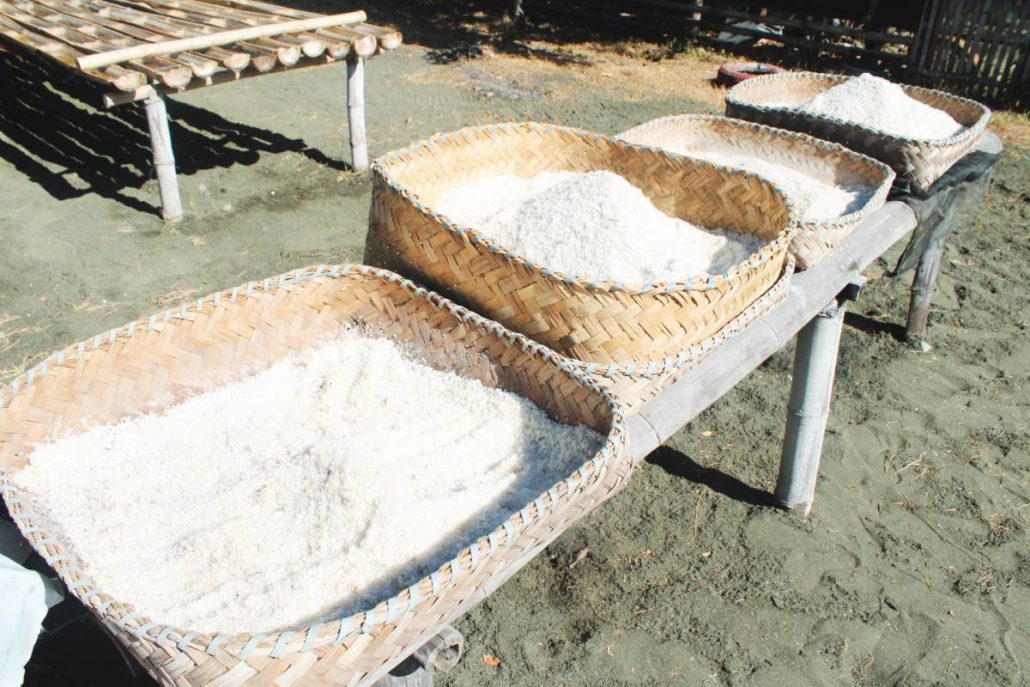
From there, the salt undergoes further drying in the punponan, roasting in the sanlagan to remove impurities, and finally packaging in the pulutusan.
But nature dictates everything.
“The salt production area should not be rained on for seven days,” Noblezada explained. “If it rains, we go back to zero.”
Battling Climate, Preserving Culture
For Noblezada, the greatest challenge in salt-making is not the labor, but the unpredictability of the climate.
Through innovation and partnerships with academic institutions, her family has adapted. What was once seasonal is now a year-round operation, producing 50 to 70 kilograms of Budbud salt daily. Noblezada share that plans are underway to build covered, greenhouse-like facilities to shield production from erratic weather.
Still, the decline of salt-making communities remains alarming. Areas such as Barangay Guibongan, Baybay Norte, and Baybay Sur have seen salt farms vanish due to shrinking shorelines and infrastructure development.
Despite these challenges, Noblezada continues to share her knowledge through organizations like Kalipunan ng Liping Pilipina (KALIPI) and engagements with agencies such as the Department of Trade and Industry (DTI) and the Bureau of Fisheries and Aquatic Resources (BFAR).
“Support is not just about materials or funding,” she said. “It’s about teaching people, organizing communities, and passing on knowledge.”
A Legacy Worth Saving
For Noblezada, Budbud salt-making is both livelihood and legacy. It enabled her family to send their children to school, with four earning degrees in criminology, marine engineering, social work, and marine transportation.
She now involves her children in the craft, hoping to pass it on. Some have already shown interest.
Beyond Miag-ao Shores
Today, Budbud salt is gaining recognition for its natural flavor and cultural value, with potential in local and international markets.
Yet for Noblezada, success lies in preservation.
“Budbud salt is part of who we are,” she said. “That is why we must protect and preserve it for generations to come.”
In a world driven by speed and modernization, the slow, deliberate process of crafting Budbud salt stands as a quiet resistance—a reminder that some traditions, like the grains of salt themselves, are small but essential.
And as long as hands like Noblezada’s continue the work, Miag-ao’s story will not be washed away by the tide./PN