

PAVIA, Iloilo — For years, he stood at the frontline of HIV (human immunodeficiency virus) awareness campaigns, educating communities about prevention, protection, and safe practices. Armed with knowledge, experience, and advocacy work, he believed he understood the risks better than most.
Yet life, as he painfully learned, can still take an unexpected turn.
Today, alias “John,” 34, a member of the LGBTQ community from Iloilo province, carries a story that is both heartbreaking and inspiring — a story not only about infection and survival, but also about courage, acceptance, and hope.
Long before he became a person living with HIV (PLHIV), “John” was already deeply involved in advocacy work. In 2014, he began volunteering for the Family Planning Organization of the Philippines (FPOP) – Iloilo Chapter, eventually becoming part of its staff and one of its HIV advocates.
FPOP is a non-government organization that provides sexual and reproductive health services and education, including family planning, HIV and syphilis testing, maternal healthcare, and sexual health awareness programs for underserved and marginalized communities.
HIV attacks the body’s immune system, particularly the cells that help fight infections. If left untreated, HIV can progress into Acquired Immunodeficiency Syndrome (AIDS), the most advanced stage of infection where the body becomes highly vulnerable to severe illnesses and infections. However, with proper treatment and regular medication, many persons living with HIV can now live long healthy, and productive lives.
Ironically, despite years of educating others about HIV prevention, “John” himself would later become infected.
The date remains etched in his memory.
“I am a person living with HIV. I’ve been HIV positive for almost seven years na. The date sang akon infection is September 17, 2020 and this was confirmed on January 15, 2021. It was three days before my birthday and a day before my mother’s birthday, that is why indi ko gid malipatan ang adlaw nga ina,” he shared.
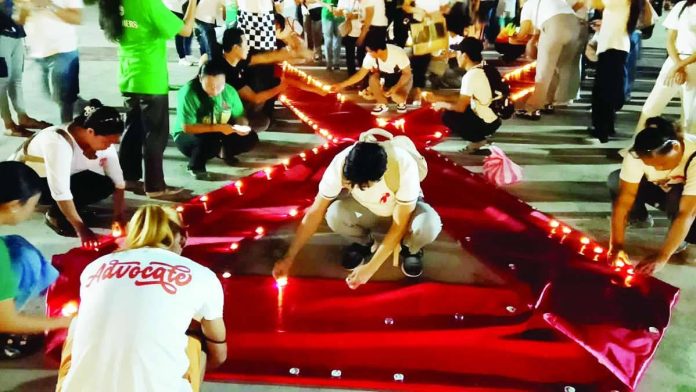
“John” spoke during the 2026 AIDS Candlelight Memorial Ceremony held at the Pavia municipal covered gymnasium on May 26. The event was organized by FPOP-Iloilo Chapter, the American International Health Alliance (AIHA), and the local government unit of Pavia.
As candles flickered inside the gymnasium in remembrance of lives lost to AIDS-related illnesses, “John” stood before the crowd not merely as a speaker, but as a living testimony to the realities faced by many PLHIVs.
He openly acknowledged the painful irony of his situation.
“I’ve been into this advocacy before ako nalatnan. That’s the reality of life. There are ups and downs sa pangabuhi naton and nakadepende sa aton kun paano atubangon ang mga responsibilidad kag ang mga resulta sang aton inobrahan,” he said.
For “John,” one of the hardest truths to confront was knowing he had done his best to protect himself.
As an HIV advocate, he was aware of the precautions needed before engaging in sexual relationships. He used protection, but during one encounter, the condom tore — a moment that changed his life forever.
“Masakit gid matuod nga ara na ako dira (HIV awareness advocacy) tapos ako pa ang nalatnan. Pero sin-o man abi ang gusto nga malatnan sina? I did my best to protect myself but shit happened. Wala na ako sang may mahimu. Ginbatun ko na lang kag gin atubang,” “John” revealed.
What helped him survive emotionally, he said, was acceptance.
His family and friends embraced him instead of rejecting him. Rather than facing discrimination, he found support.
FPOP also immediately helped him access treatment and medication from the day he was diagnosed until he eventually became “HIV undetectable” — a medical term meaning the virus can no longer be detected in the blood due to effective treatment.
Standing before the audience, “John” used his story to challenge society’s perception of PLHIVs.
“Ang mga persons living with HIV indi naton paglantawon nga daw hopeless kag makaluluoy na gid. Tandaan naton nga parehos man sila sa inyo, ang kinalain lang kay may ara sila sang infection. But tandaan niyo ang HIV infection is like high blood and diabetes na lang. And acceptance of the community, especially sang healthcare providers, is very important,” he stressed.
For many PLHIVs, fear of judgment remains one of the biggest barriers to seeking medical care.
According to “John,” some avoid healthcare providers because they fear discrimination and ridicule. This is why compassion and respect are crucial.
His appeal resonated with Harold Alfred Marshall, regional director of the Commission on Population and Development (CPD) in Western Visayas.
Marshall emphasized that beyond medical care, PLHIVs deserve dignity, understanding, and support.
“We also reaffirm our commitment to fighting the stigma and discrimination surrounding HIV and people living with HIV (PLHIV). Let us continue working together to eliminate prejudice, fear, misinformation, and self-stigma that continue to affect many individuals and communities,” Marshall said.
He also described the candlelight memorial as a reminder of society’s collective responsibility to strengthen awareness and inspire action.
Globally observed, the AIDS Candlelight Memorial serves as a platform to educate the public, encourage HIV testing, promote prevention, and advance advocacy efforts.
For FPOP-Iloilo Chapter Program Manager Mona Liza Diones, the annual gathering is more than a remembrance ceremony — it is a call for empathy and empowerment.
“I hope this time, this should be address, people should be empowered not only the non-PLHIV but also PLHIV themselves because sometimes they are the one who are having self-stigma. They cannot accept that they have this HIV and sometimes they discourage to face life,” Diones said.
She emphasized that healthcare providers today are already capable of offering proper HIV treatment and support services, many of which are available free of charge through organizations like FPOP.
“We are committed and dedicated in order that all of their needs are address,” she added.
As the memorial candles slowly burned through the evening, the message from advocates, healthcare workers, and PLHIVs became unmistakably clear:
HIV is no longer merely a medical issue.
It is also a human story — one that calls not for fear or judgment, but for compassion, understanding, and acceptance./PN