HAVING trained and grown inside the power industry – serving the National Power Corporation (NPC) for twelve years until my early retirement in January 2000 and the National Transmission Corporation (TRANSCO) for six years until its privatization in late July 2009 – I couldn’t help but feel bewildered, angry, and violated by what’s presently happening to my electric cooperative: the South Cotabato II Electric Cooperative, Inc. (SOCOTECO II).
I worked closely with SOCOTECO II as the public relations officer of NPC-Southwestern Mindanao Area (SWMA) from 1992-2000 and as the corporate communications officer of TRANSCO-District 6 from 2003-2009. Before that, I served as a public relations researcher of NPC-Visayas Regional Center in Cebu City.
As an electric cooperative whose power requirements were supplied by NPC before the effective implementation of the Electric Power Industry Reform Act (EPIRA) of 2001, both SOCOTECO II and NPC-SWMA (which at the time served General Santos City, South Cotabato, Sultan Kudarat, Maguindanao, Cotabato Province, and Cotabato City) were beset by Mindanao’s power shortage in 1992. It was an unbelievably troubled time. But with the eventual arrival of power barges in General Santos City and Cotabato City as an immediate solution, we experienced relief from those debilitating eight- to twelve-hour brownouts.
Now, it is important to give you some context.
The 1992 energy crisis in Mindanao – driven by severe drought and critically low water levels at Lake Lanao – drastically reduced the water inflow into the island’s primary natural reservoir. Lake Lanao serves as the natural water source and upper basin for the Agus River, which powers the Agus Power Plant Complex, consisting of six cascading hydroelectric plants – Agus I, Agus II, Agus IV, Agus V, Agus VI, and Agus VII – operated by NPC. Back then, Mindanao’s power supply heavily depended on hydropower.
Fast forward to my years at TRANSCO.
By the time I served TRANSCO-District 6 in 2003, the motions to implement EPIRA had already begun. Supposedly, the law was designed to dismantle state-run power monopolies by breaking the generation and transmission functions of NPC – with TRANSCO taking over the national transmission grid as the spun-off company – while privatizing energy assets (power plants) to relieve government debt and introduce free-market competition (so it said). The EPIRA even explained that by unbundling electricity bills (which we now see on our “kilometric” monthly power bills) and attracting private investments, power costs would go down, efficiency would improve, and stable electricity nationwide would be ensured (again, so it said).
The irony is that, following this heralded privatization framework and structural changes, power shortages hit Mindanao in 2010 with prolonged rotating brownouts lasting six to eight hours daily, prompting GMA to declare a power crisis. This was followed by the 2012-2014 power shortages, where recurring generation shortfalls persisted because new private investments failed to keep pace with demand growth.
Worse, in this EPIRA-led era, periodic and ongoing Visayas and Luzon grid red and yellow alerts, documented by both the National Grid Corporation of the Philippines (the company formed after TRANSCO was privatized) and DOE, show recurrent power disruptions and emergency manual load dropping (controlled, rotating brownouts). These crises intensify during peak summer months, or when private baseload coal plants experience simultaneous forced outages (explained as preventive maintenance schedules).
As a result, in September 2014, PNoy asked Congress for emergency powers to address looming supply shortages, sparking intense legislative scrutiny. By January 2015, a House Energy Committee review concluded that the law had failed to deliver sustainable or affordable power amid chronic Mindanao brownouts. (Oops!) Fast forward to May 2026: Power grid instability hit the Philippines, leading to widespread disruptions across the Luzon and Visayas grids.
Is the picture clear now?
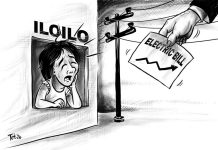
That’s why I say “supposedly,” because even now, as I write this column, the power situation in the Visayas is bad (once again!). We experience a rotating 1- to 1.5-hour brownout daily. More than two decades after the EPIRA’s passage, we’re back to power shortages.
Is that what privatization is all about? Think about that.
Back to SOCOTECO II.
I am bewildered by how fast the push for a so-called joint venture agreement (JVA) was advanced. I was right there in General Santos City from September to November 2025, and by early 2026, social media was already flooded with moves toward privatization. Talk about lightning speed, huh!
As an advocate for good governance – particularly accountability, transparency and disclosure, public consultations, fairness and equity, impartiality and independence, and risk management and strategic vision – it is fundamental that we break down the core issue.
* Accountability
The leaders of the electric cooperative face a tough and delicate situation right now. I do not envy them, but leadership positions carry weight. When you sit at the top, you must answer for every choice and own every consequence. You must answer every summons, clear the air on every single issue, and open your doors to every investigation.
* Transparency and disclosure
Transparency means no dodging officers, no missing information, and no starving the public of the facts. All records and transactions must stay open to public scrutiny.
Now, genuine transparency is measured by public consultations. Dropping information through paper, social media, and the like about a massive deal like a JVA is never enough. It disrespects the member-consumer-owners (MCOs). It insults them.
The speed of this privatization push should have been matched by the widest, most accessible, and broadest, most inclusive rounds of public consultations reaching even the farthest sitio. Was this done? Or was actual groundwork just too arduous?
Through genuine public consultations, leadership lays bare the true state of the electric cooperative for MCOs to review and question. This is where the board answers tough questions. Holding public consultations demonstrates fundamental respect for MCOs as the electric cooperative’s true owners. Was that even conceived?
A monumental decision like this is never rushed. The right process must be followed. Hurrying should not even be tolerated.
* Fairness and equity
The principle of fairness means every single member – even the most ordinary consumer – has the right to be heard before the board makes major decisions. It ensures decisions do not just serve the interests of big businesses or investors, but most importantly, protect ordinary families who carry the heavy burden of electricity bills.
As a communicator, I am committed to breaking down all information so the public can fully grasp it – never relying on second-hand details that have already been embellished and spun. Good governance demands accurate, truthful, and timely information.
* Independence and impartiality
The leadership and the Board of Directors must stay free from outside influence, politics, or personal business interests to make independent, objective, and just and fair decisions that protect the people who own the cooperative.
* Risk management and strategic vision
This is the leadership’s ability to foresee business risks before they hit, paired with a clear long-term plan to keep operations strong and sustainable for years to come.
Disastrously, SOCOTECO II failed to do this over the past couple of years. We cannot begin to fathom why, especially with so many stories and allegations circulating online. Boy, they are toxic!
And now, the Temporary Restraining Order.
It is well past time for the leadership of SOCOTECO II to listen to the aggrieved MCOs. Right now, genuine public consultations are no longer just a courtesy – they are your final and most vital risk management tool. By finally opening your ears to critics, watchdog groups, the church, and government sectors, the board has the power to stop this hostile takeover in its tracks before it forever defaces the history and legacy of SOCOTECO II.
Listen to the people, respect the true owners of the electric cooperative, and pull back before it is too late.
***
The author owns and manages Belinda Communications Consulting. You can reach us via email at belca.87@gmail.com. Engage with us on X @ShilohRuthie./PN