



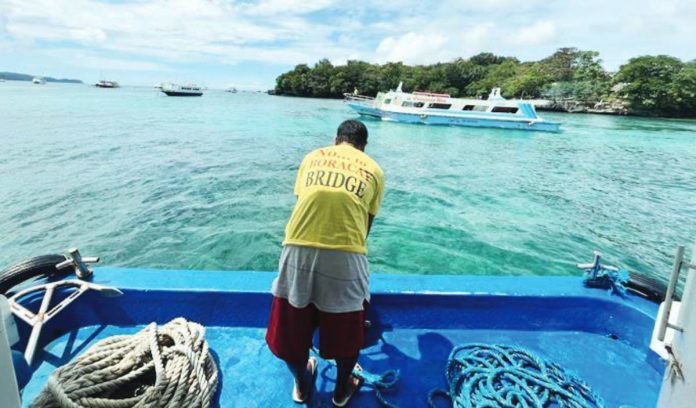
THE BOATS are still sailing.
At Cagban Port, the rhythm is as steady as ever — engines humming, waves parting, bancas gliding across the narrow channel that separates mainland Malay, Aklan from Boracay Island. It is a sound both ordinary and profound, carrying with it not just tourists, but the lifeblood of an entire community.
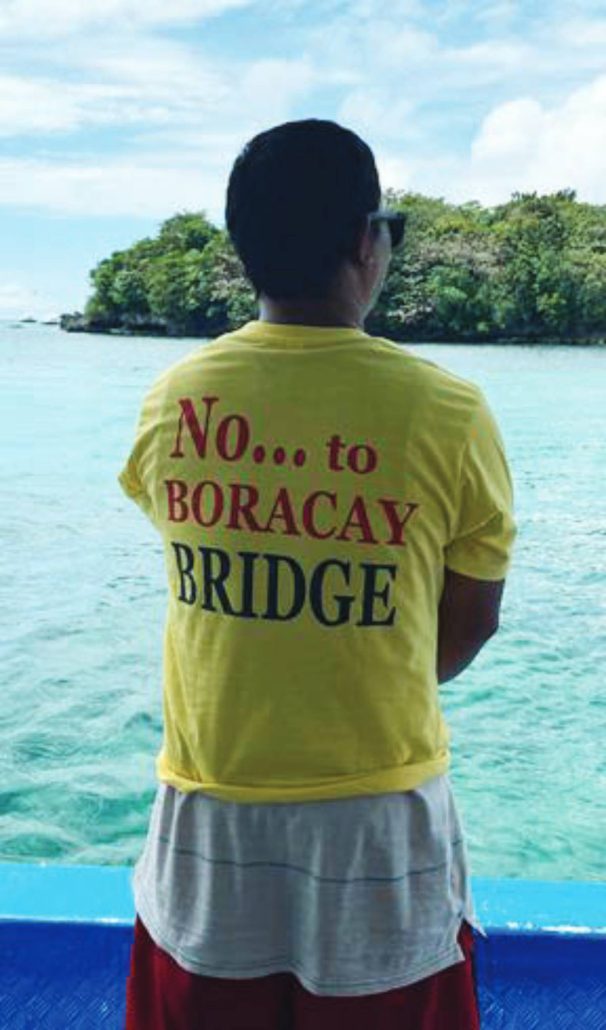
For “John,” a mambabangka, that sound now carries something else: relief.
After months of uncertainty and a groundswell of resistance, the proposed Boracay Bridge — once pitched as a bold leap toward modernization — has been decisively turned away. For those whose lives are tethered to the crossing, the decision is more than policy. It is survival.
A bridge that won’t rise
The Boracay Bridge Project promised transformation: a multi-billion peso link connecting Malay via Caticlan to the island through a 2.54-kilometer road network. Faster access. Seamless travel. A future where the journey is no longer interrupted by water.
But for those at the shoreline, the promise felt like a warning.
By late 2025, the Aklan provincial government drew a line, rejecting the proposal over environmental concerns and the looming threat to local livelihoods. With that decision, the project stalled — and the fragile equilibrium of Boracay’s gateway held.
The crossing, long seen as a simple necessity, revealed itself as something deeper: a defining ritual, a protective boundary, a source of income for hundreds.
‘Kami ‘yung apektado’
For John and countless others, the fight was never theoretical.
“Kami ‘yung apektado, Ma’am,” he said.
Each day, he earns around P500 to P600 — modest by any standard, but enough to keep a household afloat. Enough to send children to school. Enough to pay off loans tied to the very boats that sustain them.
The fear was immediate and unforgiving: if tourists could simply drive across, the boats would empty. And when the boats stop, so does everything else.
“May mga pamilya rin kami, mga anak nag-aaral. Kami ‘yung kawawa,” said John.
So they organized. They spoke out. They wore their resistance — “No to Boracay Bridge” — across their chests, turning quiet apprehension into visible defiance.
A community that stood its ground
The opposition swelled beyond the docks.
Transport groups like the Caticlan-Boracay Transport Multi-Purpose Cooperative warned of widespread displacement — not just for boatmen, but for port workers, ticketing staff, and the many unseen hands that keep the system running.
Environmental advocates added urgency to the cause, pointing to coral reefs, seagrass beds, and an ecosystem already strained by years of heavy tourism. The scars of Boracay’s 2018 rehabilitation remained fresh — a stark reminder of what happens when development outruns responsibility.
This time, the community chose not to wait for damage to be done.
More than convenience
To its proponents, the bridge made sense: improved logistics, uninterrupted access, faster emergency response.
But for many on the ground, convenience was not enough.
Boracay, after all, has always been defined by its threshold — that brief but symbolic crossing by sea. It is a transition, a pause, a quiet declaration that what lies ahead is different, protected.
Remove that, and something intangible is lost.
Without the crossing, the island risks becoming just another destination on the map — reachable, accessible, but stripped of the very experience that sets it apart.
A win for people — and place
The rejection of the bridge was more than a policy decision. It was a statement.
Development, it said, must not come at the cost of communities. Progress must not erase the very systems that sustain lives.
For locals, it was validation — proof that their voices, often drowned out in large-scale infrastructure debates, could still shape outcomes.
They did not just protect their livelihoods. They preserved a delicate balance between tourism, environment, and tradition.
The crossing continues
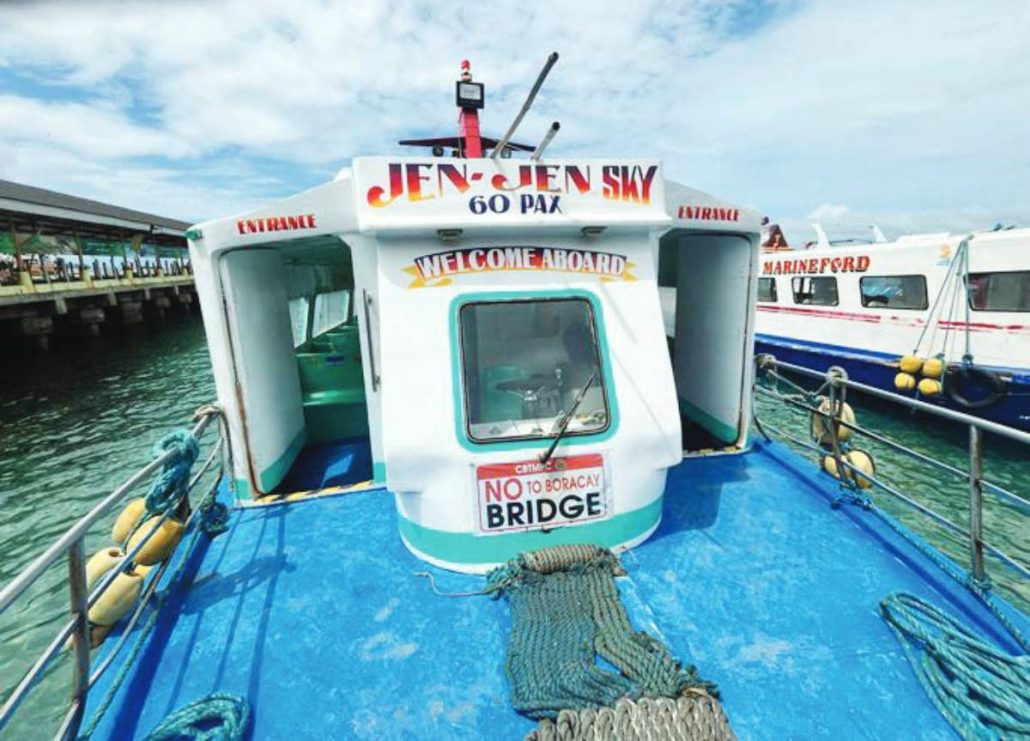
Back at the port, nothing looks dramatically different — and that is precisely the point.
Tourists line up. Boats fill and depart. The sea continues its quiet work of separation and connection.
For John, the victory is not loud. It does not come with ceremony. It simply exists in the continuity of his day.
“Huwag sana matuloy para hindi kami mawalan ng trabaho… may mga pamilya rin kami,” he said.
Now, that hope has taken shape in the everyday — in each trip across the water, in each fare collected, in each safe return to shore.
Progress is often measured by what is built. But sometimes, it is defined by what is preserved.
On this stretch of water between Caticlan and Boracay, the decision to say no has ensured that the sea still matters — that the journey still counts — and that a community, bound by both livelihood and identity, remains whole.
The boats are still sailing.
And for now, that is enough./PN