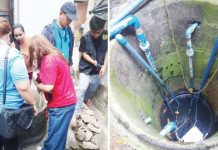




WITH MORE than 1,000 shallow wells across Iloilo City, reports of possible contamination in densely populated barangays should trigger urgent action. In Muelle-Loney and Zamora-Melleza, authorities are investigating suspicious water sources. Elsewhere, wells have repeatedly failed laboratory tests despite chlorination. One in Barangay Ingore, La Paz, has already been recommended for abandonment.
There is something severely unsettling about a city that celebrates progress while hundreds of households may be drawing water contaminated by the very waste their communities produce. Shallow wells remain vulnerable to seepage from septic tanks and drainage canals. This is both an environmental concern and a public health disaster waiting to happen.
The danger is particularly treacherous because contaminated water does not always look contaminated. Even crystal-clear water can harbor disease-causing microorganisms. Without laboratory testing, families may unknowingly expose themselves to serious health risks.
But the greater tragedy is that many households depend on shallow wells because affordable, reliable alternatives may be beyond their reach. For the poor, access to safe water should never be a luxury. Yet a basic necessity has become a gamble with disease.
This problem also exposes decades of inadequate urban planning. In overcrowded communities, septic tanks and wells stand dangerously close together. Population growth has outpaced sanitation infrastructure, allowing the consequences of urban neglect to seep underground — quite literally.
The prospect of a Super El Niño makes matters worse. As water supplies dwindle, desperate households may increasingly depend on wells already suspected of contamination. A water shortage could quickly become a public health crisis.
Iloilo City’s intensified inspections are certainly needed, but testing and condemnation are not enough. Every abandoned well must be matched with a dependable alternative water source. Otherwise, families may have no choice but to return to the very water they have been warned against using.
The city must strengthen water-quality monitoring, improve wastewater management, enforce sanitation standards and invest in safe water infrastructure, particularly in underserved communities.
Beyond skyscrapers, commercial investments or gleaming infrastructure, progress must also be evaluated by whether ordinary families can obtain clean water without risking their health. The contaminated wells are warnings about water quality, and they are an indictment, too, of urban neglect demanding immediate action.
For a city aspiring to greater heights, the most fundamental test of development may lie not in what rises above the ground, but in what seeps beneath it.
No city can truly call itself progressive when its people must wonder whether the water they depend on is slowly poisoning them.