

THE COUNTRY’S abaca industry generates about $80 million annually – making the Philippines as the world’s top exporter of abaca.
The local industry is able to supply about 85 percent of the global abaca fiber production.
However, viruses such as the Abaca Bunchy Top Virus (ABTV), mosaic, and bract mosaic have hindered the production of abaca in the country.
In 2011, about 19,000 hectares of abaca were devastated by the ABTV.
To address this challenge, projects have been put in place for the improvement of abaca to boost its yield and fiber quality.
Researchers at the Forest Products Research and Development Institute of the Department of Science and Technology (DOST-FPRDI) recently found that the “Bandala” abaca hybrid yields high quality fiber that makes it a promising material for pulp and paper.
This is good news, considering that Bandala is the result of more than 60 years of work by scientists, mostly from the Institute of Plant Breeding-University of the Philippines Los Baños (UPLB-IBP), who spent hundreds of hours in laboratories trying to come up with the kind of plant that would meet the needs of local abaca farmers and adapt to changing environmental conditions.
The result of breeding the right types of abaca and banana (the two plant species are close relatives), the Bandala has all the traits of the ideal hybrid.
It is high-yielding, drought-tolerant and able to withstand the attack of the notorious ABTV.
Research made by the DOST-FPRDI shows that the physical properties (basis weight, thickness, folding endurance, and burst, tensile and tear indices) of the Bandala paper sheets the agency studied were comparable to those of commercial abaca.
This is important because it shows that the hybrid has high economic potential.
Abaca, which is known as the world’s strongest natural fiber, is native to the Philippines.
The country is the world’s number one abaca supplier, and the crop is the source of livelihood of about 200,000 farming families in 56 provinces.
But due to various reasons, most planters earn little from abaca farming and remain very poor.
With the support of different science-based agencies in helping solve the sector’s most pressing problems, however, the future looks better for our abaca farmers.
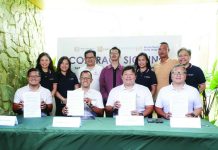
These agencies include the UPLB-IPB and DOST’s Philippine Council for Agriculture, Aquatic and Natural Resources Research and Development (PCAARRD) which has put in place a Strategic Abaca Industry Science and Technology Roadmap.
It is being undertaken in the project dubbed Abaca Functional Genomics: High Throughput Discovery of Genes and Molecular Markers, which is being implemented by the UPLB-IBP.
The project is funded by the DOST-PCAARRD.
The DOST-FPRDI is also lending support thru its research and development program that aims to improve and expand the use of abaca and other natural fibers in making specialty paper and other high-end products.
As the world’s strongest natural fiber, abaca is a preferred raw material for various modern technologies employed in making ship and power transmission ropes, car interiors, well-drilling cables, furnishing, textile, as well as specialty and security paper./PN