

ILOILO — What was once an abandoned and unproductive 10-hectare fishpond in the municipality of Leganes has been transformed into a thriving biodiversity sanctuary teeming with mangroves, migratory birds, and marine life, with the Iloilo provincial government now positioning the site as its flagship center for coastal conservation and environmental education.
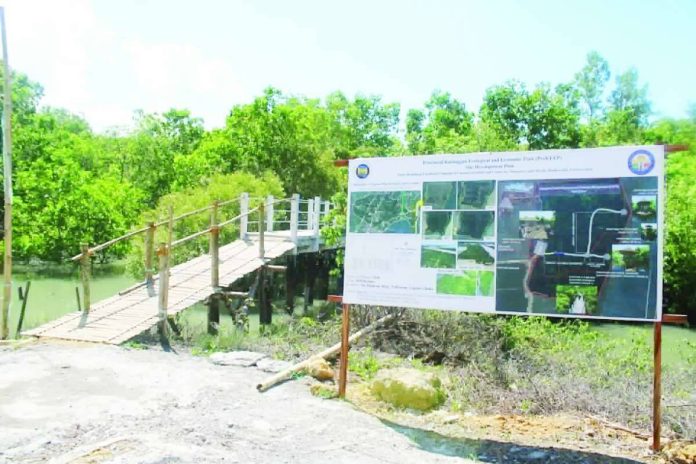
The area, located in Sitio Panuso-on, Barangay Nabitasan, was formally launched on June 2 as the Provincial Katunggan Ecological and Economic Park (ProKEEP), which has been designated as Iloilo Province’s central site for mangrove and marine biodiversity conservation.
The transformation began in 2016 when the provincial government, through the Provincial Government Environment and Natural Resources Office (PGENRO), allocated an initial budget of P710,000 to plant 100,000 mangrove seedlings in the abandoned fishpond with the support of the Leganes municipal government and local communities.
“Nag-start kita with 100,000 seedlings of mangroves like Pagatpat and Bungalon until nga amat-amat na-develop kag nag-grow na gid sila kag nag-diverse,” said PGENRO Environmental Programs and Management Services Division head Forester Mitzi Peñaflorida.
From only two mangrove species initially planted, the site now hosts at least 10 species, including Piagao, Bakhaw Lalaki, Bakhaw Babae, Lipata, Palaypay, and Nipa, among others.
The restored ecosystem has also attracted various migratory birds.
Peñaflorida attributed the successful growth of the mangroves to the area’s healthy ecosystem, favorable soil conditions, and protection from strong tides and waves.
During the launch, Gov. Arthur Defensor Jr. unveiled a 37.5-meter elevated concrete walkway worth P2.4 million, funded through the province’s share from electricity sales generated by Palm Concepcion Power Corporation.
The provincial government plans to further develop the site with an additional 38 meters of walkway, gazebos, benches, a pavilion, and a watchtower as part of efforts to transform the area into an ecotourism destination.
“Tanum Iloilo is part of our vision to make Iloilo a forest province. And this elevated walkway, we see this as a developing tourism destination,” Defensor said.
Peñaflorida said the province would need approximately P35 million more to fully establish and complete the mangrove and marine biodiversity conservation center.
“Siguro kon ma-organize naton kag ma-establish gid or ma-close ang circuit sang area, maging center for marine and mangrove biodiversity at least makabulig man kita sa community,” she said.
She emphasized that mangroves play a critical role in carbon sequestration, protecting coastal communities from storm surges, and providing breeding grounds for fish, crustaceans, and other marine species.
Although the site remains under development, visitors, particularly students and researchers, may already visit the area upon coordinating with PGENRO.
The project has drawn praise from conservation experts, including Dr. Jurgenne Primavera, chief mangrove scientific adviser of the Zoological Society of London, who described Leganes as the “heart of mangrove stewardship in the region.”
She commended Iloilo’s leadership for believing that “nature, community, and good governance, working together, can protect our shores and secure our future.”
The Katunggan: Coastal Greenbelt for BioCoCo Protection Project has already gained national and international recognition, earning the Excellence in Environmental Governance Award during the 2024 EXCELL Awards and the 2025 Normandy Honor for Peace – with the Earth./PN