

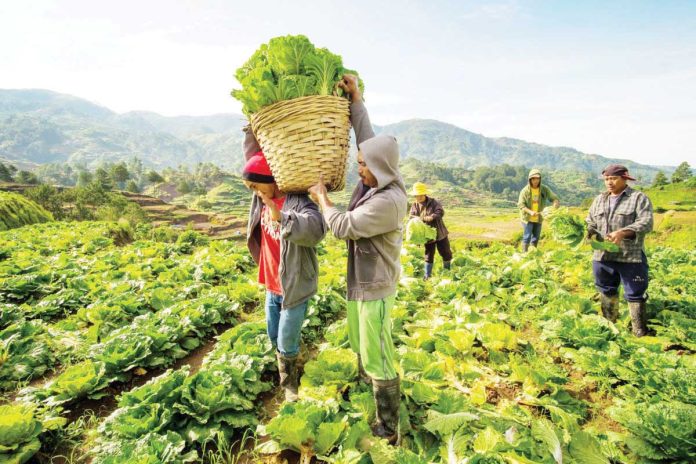
THE Asian Development Bank (ADB) said it is spending an additional $26 billion to boost food security and nutrition in Asia and the Pacific. This brings ADB spending for food security to $40 billion from 2022–2030.
In a statement, the ADB said $18.5 billion of the $26 billion investment will be for direct support to governments, while $7.5 billion will be for private sector investments.
The multilateral lender said the program will modernize agricultural value chains to improve access for the vulnerable to affordable and healthy food.
It will also invest in improving soil quality to help protect agricultural produce from the effects of climate change and pollution.
The program will support the development of digital technology and analytics to improve decision-making for farmers, agribusinesses, and policymakers.
“This expanded support will help countries alleviate hunger, improve diets, and protect the natural environment, while providing opportunities for farmers and agribusinesses,” said ADB President Masato Kanda.
The ADB recently also gave the Philippines loans to help upskill its workers and improve disaster resilience.
It is also helping finance the Malolos–Clark Railway Project.
In January this year, the ADB said it lent the Philippines $500 million to upskill workers, saying that the Business and Employment Recovery Program-Subprogram 2 will prepare Filipino employees, including the youth, for higher-skilled jobs in fields like analytics and artificial intelligence, software development and security, and business process management.
The program hopes to increase the formal employment in the private sector by about 600,000 to 700,000 jobs yearly, with the share of private sector jobs to total employment rising to 51 percent.
The loan also wants to encourage more women to work by giving them technical and vocational education and training.
“While job recovery in the Philippines has been encouraging in the post-COVID-19 period, the quality of jobs remains a critical concern, with many workers still facing challenges such as underemployment, informality, and limited access to decent work opportunities,” said ADB Country Director for the Philippines Pavit Ramachandran. (ABS-CBN News)