


ILOILO — A powerful 11.4 percent rebound in agriculture helped propel Iloilo Province’s economy to P232.13 billion in 2025, nearly quadrupling its economic growth rate from the previous year and reinforcing its position as Western Visayas’ largest economic powerhouse.
The province’s gross domestic product (GDP) expanded by 5.9 percent, a dramatic acceleration from the sluggish 1.6 percent growth recorded in 2024, according to the Provincial Product Accounts released by the Philippine Statistics Authority (PSA) on October 13, 2026.
The resurgence of agriculture, forestry and fishing emerged as the biggest driver of the economic recovery, contributing 2.2 percentage points to the province’s overall growth and underscoring the crucial role of the farming sector in sustaining Iloilo’s economy.
The province’s economic output increased from P219.23 billion in 2024 to P232.13 billion in 2025, representing an additional P12.9 billion in economic activity.
Despite growing below Western Visayas’ regional average of 6.4 percent, Iloilo outperformed the national GDP growth rate of 4.4 percent.
More significantly, the province accounted for 34 percent of Western Visayas’ P683.44-billion economy, maintaining its dominance as the region’s single largest economic contributor.
Engr. Arecio A. Casing Jr., director of the Department of Economy, Planning, and Development (DEPDev) Region 6, emphasized that Iloilo’s economic strength should be measured not merely by its growth rate but also by the enormous value of its contribution to the regional economy.
“Iloilo Province’s GDP at 5.9% is below the regional average of 6.4%, but above the country’s 4.4% average. Within the regional economy, it ranks fifth behind Capiz, Antique, and Guimaras. However, size matters more than speed. The province remains the largest economy in the region, generating 34.0% of Western Visayas’ total output,” Casing explained.
Although several neighboring provinces registered faster percentage growth, Iloilo’s substantially larger economic base allowed it to remain the region’s principal economic anchor.
Agriculture drives recovery
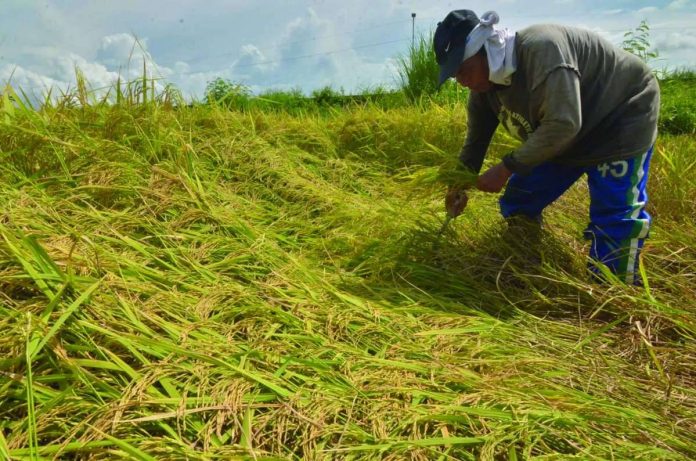
The remarkable turnaround in agriculture, forestry and fishing, which expanded by 11.4 percent, became a defining feature of Iloilo’s economic performance in 2025.
Provincial officials attributed the sector’s recovery partly to sustained government interventions, agricultural assistance programs and measures designed to protect farmers against unstable commodity prices.
Mary Rose A. Matucan, acting head of the Iloilo Provincial Planning and Development Office (PPDO), said the figures reaffirmed the importance of agriculture in the province’s development priorities.
“In terms of agriculture, we return to the core reality that Iloilo is an agricultural province. The focus of the provincial government remains firmly on agriculture and fisheries,” Matucan said.
She particularly cited the provincial government’s Mangunguma Sapnayon: Palay Price Support Program, which provided assistance to rice farmers and partner cooperatives amid fluctuations in farmgate prices.
“Last year, the province rolled out the Mangunguma Sapnayon: Palay Price Support Program to directly assist farmers and partner cooperatives. Coupled with national government interventions and local government projects, these efforts directly catalyzed our agricultural performance,” Matucan noted.
Implemented through the Provincial Cooperatives Development Office, the program sought to cushion rice producers against market uncertainties while strengthening agricultural productivity.
Separate PSA agricultural production data also showed Iloilo maintaining its leadership in the production of major fruit crops in Western Visayas.
The province likewise accounted for the largest regional production shares in nearly all major vegetable and root crops covered by the report, except cassava.
Services remain economic backbone
While agriculture provided the strongest push to economic growth, the services sector continued to dominate Iloilo’s economy, accounting for 59.9 percent of total provincial GDP.
Growth was supported by transportation, trade, finance, education, communications and other service-related activities.
Human health and social work activities recorded the fastest expansion among major industries at 13.5 percent, followed by agriculture, forestry and fishing at 11.4 percent.
Public administration and defense, including compulsory social security, registered an 11.2 percent increase.
In terms of actual contributions to overall GDP growth, transportation and storage added 1.0 percentage point, while wholesale and retail trade, including motor vehicle repair, contributed 0.7 percentage point.
Education, financial and insurance activities, and information and communication also sustained positive growth.
Construction, mining suffer setbacks
However, the province’s economic expansion was not uniform across industries.
Mining and quarrying suffered the sharpest contraction, declining by 10.2 percent, while construction shrank by 4.5 percent.
The downturn in these sectors highlighted continuing weaknesses in industrial extraction and construction activity despite the broader economic recovery.
Their negative performances also underscored the importance of sustaining growth across more industries to strengthen the province’s economic resilience.
Nevertheless, the agricultural resurgence and continued expansion of services enabled Iloilo to recover much of the economic momentum lost in 2024.
With its P232.13-billion economy accounting for more than one-third of Western Visayas’ total output, Iloilo remains central to the region’s economic performance.
The latest figures also reinforce the importance of continued investments in agriculture, transportation, trade and essential services to sustain the province’s recovery and translate economic expansion into broader livelihood opportunities for Ilonggos./PN