

ILOILO City – The observance of All Saints’ Day and All Souls’ Day on November 1 and 2, respectively, is providing additional income opportunities for cemetery caretakers and tombstone painters across Iloilo City, although some workers say business has slowed compared with previous years.
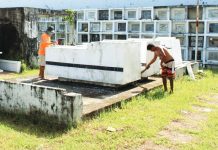
As families prepare to visit the graves of departed loved ones, workers at several cemeteries have begun cleaning, repainting and restoring tombstones, turning the annual tradition into an important source of livelihood.
At Christ the King Memorial Park in Barangay Ungka, Jaro district, 50-year-old Elma Mainar has been maintaining graves for 30 years.
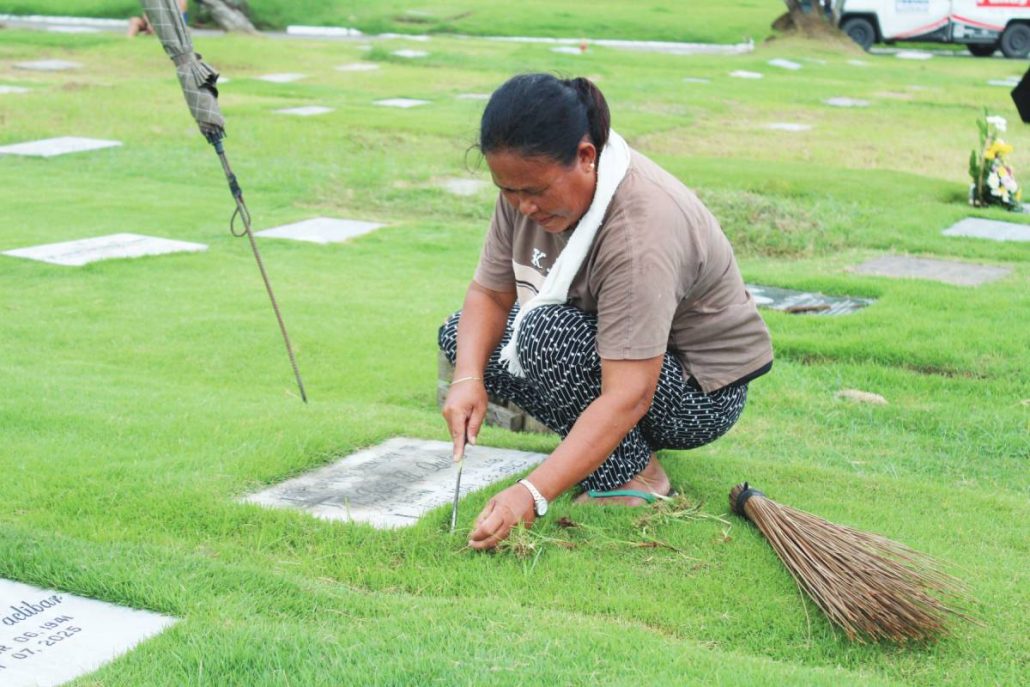
“Subong magpaninlo ako kada pantyon, P200. Sang una tag-P100 lang. Ginpataasan man namon,” Mainar said.
Mainar, who works independently and is paid directly by grave owners, said she expects to clean about 70 tombs ahead of this year’s “Piyesta Minatay”.
“Kun gapadulong ang Piyesta Minatay, adlaw-adlaw kami diri. Pero bisan ordinaryo nga adlaw, ga-maintain man ako diri mga tatlo ukon apat ka beses sa isa ka bulan,” she said.
The earnings help support her family, including two children who are still studying.
At the Jaro Catholic Cemetery, 33-year-old Dave Lozarte charges a minimum of P500 for cleaning and repainting graves.
Aside from accepting paid work, Lozarte also maintains the resting places of his relatives.
“Aside from taking on paid cleaning jobs for long-time family friends, I am also here for my own family — my late grandfathers and grandmothers,” he said.
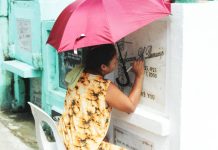
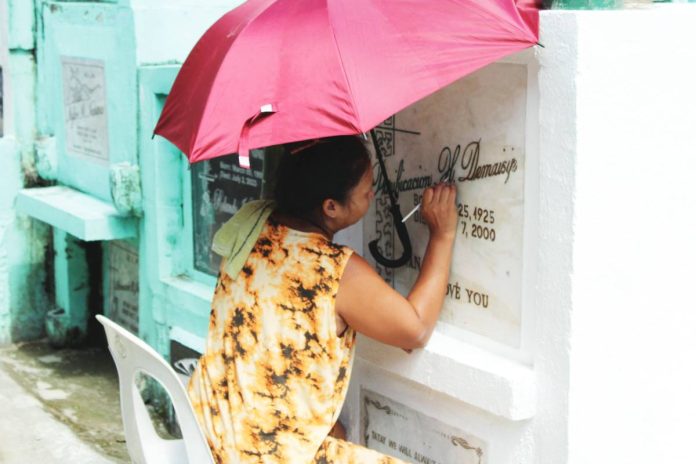
Meanwhile, the traditional practice of sombra, or repainting and restoring faded lettering on tombstones, continues to provide seasonal income for skilled workers.
At Tanza Public Cemetery, 69-year-old Rodrigo Tianero has practiced the craft for more than four decades, charging P250 to P300 for tombstone painting and lettering restoration.
“Dugay na ako nagasombra, mga 40 years, sobra,” Tianero said.
Another worker, 32-year-old Bebe Soriano, learned the trade from her late father and has been maintaining graves for more than a decade.
Soriano charges P200 per tombstone inscription and can complete about six jobs daily, depending on demand.
“Depende man. Subong pigado. May gabinulan man diri. Pero ang gabinulan diri si Papa. Mga sobra 10 years na ako nga muni pangabuhian ko,” she said.
However, Soriano, a mother of four, observed that cemetery activity and earnings have declined compared with previous years.
“Sang una dako ang kita. Subong pigado. Sang una October 28 damo na tawo sa sementeryo, subong wala na,” she said.
While caretakers earn from the seasonal demand, other residents personally clean their relatives’ graves as part of an enduring family tradition.
Christian John Villanueva, 55, a call center agent from Jaro, visits the Jaro Catholic Cemetery to clean the graves of his parents, a younger sibling and grandmother.
He said he prefers completing the work before Nov. 1 to avoid the expected crowds.
At Tanza Public Cemetery, 53-year-old Robert Tumambing likewise maintains his parents’ graves.
“Ginatinluan ko. Walo kami nga mag-ulutod, ari man diri sa city gaulubra. Pero tradition ko ini nga kada tuig ako ang gatinlo. Once a year lang man ini siya ah,” Tumambing said.
For cemetery workers, All Saints’ Day and All Souls’ Day are opportunities to earn additional income amid rising living costs, while for families, the annual cleaning and restoration of graves continue to symbolize remembrance and respect for departed loved ones./PN
(caption)
Elma Mainar has been maintaining graves for 30 years. She is paid directly by grave owners, and expects to clean about 70 tombs ahead of this year’s “Piyesta Minatay”. PHOTOS BY ALLEN ANIMAS/PN