


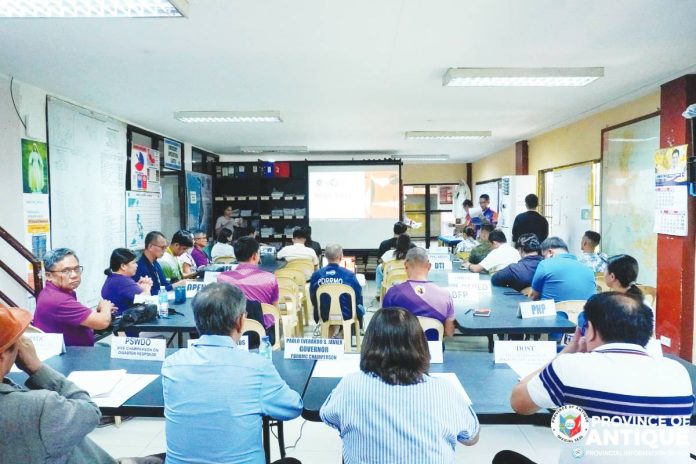
ANTIQUE — The Provincial Disaster Risk Reduction and Management Council (PDRRMC) has intensified its preparedness efforts as it convened for its first-quarter meeting to address the potential impacts of the looming El Niño phenomenon.
Council members discussed key intervention and mitigation strategies to cushion the province from the adverse effects of prolonged dry conditions, following an advisory from the Philippine Atmospheric, Geophysical and Astronomical Services Administration (PAGASA), which raised its ENSO Alert and Warning System to El Niño Watch status.
While conditions remain ENSO-neutral, PAGASA noted that the likelihood of El Niño developing in the coming months is increasing and may persist until August.
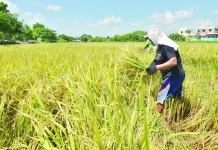
Among the major risks identified were extreme heat, heightened fire hazards, water shortages, agricultural losses, power supply concerns, and health issues such as heat stroke and dehydration.
Data presented by the Office of the Provincial Disaster Risk Reduction and Management Officer (OPDRRMO) showed that water shortage remains the primary concern. Based on consolidated reports from 2024—when the province declared a state of calamity due to El Niño—some 15 municipalities covering 183 barangays are expected to experience water disruptions.
Areas projected to experience high impact (24 percent) include the municipalities of Hamtic, Patnongon, and Tobias Fornier. Medium-impact areas (16 percent) include Sibalom, Valderrama, and Anini-y, while lower-impact areas (9 percent) include Barbaza, Bugasong, Belison, Laua-an, and Sebaste.
To strengthen resilience, the Department of Social Welfare and Development (DSWD) presented its risk resiliency initiative, Project LAWA at BINHI, which focuses on climate change adaptation and mitigation for vulnerable communities.
Meanwhile, the Department of Environment and Natural Resources (DENR) provided updates on water impounding systems, river management, and watershed protection programs aimed at securing water resources across the province.
The council also presented draft resolutions to further enhance disaster preparedness and response. These include the reconstitution and reactivation of the El Niño Task Force, the funding and implementation of small water impounding projects (SWIP), procurement of water tanks, and the conduct of province-wide earthquake and tsunami preparedness drills.
In addition, the council discussed the creation of a Provincial Crisis Committee in response to Executive Order No. 110, s. 2026, which declares a State of National Energy Emergency and authorizes a unified support package for key sectors.
PDRRM Officer Broderick Train emphasized the importance of early preparation and coordinated action among local government units, national agencies, and communities to mitigate the potential impacts of El Niño.
Gov. Paolo Javier also urged Antiqueños to take precautionary measures.
“Sa mga Antiqueños, paalala lang ngayong paparating ang El Niño, drink plenty of water to avoid dehydration. Magtipid din po tayo sa tubig at huwag itong sayangin dahil posibleng magkaroon ng kakulangan sa suplay. Maging handa at magtulungan po tayo,” the governor said./PN