



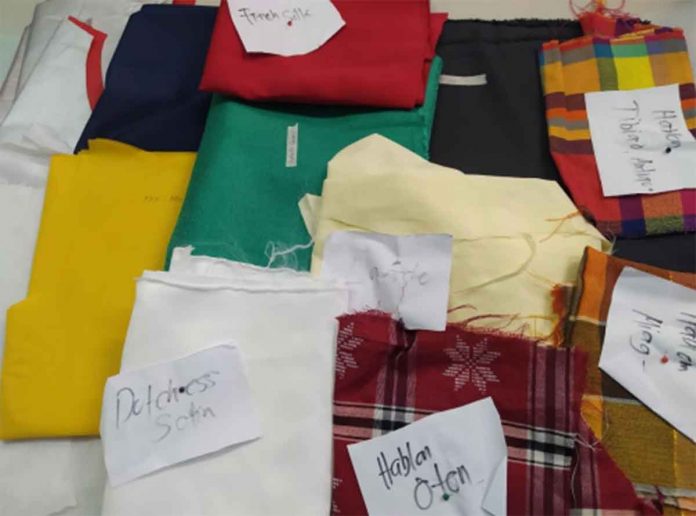
AS THE country looms to the threat of coronavirus disease 2019 (COVID-19) and at the same time experiences scarcity of medical resources last year, fabric personal protective equipment (PPEs) started emerging as the alternative. With that, the local fashion industry in Iloilo took the initiative and effort to provide free PPEs using locally available fabrics for the frontliners.
Although PPEs can be washed, disinfected, and used repeatedly, the durability span and deterioration rate of the material is still undetermined.
Recently, the Department of Science and Technology Region VI (DOST-6), through the Western Visayas Health Research and Development Consortium (WVHRDC), funded the project “Ultrastructural and Biophysical Characterization of Commonly Used Alternative Textiles for Hazmat Suits and Face Masks” of Patrick Joseph Jalandoni from The Medical City Iloilo.
The WVHRDC, one of the consortia of DOST-6, strengthens the system of health research collaboration in Western Visayas to develop and enhance the capacity of institutions within the region engaged and with interest in health research as a strategy to improve the current health conditions.
With an approved fund of P351,000, the study aims to describe and compare the fabrics used for PPEs through their breathability, filtration capacity, and permeability.
Moreover, it also targets to provide local baseline information on which fabrics will be best suited for creating local manufactured PPEs.
The study started on Jan. 4, 2021. The Iloilo Science and Technology University was tapped to select and collect 20 identified fabrics samples to be tested.
The study will proceed with the tests using an Improvised Henderson Apparatus to determine the fabrics’ permeability and breathability. Also, the fabric samples were sent to the University of the Philippines Visayas – Regional Research Center for morphological analysis.
The results of the study will guide the public to which fabric material they should look for when buying PPEs. It will also help the community in mitigating and controlling not just COVID-19 but also the spread of communicable diseases.(DOST-6)