


ILOILO City – The Capiz provincial government has tightened its defenses against African swine fever (ASF) by banning the entry of live hogs, pork and related products from Iloilo Province and Negros Island under an executive order signed this week.
ASF is a highly contagious and deadly viral disease affecting domestic and wild pigs but not humans.
Gov. Fredenil H. Castro issued Executive Order No. 21, Series of 2026, on June 24, 2026, imposing an immediate prohibition on the transport, delivery, sale and other movement of live pigs, pork, pork products and byproducts originating from or passing through areas identified as ASF-positive or ASF-suspected, particularly Iloilo Province and Negros Island.

The order likewise covers hog transport vehicles and traders operating from or traversing the affected areas.
Provincial officials said the measure was adopted to prevent the entry of the highly contagious animal disease into Capiz and shield the province’s swine industry from possible losses.
Negros Occidental recently confirmed ASF cases while Iloilo province may have suspected cases following reports of mysterious deaths of hogs in Dumangas town, prompting stricter implementation of quarantine and biosecurity protocols.
The Capiz provincial government order stressed the need to protect the livelihood of local hog raisers and preserve food security by preventing contaminated livestock and pork products from reaching the province.
Under the directive, border inspection teams are authorized to intercept prohibited shipments entering Capiz.
Confiscated animals or pork products may be seized, destroyed or returned to their place of origin at the owner’s expense, depending on the assessment of the Provincial African Swine Fever Task Force.
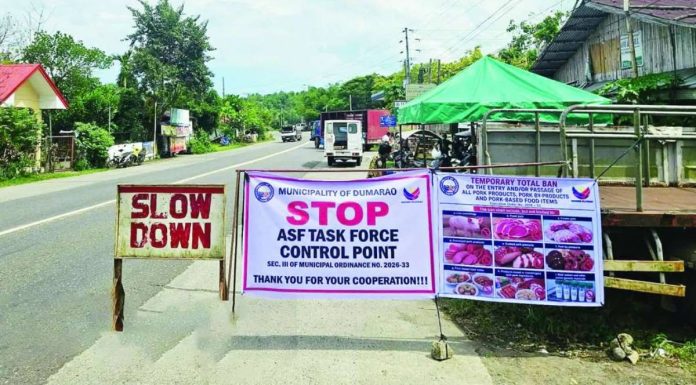
The provincial government will also maintain checkpoints at strategic land entry points, particularly in the municipalities of Tapaz, Dumarao, Pilar and Maayon, while veterinary quarantine personnel will continue monitoring cargo arriving through Capiz’s seaports and airport.
The executive order took effect immediately upon its signing and will remain in force until revoked or superseded. It also repeals or modifies provisions of Executive Order No. 32, Series of 2026, that are inconsistent with the new directive.
Last week, Iloilo Province has tightened inspections on all incoming swine shipments and ordered hog raisers to strengthen biosecurity measures. The provincial government, through the Office of the Provincial Veterinarian (OPVet), intensified monitoring at ports of entry and deployed collection teams to obtain blood samples from all incoming pigs to ensure they are free from ASF before entering the province.
The move comes as authorities investigate the deaths of several pigs from at least five backyard hog raisers in Dumangas.
Iloilo Provincial Veterinarian Dr. Darel Tabuada said investigators are still tracing the circumstances surrounding the deaths to determine whether the animals showed symptoms consistent with ASF or other diseases before they died.
ASF may cause high fever, loss of appetite, weakness, red or blotchy skin lesions, diarrhea, vomiting, coughing, difficulty breathing, abortion in pregnant sows, or sudden death. Because the disease can spread rapidly among pigs and can cause heavy losses to hog raisers, early reporting, testing and strict farm sanitation remain critical.
“Nag-install naman kita liwat sang collection team, nagapang–kolekta na kita sang dugo sa tanan nga incoming nga mga baboy halin sa other areas pakadto diri sa probinsya sang Iloilo to ensure nga safe sila kag wala sila sang dala nga balatian pakadto sa aton,” Tabuada said.
Tabuada explained that if laboratory tests detect ASF in any shipment, subsequent deliveries from the same source may be barred from entering Iloilo to prevent the disease from spreading to local farms.
He stressed that pig shipments remain allowed, provided traders and raisers can present a negative ASF laboratory result, a veterinary health certificate, and a valid shipping permit.
Beyond stricter port inspections, OPVet is also urging hog raisers to adopt more stringent farm-level biosecurity measures, particularly in areas classified under the green, yellow, and pink ASF zones.
Farms should have perimeter fencing, footbaths, and sanitation protocols requiring workers to bathe, clean themselves, change clothes, and wear clean slippers before entering pig pens.
Tabuada also warned against feeding pigs kitchen waste containing pork products, a practice known as swill feeding, which can contribute to the spread of ASF.
Hog raisers can help prevent ASF by limiting visitors to pig pens, disinfecting vehicles, footwear and equipment, separating newly acquired pigs before mixing them with the herd, avoiding swill feeding, buying pigs only from trusted and documented sources, and immediately reporting sick or dead pigs to veterinary authorities instead of burying or disposing of them without proper coordination./PN