



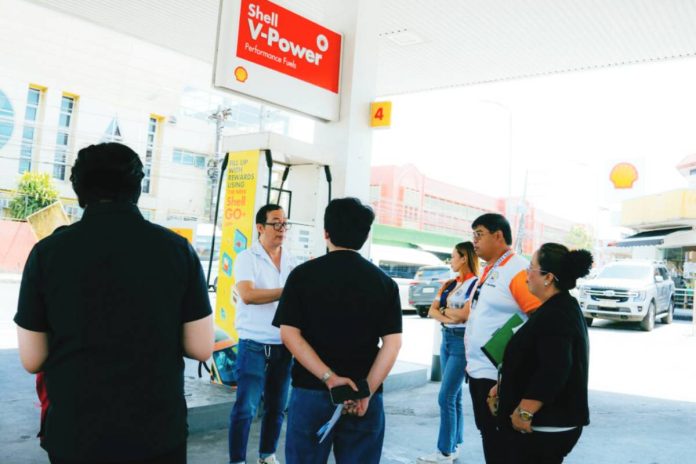
BACOLOD City — The local government unit (LGU) here has issued a public advisory reminding residents to use only approved fuel containers when purchasing petroleum products, emphasizing safety amid ongoing concerns over improper storage and transport.
Secretary to the Mayor Atty. Marty Go warned consumers against using makeshift or non-compliant containers, stressing that only petroleum-grade or fuel-grade containers should be used when buying fuel from gasoline stations.
The city government underscored that all containers must comply with guidelines set by the Department of Energy (DOE). Approved containers are specifically designed for fuel storage and transport, ensuring durability, leak resistance, and proper sealing.
Authorities highlighted that highly flammable substances like gasoline pose serious risks when stored in ordinary plastic bottles, thin containers, or improvised vessels not intended for petroleum use.
Improper containers, Go said, may lead to fuel leaks, the release of harmful vapors, contamination, or even fires during handling and storage.
He advised the public to use containers made for fuel handling, such as those composed of high-density polyethylene (HDPE) or other approved materials known for their strength and chemical resistance.
Containers must be specifically designed for fuel storage and transport, sturdy, clean, leak-proof, and properly sealed to prevent spills and vapor release.
Under DOE regulations, purchasing fuel using portable containers is allowed only for legitimate operational purposes. These include fishing and marine operations; sea transport services; generator sets for hospitals, telecommunications facilities, and government offices; agricultural machinery and equipment; telecommunication towers and related facilities; disaster response and rescue equipment; and businesses with valid operational requirements.
The Bacolod LGU also noted that in cases of potential fuel supply shortages, gas stations may impose temporary and reasonable purchase limits per vehicle. This measure aims to prevent panic buying and hoarding while ensuring fair access to available fuel.
Buyers may be required to present proof such as a business permit, purchase order, certification, or other valid documentation to justify the need for fuel in portable containers. Priority will be given to essential sectors, including emergency responders, hospitals, government operations, public transportation, and critical infrastructure.
Go emphasized that these measures are preventive and temporary and will be lifted once supply conditions stabilize.
“The simple act of using the correct container can prevent serious accidents,” he stressed, urging the public to prioritize safety at all times.
Meanwhile, amid the continuing fuel price hike, the Bacolod City government has strengthened monitoring efforts to ensure that petroleum price adjustments remain fair and transparent.
Mayor Greg Gasataya recently ordered the creation of Fuel Monitoring and Inspection Teams tasked with conducting random inspections of gasoline stations across the city./PN