



ILOILO City – Silence, laughter and even a simple click of the “share” button can perpetuate bullying. A child protection specialist at the Western Visayas Medical Center (WVMC) has urged young learners to break this cycle by standing up for victims, refusing to tolerate cruelty, and actively defending the rights of their peers both in schools and on digital platforms.
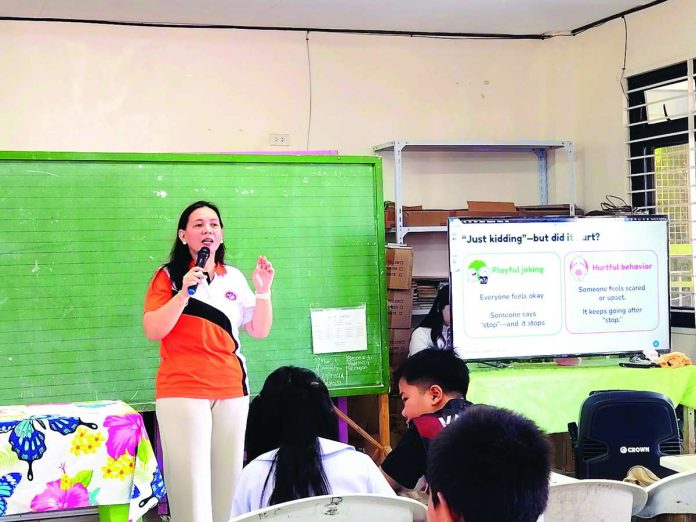
Dr. Mae Anne Rizalyn Allam, pediatrician and head of the WVMC’s Women and Children Protection Unit (WCPU), stressed that children must become “upstanders” rather than passive bystanders, emphasizing that every child has an inherent and unconditional right to safety, dignity, respect and protection from violence.
“You can be an upstander—the one who makes a difference,” she stressed.
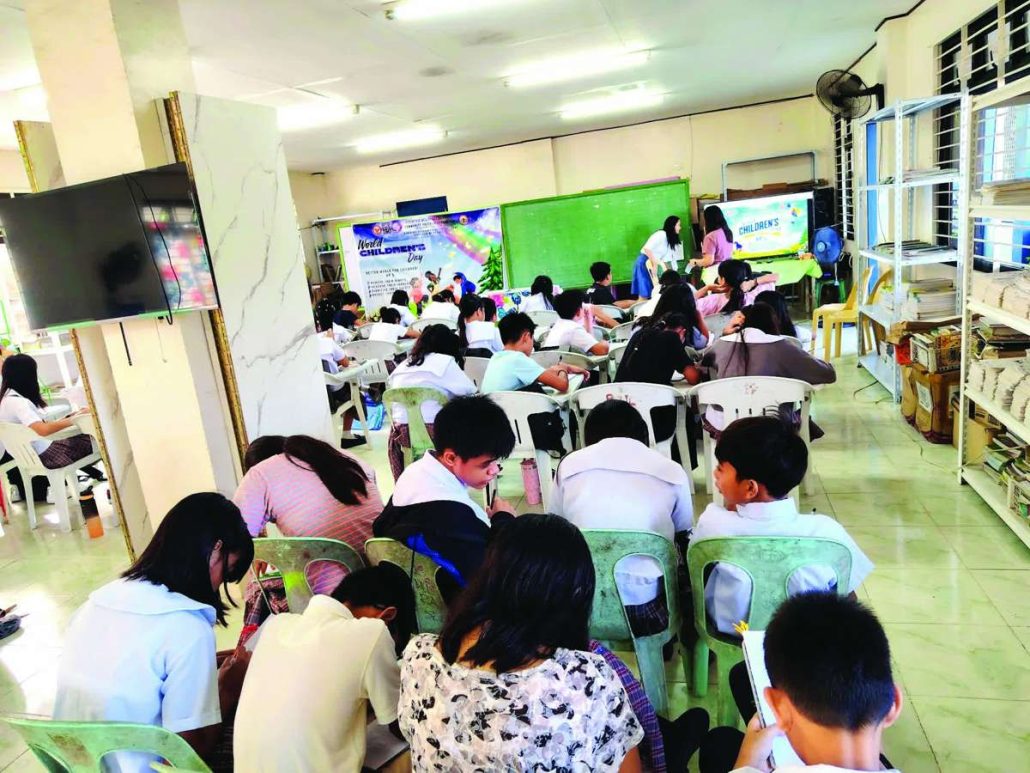
Allam addressed Grade 6 learners at A. Mirasol Elementary School in Mandurriao district on November 24 during an activity marking World Children’s Day, which is observed globally every November 20.
In her talk titled “Be Brave. Be Kind. Be Safe: Empowering Young Minds to Stand Up, Speak Out, and Stay Safe,” Allam warned against behaviors that normalize bullying, including laughing at someone being ridiculed and circulating humiliating content online.
“When someone is being teased and you sense they are already upset, don’t fuel it. Don’t laugh, don’t share the post, and don’t be part of the bullying,” Allam emphasized.
She encouraged students to extend emotional support to victims instead of ignoring their suffering.
“Rather than walking away when a classmate is publicly embarrassed or isolated, approach them quietly and ask a simple, grounding question: ‘Are you okay?’” she said.
FOUR FORMS OF BULLYING
Allam discussed four major forms of bullying addressed under Republic Act No. 10627, or the Anti-Bullying Act of 2013: physical, verbal, social and cyberbullying.
Physical bullying includes hitting, kicking, pushing, tripping, spitting and deliberately damaging or taking another student’s belongings.
Verbal bullying involves name-calling, persistent teasing, insults, derogatory remarks and threats, while social bullying includes deliberate exclusion, spreading malicious rumors and damaging another person’s friendships or reputation.
Cyberbullying, meanwhile, involves using smartphones, messaging applications, online games and social media platforms to harass, threaten, embarrass or impersonate others.
With bullying increasingly extending beyond school premises into digital spaces, Allam urged students to exercise empathy and restraint before posting or sharing content online.
“Ask yourself: How might I feel if this happened to me, or if I were in the same situation? Remember to pause and think before you post online, before you speak, or before you act,” she advised.
She also warned that “whatever you do online stays there and becomes available for others.”
Students were advised against forwarding hurtful messages, spreading rumors, circulating embarrassing photographs and posting derogatory comments. They were also reminded to respect the privacy and consent of their classmates and friends.
RIGHTS ARE NOT REWARDS
Drawing from her unit’s work with children affected by abuse, neglect and peer violence, Allam emphasized that children’s rights are neither privileges nor rewards for academic excellence, obedience or good behavior.
“You earn your rights not by being a good person, being excellent at something, or having good grades, or helping your parents with chores at home; that is not how you earn your rights,” Allam said.
“Actually, you earn your rights just by being you. Anyone who is born has rights, and that includes children,” she added.
She stressed that physical appearance, geographical origin, language, religion, gender, disability and economic status should never determine how children are treated.
“Your rights aren’t based kon ano hitsura mo, gwapo ka or gwapa ka, kon taga-Iloilo ka or taga-Manila ka,” she told the students.
“It doesn’t depend on the language you speak. If Englishera ka, it doesn’t mean damo ka rights. No. We are all equal,” she added.
“We all have equal rights. It does not depend on your religion,” she added.
“Gender is also not a basis for whether someone is treated fairly. Whether they have a disability is not a basis for treating people unfairly, nor does it matter whether their family is rich or poor—rights do not look at whether you are rich or poor. All of us have the same rights,” she stressed.
MAKING SCHOOLS INCLUSIVE
Allam also underscored the responsibility of schools to provide an inclusive learning environment by eliminating barriers that disadvantage children, particularly those with disabilities.
“Being fair means you give them the same chance of being successful,” Allam stressed.
“In school, it’s not fair kon wala kita sang alagyan for persons with physical disabilities who use wheelchairs. To keep a fair school environment, we must give a chance to those with disabilities—for example, for a child using a wheelchair, we must provide ramps so they can go to school,” she emphasized.
Other measures include providing enlarged reading materials for students with visual difficulties and assigning shorter pupils to front-row seats to ensure an unobstructed view of classroom lessons.
“We want to understand other people, and it’s called empathy, relating to our classmates or teacherss,” she said.
12 FUNDAMENTAL RIGHTS
The discussion also highlighted the 12 fundamental rights of Filipino children, anchored in national and international legal frameworks, including the 1987 Philippine Constitution, the United Nations Convention on the Rights of the Child, Republic Act No. 7610 and Presidential Decree No. 603.
These encompass the rights to be born well, enjoy a wholesome family life, be raised well, receive basic necessities, access resources necessary for a good life, obtain quality education, play and enjoy childhood, be protected from danger, live in a productive environment, receive state care when necessary, benefit from good governance, and enjoy freedom and peace.
These rights revolve around four fundamental pillars of child welfare: survival, development, protection and participation.
The activity was organized by the WVMC Department of Pediatrics through its Pediatric Residency Training Community Program Consortium, in cooperation with the Zonta Club Metro Iloilo.
It centered on the “4Ps” of child welfare: promoting children’s rights, preserving their innocence, prioritizing their safety and protecting their future.
Educational lectures, interactive games, raffle draws and a poster-making contest formed part of the celebration.
Allam stressed that children must be made aware of their rights as early as possible and empowered to help build an inclusive environment free from discrimination, bullying and school violence./PN