



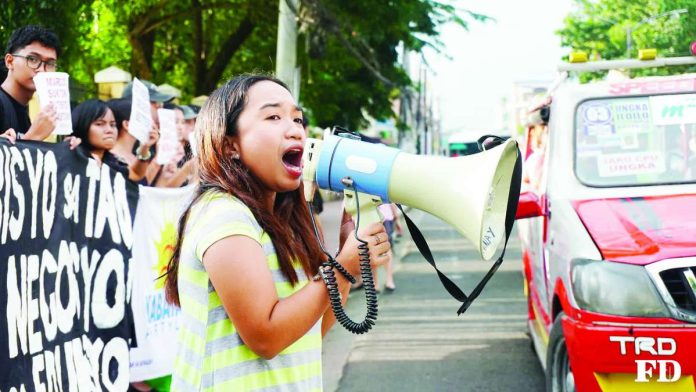
ILOILO City – Nearly half of the country’s 113 state universities and colleges (SUCs) face budget cuts under the proposed 2027 national budget, prompting youth and student organizations in Iloilo City to demand Senate intervention to prevent further deterioration of public education and protect students’ access to free tertiary education.
At least 49 SUCs are facing reductions in their proposed allocations, while the national government reportedly owes state universities and colleges an estimated P5 billion in unreimbursed funds covering the 2025–2027 period, raising concerns over the sustainability of the Universal Access to Quality Tertiary Education Act.
These funding concerns fueled a picket protest outside the main campus of West Visayas State University (WVSU) on October 12, where progressive youth and student organizations denounced the proposed P7.2-trillion national budget for 2027 as “anti-people.”
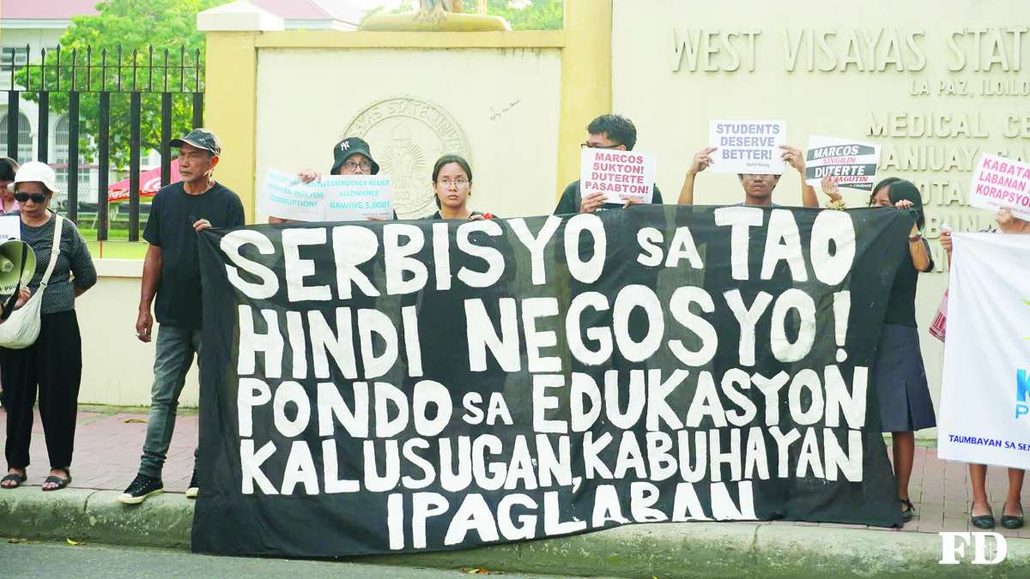
The demonstration coincided with the House of Representatives’ approval of House Bill No. 10858, or the 2027 General Appropriations Bill, on third and final reading.
Protesters accused lawmakers of prioritizing discretionary appropriations, flood control infrastructure and military spending over education, healthcare and other essential social services.
The youth groups warned that reductions in SUC funding, compounded by billions of pesos in unreimbursed government obligations, could undermine the delivery of free higher education and place additional financial pressure on public universities and their students.
They urged Congress to address the funding deficiencies before the proposed national budget becomes law.
EDUCATION BACKLOGS PERSIST
Beyond higher education, the protesters raised alarm over persistent deficiencies in the country’s basic education system, particularly the shortage of public school teachers and an estimated nationwide backlog of 159,000 classrooms.
The Department of Budget and Management (DBM) has cited a record P1.224-trillion allocation for education in the proposed 2027 budget, equivalent to approximately four percent of the country’s gross domestic product.
However, youth advocates argued that the amount remains inadequate to address longstanding shortages in educational facilities, improve learning conditions and provide cost-of-living adjustments for teachers.
They maintained that record-breaking appropriations would mean little if public schools continued to struggle with overcrowded classrooms, insufficient teaching personnel and inadequate resources.
The groups also questioned the government’s spending priorities, arguing that education and other basic social services should receive greater attention in the national expenditure program.
P100-B FLOOD CONTROL FUNDS QUESTIONED
The protesters likewise challenged the proposed restoration of more than P100 billion in flood control infrastructure funding, demanding comprehensive audits and accountability for previous expenditures before Congress authorizes additional allocations.
They argued that public funds should not be committed to new infrastructure projects without first ensuring transparency and proper accounting for earlier government spending.
The youth organizations also opposed proposed increases in appropriations for defense agencies and the National Task Force to End Local Communist Armed Conflict (NTF-ELCAC).
Citing documented reports of alleged red-tagging, surveillance and human rights violations involving campus journalists, labor organizers and youth leaders, the protesters called for the defunding of the task force.
They maintained that public resources would be better directed toward education and essential social services rather than programs they believe threaten democratic rights and civil liberties.
SENATE URGED TO REVERSE CUTS
With the proposed budget advancing to Senate deliberations, the youth coalitions called on senators to thoroughly scrutinize House Bill No. 10858 and reconsider appropriations that they believe undermine public welfare.
They specifically demanded the restoration of funding for affected state universities and colleges, stronger financial support for basic education, and increased allocations for social services.
The protesters also pressed lawmakers to examine controversial infrastructure and security appropriations before approving the final spending measure.
For the youth organizations, the Senate’s review of the proposed 2027 national budget represents a crucial opportunity to correct what they consider misplaced government priorities and ensure that public education receives the resources necessary to serve millions of Filipino students.
Their central demand was clear: Congress must prioritize education and the basic needs of Filipinos over expenditures they believe offer fewer direct benefits to the public./PN