


ILOILO City – The Commission on Human Rights (CHR) Region 6 said climate change is not just an environmental concern but a pressing human rights emergency, stressing the disproportionate impact of climate-induced disasters on vulnerable populations and calling for stronger government accountability and citizen action.
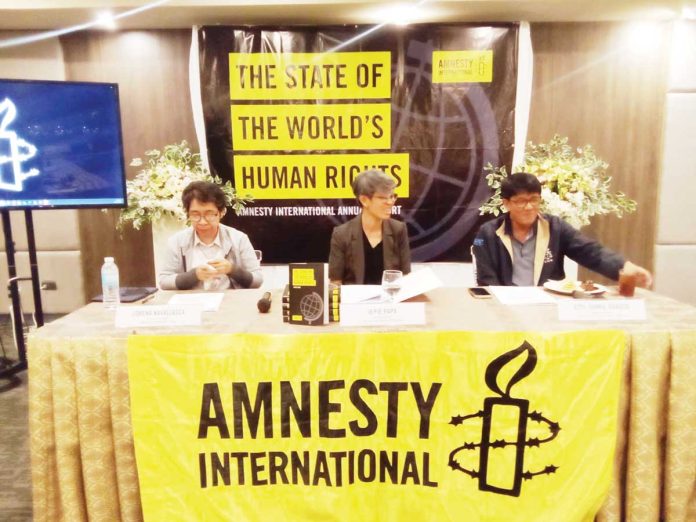
In a recent joint press briefing with Amnesty International Philippines on the “State of the World’s Human Rights,” CHR-6 director Atty. Jonnie Dabuco emphasized that the right to a healthy and peaceful environment is a fundamental human right — one that is increasingly threatened by the worsening climate crisis.
“Sometimes we forget that environmental rights are third-generation human rights,” Dabuco said. “The impact on people’s lives is so massive that protecting the environment must be seen as a shared and urgent responsibility.”
Dabuco pointed out that while everyone suffers from the effects of climate change, it is the poor and marginalized who bear the brunt of typhoons, flooding, and rising temperatures.
He cited the aftermath of 2013’s Super Typhoon Yolanda as an example, when families in makeshift homes were devastated, while more affluent individuals recovered quickly.
“The impact is always more severe on those without resources,” he said.
The CHR cited the commission’s 2022 inquiry on climate change, which framed the crisis through a human rights lens. The study found that the failure to address fossil fuel emissions and environmental degradation violates core rights — including the rights to health, clean air, livelihood, and life itself.
The agency reiterated calls for the Philippine government to be legally compelled to take urgent and concrete steps toward reducing carbon emissions and addressing the root causes of climate disruption. This includes a phased transition away from fossil fuels and the enforcement of climate justice measures.
CHR also urged the public to play a more proactive role in environmental protection, noting that grassroots participation is vital in curbing climate-related threats.
The warning comes after Climate Central, a US-based research group, revealed that the Philippines experienced an extended period of extreme heat from December 2024 to February 2025, with Western Visayas recording some of the highest heat indices in the country.
As the frequency and severity of climate-related calamities increase, CHR-6 reiterated that climate change is a generational challenge — one that demands a collective, rights-based response to safeguard both current and future generations./PN