

ILOILO City – A coordination bottleneck that could delay the simultaneous deployment of emergency agencies was exposed during Iloilo City’s first full-scale simulation exercise (SIMEX), prompting authorities to improve the communication and dispatch system even as the drill earned an overall “very satisfactory” rating.
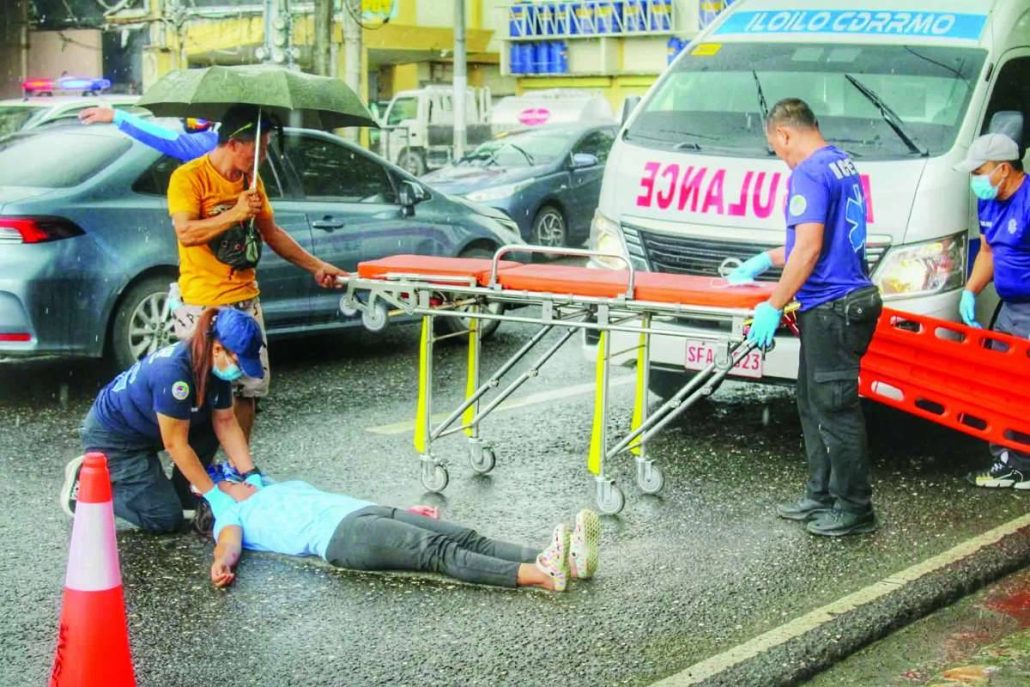
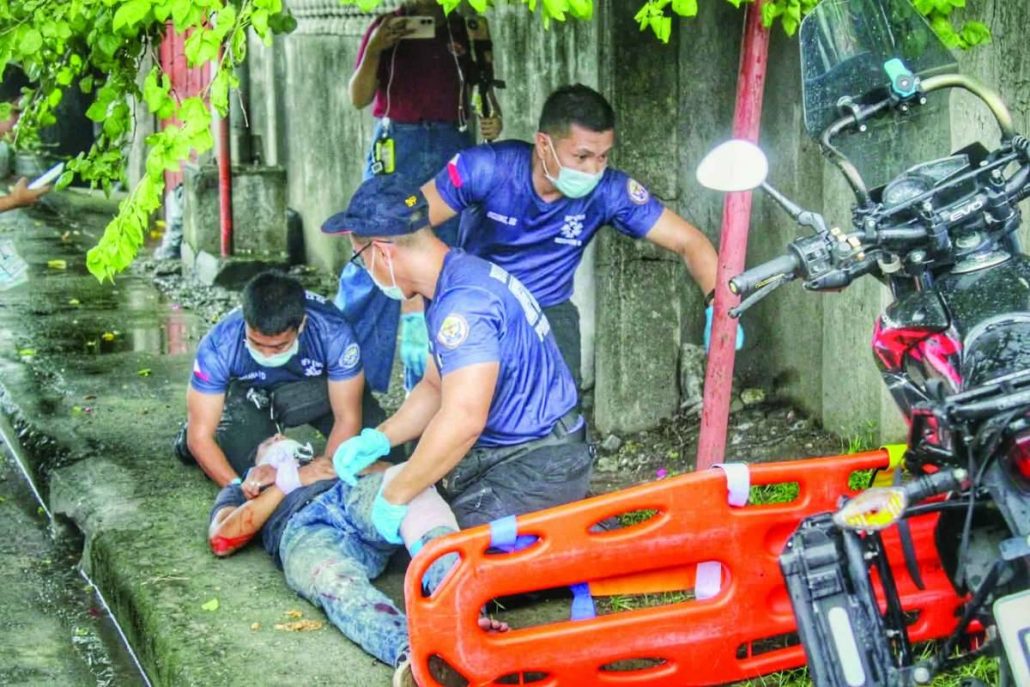
The exercise, held Wednesday, Sept. 16 along McArthur Highway in Barangay Buhang, Jaro district, simulated a motorcycle accident involving two victims and tested the response time, coordination and resource utilization of the city’s emergency response units.
Darwin Papa, head of the Disaster Response Division of the City Disaster Risk Reduction and Management Office (CDRRMO), said the exercise showed satisfactory performance in response time and resource utilization once the individual units were activated.
“First of all, we really tested the response time of our units. So far, in terms of time, coordination and resource utilization, we saw satisfactory performance. Specifically, in terms of time and resource utilization, the performance was satisfactory,” Papa said.
But the drill uncovered a weakness in the city’s existing dispatch system: emergency agencies must still be contacted individually after an emergency call is received.
“We encountered an issue in terms of coordination. Given that during the activation of our dispatch, we also have to relay the information to other agencies like the BFP (Bureau of Fire Protection), PNP (Philippine National Police) and POSMO (Public Order and Safety Management Office), this can create a delay because our current setup requires us to call them one by one,” he said.
Despite the coordination issue, most agencies posted quick response times after activation.
The city police unit responding from the Iloilo City Action and Resilience (ICARe) Center in Bankers Village, Jaro reached the simulated accident scene within two minutes.
Personnel of POSMO arrived within one minute after activation from their operations center, while traffic enforcers were already positioned near the Buhang area.
The BFP arrived within three minutes.
The CDRRMO’s medical emergency services, however, took about 10 minutes to reach the simulated patients because nearby ambulances were unavailable.
Papa said ambulances assigned to Bankers Village and Balantang were either responding to actual calls or out of service. One unit was undergoing disinfection after transporting a patient, forcing the CDRRMO to dispatch the nearest available ambulance from Ungka.
The ambulance traveled through Circumferential Road before reaching the simulation site.
“So far, being the first exercise, we already expected that there would be issues and concerns. We were also affected somewhat by the weather. The performance was considered very satisfactory, with only one area — coordination — where we fell below our satisfactory level,” Papa said.
The city government launched the weekly SIMEX program to continuously test the operational readiness of emergency responders, reduce response delays and strengthen joint command coordination across Iloilo City.
Using the network of ICARe Centers, the exercises will examine the entire emergency response chain — from receipt and processing of an emergency call to dispatch, travel and arrival of responders.
Aside from response time, the drills will assess interoperability, joint command, communication, personnel deployment and resource management among the PNP, BFP, POSMO and CDRRMO.
Operational leadership will rotate among the four agencies, while scenarios will change weekly to cover fires, rescue operations, mass-casualty traffic incidents, flooding, extrication and other public safety emergencies.
Each drill will be evaluated by an Exercise Control or Red Team composed of representatives from the PNP, BFP, CDRRMO and POSMO.
The Iloilo City Hall Press Corps will also serve as crisis communication evaluators, assessing media handling, public information, messaging and field reporting during emergencies.
An Immediate After-Action Review will follow every exercise to identify strengths, operational bottlenecks and areas for improvement. A weekly performance matrix will also track response benchmarks, coordination gaps and resource readiness.
Papa said findings from the inaugural exercise will be used to strengthen the city’s emergency response system, particularly inter-agency coordination and communication./PN