

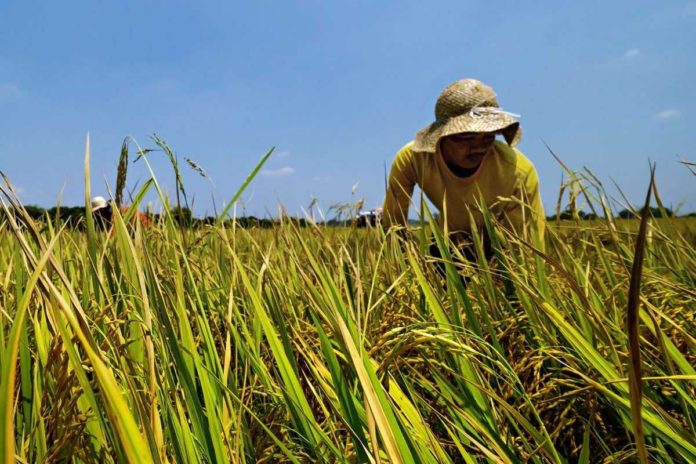
THE Department of Agriculture (DA) is doubling down its efforts to modernize the country’s rice farming sector.
Agriculture secretary Francisco Tiu Laurel Jr. yesterday said the DA is stepping up work to mechanize farming, build more agricultural infrastructure and adopt latest technologies to improve rice production, increase farm yield and grain supply, minimize imports, and lower prices of the national food staple.
In a speech at the Ugnay Palay: The 35th National Rice R4D Conference in Nueva Ecija read by Laurel, President Ferdinand Marcos Jr. said the government is adopting a science-based approach to rice farming to increase yield and establish “a sustainable rice value chain.”
“I am optimistic that all concerned government agencies, partners, and stakeholders will continue to explore ways to enhance existing agricultural technologies to improve and strengthen the rice industry, in line with our goal of a food-secure nation,” said the President in his remarks read by the DA chief.
“Rest assured that the government shall continue to give primacy to research and development to ensure a sustainable rice value chain. We will also continue to support the initiatives undertaken by the PhilRice in introducing modern agricultural biotechnology to improve rice production,” said Marcos.
Laurel, likewise, said that the government “is moving, with a sense of urgency” to widen irrigation coverage, set up more drying facilities and other infrastructures needed to boost rice yield.
“Ultimately, our aim is to minimize rice importation to achieve food security and sufficiency,” he said.
The push for agricultural modernization will also focus on equally important sectors like livestock, poultry, fisheries and high value crops to ensure that affordable food items are readily available and accessible to Filipino consumers, according to the President, who held the DA’s top post for over a year since he assumed the presidency.
Citing DA data, Laurel said that with improved rice harvest so far this year, the country has imported around 2.8 million tons, “one million tons less than the volume of grains bought from abroad last year.”
The DA chief said that minimizing import of rice and other agricultural products should also help improve the income of farmers and fisherfolk, create more jobs in a sector that already provides employment to one in every four Filipinos, and reverse the shrinking trend of agriculture’s contribution to economic growth. (GMA Integrated News)/PN