


ILOILO City — Western Visayas is confronting a widening basic education access problem as fewer learners are entering school while more struggle to remain and complete their studies, with key enrollment, retention and completion indicators deteriorating over the past three school years.
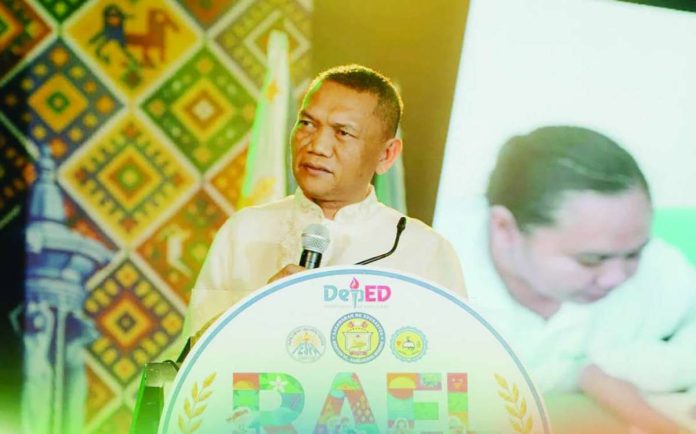
Department of Education (DepEd) Region 6 director Dr. Cristito Eco sounded the alarm during the First Regional Assembly of Education Leaders on August 18, citing declining Gross Enrollment Rates (GER) across elementary, junior high school and senior high school from School Year 2022-2023 to SY 2024-2025.
The decline was particularly pronounced in junior high school, where GER dropped from 103.89 percent in SY 2022-2023 to 92.18 percent in SY 2024-2025.
Elementary GER likewise fell from 95.57 percent to 90.91 percent during the same period.
Senior high school, despite maintaining the highest GER among the three levels, was not spared. Its rate declined sharply from 113.45 percent in SY 2022-2023 to 108.21 percent the following year and further to 100.19 percent in SY 2024-2025.
But the regional education problem goes beyond declining enrollment.
Eco said transition, retention, promotion, completion, cohort survival and graduation rates have also fallen, while repetition and school leaver rates have increased — indicating that Western Visayas faces challenges not only in bringing children into classrooms but also in keeping them there until they finish basic education.
“The data tells us that there is an alarming concern in terms of access. Our educational system, one of the largest institutions in Western Visayas, must ensure that no learner is left behind, regardless of their circumstances,” Eco emphasized, reinforcing the importance of inclusive education.
As of January 17, 2026, Western Visayas has 3,444 schools — 2,841 public schools, 594 private institutions, and nine State Universities and Colleges (SUCs) and Local Universities and Colleges (LUCs).
These schools serve 1,079,924 learners with 46,927 teachers and 4,634 non-teaching personnel. The Alternative Learning System (ALS), meanwhile, serves another 22,478 learners through 1,205 Community Learning Centers.
Despite the size of the regional education system, DepEd-6 data underscore the challenge of reaching learners whose circumstances make access to education more difficult.
“Education must reach every learner—regardless of their location, disability, or individual circumstances,” stated Eco.
“No learner should ever be left behind. Inclusive education is not just a policy; it is a profound moral obligation and a testament to social justice in action,” he added.
Data from DepEd-6’s Learning Information System as of January 2026 show that the regional school system serves 32,947 Special Needs Education learners, 2,413 Muslim learners, 49,985 Indigenous Peoples learners and 96,496 learners belonging to Pantawid Pamilyang Pilipino Program households.
It also covers 34,279 learners from Geographically Isolated and Disadvantaged Areas, 247,509 learners affected by disasters and 2,577 learners affected by armed conflict.
“This educational system is so far, among the largest institutions in Western Visayas and every single day, thousands of educators work tirelessly to make learning habit,” Eco stressed.
The regional education chief pointed to socioeconomic pressures, household poverty and transportation difficulties among the barriers that could prevent learners from entering school and progressing through the education system.
Eco presented the figures during the first-ever Regional Assembly of Education Leaders at the Iloilo Convention Center, which runs from August 18 to 20.
The three-day gathering, themed “Stronger Education Leaders, Better Schools, Brighter Future,” brings together education leaders from across Western Visayas to strengthen leadership, collaboration and strategies for improving the region’s education system./PN