



ILOILO City – Parents must become the first line of defense against security threats involving their children, according to the Department of Education (DepEd) Region 6 as it tightens protective measures across Western Visayas schools while pointing out that its authority ends beyond the campus.
DepEd-6 has rolled out a multi-layered security system across its eight Schools Division Offices, combining police visibility, barangay tanods, school entrance inspections and stronger parental involvement to protect nearly one million learners, teachers and personnel.
But Regional Information Officer Hernani Escullar Jr. stressed that even the strictest school security measures cannot substitute for vigilance at home, particularly because privacy rules and learner protection policies limit what school authorities can inspect.
“What we can do in DepEd is to make sure learners are safe inside the school. Outside of that, our jurisdiction has limits due to privacy laws and learner rights,” Escullar explained.
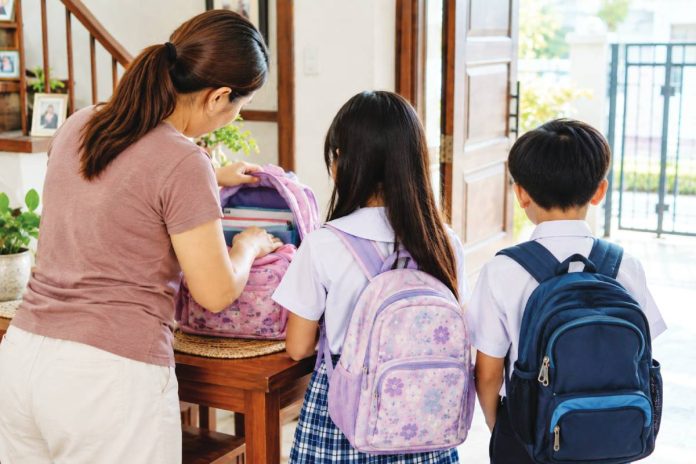
“This is why the ultimate role rests on the parents — they have the absolute right and duty to inspect their children’s personal belongings, bags, and mobile phone contents every single day,” he added.
The regional office has issued a memorandum directing all eight Schools Division Offices to strengthen safety protocols and coordinate with law enforcement agencies.
“In DepEd Region 6, we already issued a memorandum outlining safety measures for our eight schools division offices. This includes all the necessary protocols to ensure our schools are safe, which involves coordinating with law enforcement agencies like the PNP to maintain police visibility outside our campuses,” Escullar said.
Police personnel and patrol vehicles are being deployed around school premises, particularly during peak arrival and dismissal hours, while barangay tanods are being tapped to reinforce security outside campuses.
“We are also tapping barangay tanods to provide additional security measures for our learners, especially since most schools across the region are now conducting bag checks upon entry. Therefore, we need the help of these civilian officers,” Escullar added.
Bag inspections have become a key component of the security measures, although DepEd-6 clarified that students cannot be required to use transparent bags.
Some schools have adopted clear bags to make visual inspections faster, but students who cannot afford them must still be allowed to enter and will instead undergo other security checks.
“While some schools are already using transparent bags, having one is not a condition for a student to enter. It just helps speed up the security check. For those who can’t afford a clear bag, we implement other measures to make sure their bags are completely safe and free of illegal items,” Escullar explained.
Schools have also tightened restrictions on unauthorized mobile phone use during class hours.
DepEd-6, however, stressed that security measures must respect learners’ privacy and rights. Random and invasive searches are prohibited under the Learner Rights Protection policy.
If a visual inspection reveals a suspected illegal object, teachers must discreetly bring the student to the principal or guidance counselor and immediately notify the parents.
DepEd-6 is also strengthening the role of Parent-Teacher Associations, with school safety, student mental health and community vigilance now required topics during PTA assemblies.
Escullar reiterated that parents have broader authority over their children’s belongings than school personnel, whose actions are constrained by learner protection and privacy rules.
“Parents really have that right. Because for us in DepEd, our rules and what we can do there are limited, because we have the Learner Rights Protection and we have to protect the privacy of our learners,” he added./PN