
BACOLOD City — The Department of Education (DepEd) is strengthening partnerships with local government units, civil society organizations, the Armed Forces of the Philippines (AFP), and other stakeholders to help address classroom shortages and improve education delivery in the Negros Island Region (NIR).
The initiative was highlighted during the Regional Brigada Eskwela 2026 kick-off program held June 1 at Talisay Hope GK Sibol Elementary School in Talisay City, Negros Occidental.
Speaking before education leaders, local officials, and community partners, DepEd Undersecretary Fatima Lipp D. Panontongan underscored the importance of a whole-of-government and whole-of-community approach in addressing challenges faced by the education sector.
“Education is no longer the sole responsibility of the DepEd. The success of our programs depends on the active participation of our partners in government, the private sector, and the community,” Panontongan said.
She cited key reforms being implemented under Education Secretary Sonny Angara, including the institutionalization of the Academic Recovery and Accessible Learning (ARAL) Program to address learning losses among students and the continued hiring of additional teaching and non-teaching personnel.
Panontongan said collaboration among stakeholders has become increasingly vital as schools continue to grapple with infrastructure concerns, particularly the shortage of classrooms nationwide.
Her statement came as DepEd-NIR disclosed that the region still lacks more than 2,000 classrooms ahead of the opening of classes. The shortage includes facilities damaged or destroyed by typhoons and other natural calamities that have affected Negros Island in recent years.
To help address the deficit, she said local government units, civil society groups, AFP engineering units, and other partner organizations have been authorized to participate in classroom construction and rehabilitation projects.
The expanded partnership framework is expected to accelerate the implementation of school infrastructure projects and provide learners with safer and more conducive learning environments.
DepEd-NIR Regional Director Dr. Ramir B. Uytico said the classroom shortage has already been raised with Angara and that efforts are underway to secure additional resources.
“We continue to coordinate with local government units and other stakeholders to obtain funding support and expedite the construction and rehabilitation of classrooms,” Uytico said.
He expressed optimism that stronger collaboration among national agencies, local governments, and private partners would help bridge infrastructure gaps amid rising student enrollment across the region.
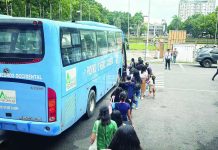
The Brigada Eskwela 2026 regional launch showcased this collaborative effort, gathering education officials, local government leaders, volunteers, and private sector partners in preparation for the opening of classes.
Activities included a motorcade, ceremonial tree planting, partner recognition ceremonies, and resource turnover activities aimed at mobilizing support for public schools.
The Police Regional Office–Negros Island Region (PRO-NIR) also joined the event, reaffirming its commitment to supporting educational initiatives through community engagement.
Representing PRO-NIR, Police Capt. Everly B. Canto and personnel from the Regional Community Affairs and Development Division participated in school preparation activities and highlighted the police organization’s continuing partnership with DepEd and local governments.
According to PRO-NIR, its participation reflects its commitment to helping create safe, learner-friendly school environments while promoting youth development, civic responsibility, and nation-building.
As Brigada Eskwela 2026 officially rolls out across the region, education officials expressed confidence that stronger partnerships among government agencies, uniformed services, civic organizations, private groups, and community volunteers will play a key role in reducing classroom shortages, improving school facilities, and expanding learning opportunities for students in the Negros Island Region./PN