

BACOLOD City – The Department of Energy (DOE) has acknowledged a critical power-generation gap in the Visayas, admitting that the region lacks sufficient baseload capacity to keep pace with rising electricity demand and prevent recurring grid alerts.
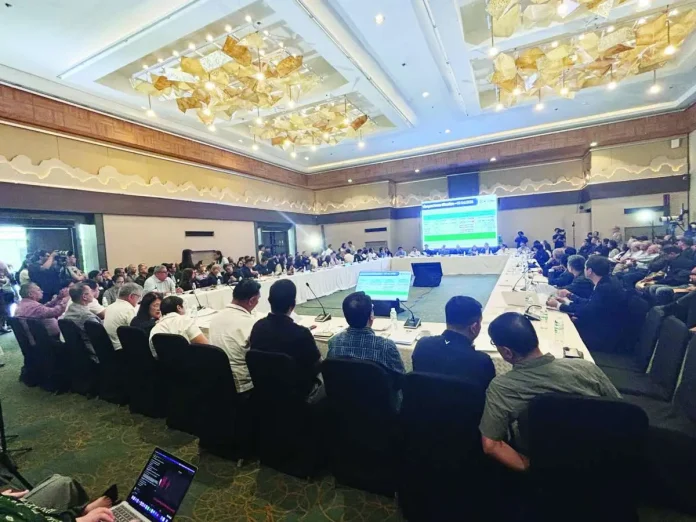
Energy Secretary Sharon Garin made the admission during a joint congressional hearing of the House Committees on Energy, Visayas Development, and Legislative Franchises in Bacolod City on Oct. 3, where lawmakers grilled energy officials and industry stakeholders over continuing power instability in the Visayas Grid.
“If we look at Visayas on island assessment… may kulang talagang baseload sa Visayas,” Garin told lawmakers.
The energy chief noted that the problem becomes particularly critical at night when solar generation drops while electricity demand remains high.
Negros, she explained, produces excess electricity during the day, but much of that supply comes from solar farms. Without adequate baseload generation, the island remains heavily dependent on power imported from other areas through the interconnected grid.
“So saan nakukuha yung kulang sa gabi? Negros alone cannot survive because there is not enough baseload,” Garin said.
Garin warned that an outage at a major power plant in Panay could immediately place additional pressure on Negros because of the island’s dependence on interconnection.
“We’ve been trying to assess how do we make it independent bago pa mag-alerts,” she said.
The DOE chief informed lawmakers that the generation shortfall could persist until 2028, underscoring the long lead time required to develop and commission new power plants. She warned that the Visayas could again face grid alerts if even a single major plant goes offline.
“Isang power plant lang mawawala, mag-alert ulit tayo, and that is not good for business,” Garin said.
The disclosure drew sharp criticism from lawmakers over the government’s failure to anticipate the supply gap despite years of projected growth in electricity demand.
ACT Teachers Party-list’s Rep. Antonio Tinio directly challenged the DOE’s planning.
“Obviously, this is a failure in planning,” Tinio said. “Sabi nyo kanina, three years ang kailangan. It should have been projected way before, but it wasn’t done. Kulang ang baseload, kaya ito tayo ngayon.”
House Committee on Energy chair Rep. Jose Alvarez questioned why the Visayas continues to experience power alerts despite the interconnection of the Luzon, Visayas, and Mindanao grids, which was designed to allow power sharing among regions.
Alvarez pointed out that the interconnected system should allow electricity to be transmitted from areas with excess supply to areas experiencing shortages.
Garin maintained that the transmission infrastructure itself is functional.
“The grid is functioning,” she said, explaining that the problem stemmed from the simultaneous forced outages of several generating units, which drastically reduced available capacity.
Mindanao also experienced generation issues during the same period and entered Red Alert status, limiting its ability to export surplus power to the Visayas.
Rep. Ferdinand Hernandez of South Cotabato’s 2nd District emphasized that the return of several generating units immediately stabilized the grid.
“Kaya walang grid alerts kasi nakabalik na ang mga power plants, meaning may supply,” Hernandez said. “Malinaw na hindi transmission ang issue. May demand ka, may supply.”
Garin cited Cebu’s rapidly expanding electricity demand as another major hurdle.
“Cebu is growing exponentially and projects are not keeping up with the demand. We have to catch up. We still have time to catch up,” she said.
As a short-term fix, Garin said the DOE is turning to battery energy storage systems (BESS) to bridge the gap between daytime generation and evening peak demand. She noted that the DOE asked the National Grid Corporation of the Philippines (NGCP) to contract battery storage facilities as early as May.
“Kasi yung Visayas may excess sila, puwede itago sa batteries,” Garin said, explaining that batteries could store excess solar energy generated during the day and discharge it during evening peak hours.
But while battery storage could provide a temporary buffer, the congressional hearing underscored a deeper problem: the Visayas needs additional dependable generation capacity to keep up with demand./PN