



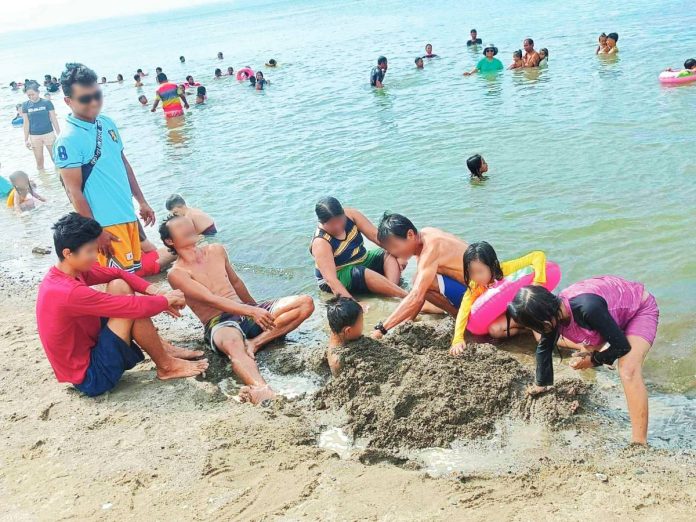
ILOILO — With the annual Holy Week travel surge and summer outings set to peak, the Department of Health (DOH) has raised the alarm over preventable drowning incidents, warning Western Visayans that complacency in water safety could turn leisure trips into tragedies.
DOH Region 6 is intensifying its public campaign as families flock to beaches, pools, and rivers — environments where risks sharply increase, especially for children and inexperienced swimmers.
Penny Exocet Hubag, health education and promotion officer at DOH-6, stressed that vigilance must be non-negotiable as the region enters its busiest recreation period.
“Do your part, ‘B’ water smart,” Hubag said, underscoring the agency’s push for proactive prevention.
The health department rolled out four key safety directives — Bantay, Bida Salbabida, Barrier, and Bawal ang Alak — as frontline defenses against drowning.
Under Bantay (Supervision), Hubag emphasized constant adult attention.
“Always keep a watchful eye on children in and around water. It only takes a moment for a child to find themselves in a dangerous situation,” she cautioned.
For Bida Salbabida (Use of Life Jackets), she highlighted the critical role of flotation devices: “While some may consider life vests unnecessary for shallow waters, they provide an essential layer of safety, especially for inexperienced swimmers.”
Communities were also urged to implement Barrier (Safety Precautions) by securing water hazards.
“We encourage families to cover wells and create barriers around pools or bodies of water, particularly if there are children in the household. It’s crucial to mitigate risks in areas where children play,” Hubag said.
Equally critical is Bawal ang Alak (No Alcohol) during swimming activities.
“While socializing at beaches and pools is common during summer, we urge individuals to refrain from drinking alcohol before or during swimming activities, as it impairs judgment and coordination,” she added.
DOH-6 underscored the gravity of the issue, citing global and national data that place drowning among the leading causes of preventable deaths.
The World Health Organization estimates 236,000 fatalities worldwide each year, while the Philippines records around 3,604 drowning deaths annually — roughly ten lives lost daily.
Children remain the most vulnerable, with drowning ranking among the top causes of death in multiple age groups.
Regional data also point to Western Visayas as among the areas with notable drowning incidents, alongside CALABARZON, Ilocos Region, and Central Luzon.
As of 2025, the region has already logged eight drowning cases, including two fatalities — incidents linked to intoxication and accidental circumstances.
“As of 2025 in Western Visayas, we have reported eight drowning incidents with two reported mortality, based on our Online National Electronic Injury Surveillance System (ONEISS) of the Department of Health (DOH),” Hubag said.
She appealed to the public to remain cautious as outings increase.
“We urge all community members to remain mindful of water safety, especially during summer activities,” Hubag implored.
“This summer, while families aspire to create joyful memories at beaches, pools, and waterways, safety must remain a priority. By adhering to these guidelines and adopting preventive measures, communities can work together to reduce drowning incidents and ensure a safe and enjoyable summer for everyone,” she added. DOH-6 emphasized that the campaign extends beyond the Holy Week and summer season, positioning water safety as a year-round public health priority through sustained education and community engagement./PN