




ILOILO — Dueñas became the first municipality in this province to declare a state of calamity due to a dry spell after three months of little to no rainfall left rice and other crops withering, the Provincial Agriculture Office (PAO) confirmed.
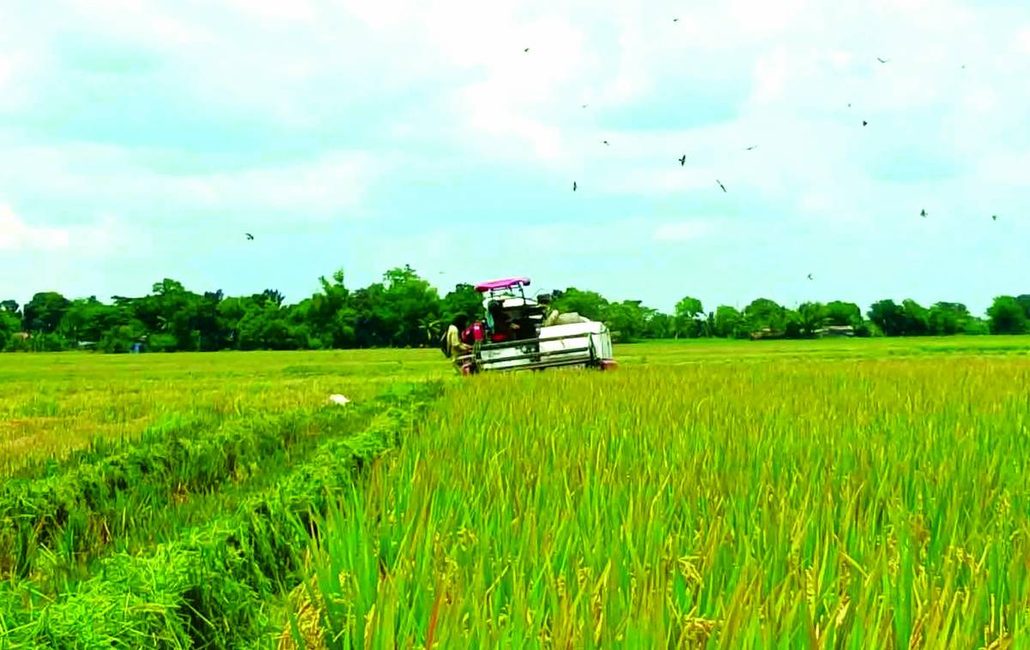
Prolonged dry spell has damaged more than 400 hectares of crops across at least eight towns, including Dueñas, and affected over 200 farmers, prompting provincial authorities to review whether existing El Niño preparations and funding are enough to confront the worsening conditions.
According to PAO acting head Geron Magbanua, Dueñas declared a state of calamity last week of September.
Three months of inadequate rainfall that left available water insufficient to sustain irrigation and resulted in crop damage, said Magbanua.
More than 100 hectares of rice, high-value crops and other agricultural areas in Dueñas have already been reported damaged, with assessments still ongoing.
“Nagkalalaya ang ila mga tanum nga mga palay,” Magbanua said.
But the agricultural damage is not confined to Dueñas.
Magbanua said the PAO has received reports of crop damage in seven other municipalities due to the lack of rainfall, including Santa Barbara and Lambunao.
Around 300 hectares of crops have been affected in these seven towns, bringing the initial province-wide total to more than 400 hectares.
More than 200 farmers have so far been reported affected, although Magbanua said the figure still needs validation.
The PAO has yet to determine the total value of agricultural losses as damage reports from the affected municipalities continue to be consolidated.
The widening impact of the dry spell has also raised concerns over whether the provincial government’s existing preparations and funds will be sufficient should conditions worsen.
Magbanua said mitigating measures had already been put in place even before the onset of El Niño to provide assistance to farmers.
He acknowledged, however, that existing preparations — particularly the funds allotted for El Niño response — may prove insufficient.
Magbanua said he met last week with Gov. Arthur Defensor Jr. and members of the province’s Disaster Cluster to review existing mitigation measures and the funds allocated for the response.
The El Niño Task Force is scheduled to meet this Tuesday, Oct. 6, to determine whether adjustments to the province’s mitigation measures and resources are necessary to ensure assistance reaches all affected farmers.
With damage reports still coming in, the extent of agricultural losses from the prolonged dry spell could increase further.
6-MONTH DRY SPELL THREATENS WV
Western Visayas is bracing for a prolonged six-month dry period beginning this October, with a very strong El Niño threatening to trigger water shortages, drought, extreme heat and mounting pressure on agriculture and power supply through March 2027.
The Philippine Atmospheric, Geophysical and Astronomical Services Administration (PAGASA) warned that rainfall across the region is expected to fall below normal in October and November before deteriorating to way-below-normal levels from December 2026 to March 2027.
El Niño is the warm phase of the El Niño-Southern Oscillation (ENSO), a recurring climate pattern characterized by unusually warm sea-surface temperatures in the central and eastern equatorial Pacific Ocean. The phenomenon disrupts normal atmospheric circulation and rainfall patterns and, in the Philippines, generally increases the likelihood of below-normal rainfall, dry spells and drought in affected areas.
A “Super El Niño” is a popular term for an exceptionally intense or very strong El Niño, when warming in the tropical Pacific becomes particularly pronounced. “Super El Niño” is not a formal PAGASA classification; meteorological agencies generally describe exceptionally intense events as very strong El Niño episodes. Such events can produce stronger disruptions in rainfall and temperature patterns, although their exact effects vary by location.
Engr. Ferdinand L. Rubin Jr., weather specialist at PAGASA-Iloilo, said during a scientific forum in Iloilo City that the prolonged rainfall deficit could set off interconnected problems affecting water, food production and energy as temperatures rise.
“Water crisis is very possible. Kun kulang ang ulan. Wala clouds, so there are hotter temperatures, of course there will also a crisis sa heat,” Rubin said, adding that increased use of air-conditioning units could further strain the energy sector.
“Cascaded ‘yan. Interrelated ang mga problema sa heat,” he added.
PAGASA’s rainfall outlook indicates that drought conditions could develop across the country from January to March 2027, while Iloilo Province and Iloilo City could experience dry spell and drought conditions toward the end of the first quarter./PN