


[av_one_full first min_height=” vertical_alignment=” space=” custom_margin=” margin=’0px’ padding=’0px’ border=” border_color=” radius=’0px’ background_color=” src=” background_position=’top left’ background_repeat=’no-repeat’ animation=”]
[av_heading heading=’EDITORIAL | The hand that rocks the cradle’ tag=’h3′ style=’blockquote modern-quote’ size=” subheading_active=’subheading_below’ subheading_size=’15’ padding=’10’ color=” custom_font=”][/av_heading]
[av_textblock size=” font_color=” color=”]
Sunday, May 14, 2017
[/av_textblock]
[av_textblock size=” font_color=” color=”]
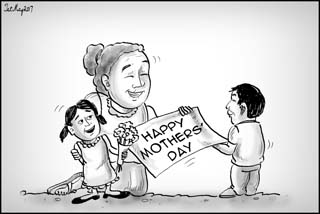
THE HAND that rocks the cradle is the hand the rules the world. As we mark Mother’s Day today, let us acknowledge our country’s potential to lead the global effort to achieve gender equality and women empowerment.
It is good that just this March, the Senate approved the Expanded Maternity Leave Law – a multi-pronged measure on improving maternal healthcare, reducing child mortality, and promoting breastfeeding. The measure provides that all female workers, regardless of civil status or legitimacy of her child, should be granted 120 days maternity leave with pay and an option to extend for another 30 days without pay. Single mothers, on the other hand, would be granted a total of 150 days maternity leave with pay.
This is an important women empowerment measure because when mothers are given enough time to recuperate from childbirth and care for their newborns, they feel more fulfilled as mothers, which will definitely affect their emotional well-being, give them more confidence, and allow them to be prepared again to embark on a more challenging role of being working mothers and equal partners of men in nation-building.
The country already has several laws on gender equality and women empowerment, and the implementation of these policies is improving through the years – Anti-Violence Against Women and Children Act, Anti-Discrimination Against Women Act, Women in Development and Nation Building Act, Rape Victim Assistance and Protection Act, Magna Carta of Women, Anti-Trafficking in Persons Act and its expanded version, and the Domestic Workers Act. We know that there are still challenges and there are many Filipino women who are still victims of abuse and discrimination. But we are doing well compared to other nations, thus, we must build on our gains and continue to provide equal support to men and women. We are consistently at the top tier in the World Economic Forum’s (WEF) gender equality index. We rank first in Asia and always at the Top 10 countries globally in the WEF’s Global Gender Gap Report.
The Philippines can lead the global effort to achieve gender equality and women empowerment. We can share with other countries our best practices on women empowerment as well as our laws which can be used as guide by other nations in crafting policies on gender equality.
We must invest in women, make them part of decision-making, as their development role is crucial in our nation’s development.
[/av_textblock]
[/av_one_full]