

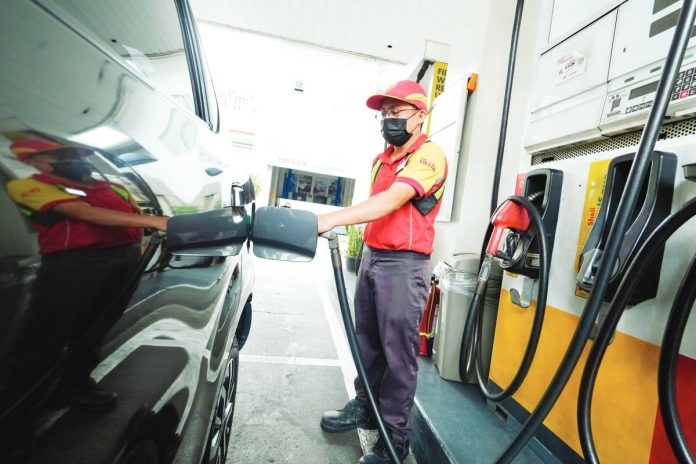
MANILA — President Ferdinand “Bongbong” Marcos Jr. has declared a national energy emergency and ordered a sweeping whole-of-government and private sector response to prevent fuel shortages and cushion the economy from global oil supply shocks.
Under Executive Order 110, the administration activated a coordinated national framework aimed at securing fuel supply, stabilizing prices, and ensuring uninterrupted delivery of essential services amid rising risks in the global energy market.
The order introduces the Unified Package for Livelihoods, Industry, Food, and Transport (UPLIFT), a comprehensive strategy designed to protect vulnerable sectors, sustain economic activity, and maintain critical operations across transport, utilities, and healthcare.
The directive underscores the country’s vulnerability due to its reliance on imported fuel.
“As a net importer of petroleum products, the Philippines remains highly dependent on external sources of fuel supply and is therefore vulnerable to disruptions in global oil production and transportation, which may affect the availability and timely delivery of petroleum products necessary to sustain domestic energy requirements,” the order read.
Energy officials warned that supply constraints could emerge, prompting urgent government intervention.
“The Secretary of Energy has determined that the foregoing circumstances pose an imminent danger of a critically low energy supply and that urgent measures are necessary to ensure the stability and adequacy of the country’s energy supply,” it added.
An inter-agency UPLIFT Committee, to be chaired by the President, will oversee response measures, including monitoring fuel, food, and essential goods, while ensuring the continuous operation of transport systems, utilities, and health services.
The order also mandates long-term structural reforms in the energy sector. The Department of Energy has been directed to enforce conservation measures, regulate fuel consumption, and accelerate the country’s shift toward renewable energy sources.
Among the key initiatives are the promotion of electric vehicles in public transport and the integration of clean energy solutions in agriculture and manufacturing, alongside intensified public campaigns on energy efficiency.
State energy firms have been authorized to fast-track fuel procurement, including advance payments when necessary, to secure supply amid volatile global conditions.
Local government units are required to align with national policies, while private sector players and civil society groups are encouraged to support logistics and provide assistance to affected communities.
The energy emergency declaration, anchored on the Department of Energy Act, will remain in effect for one year unless lifted or extended by the President./PN