


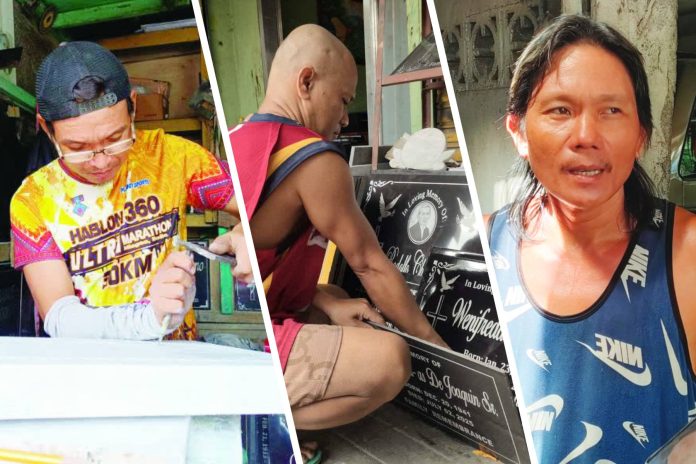
ON E. LOPEZ Street in Jaro, Iloilo City, amid the bustle of passing vehicles and busy streets, three artisans quietly dedicate themselves to an age-old craft that blends tradition with modern technology — the creation of memorial tablets, locally known as lapida.
Their stories, marked by sweat and dedication, weave a tapestry of artistry, labor, and a profound connection to the memories they help preserve.
The artistry, heart of ‘lapida’ making
First is Rex Montecalvo, 45, unmarried, and a resident of Jaro. Montecalvo has spent 15 years at RC Lapida, starting humbly as a stainless cleaner before becoming a skilled engraver through observation and practice.

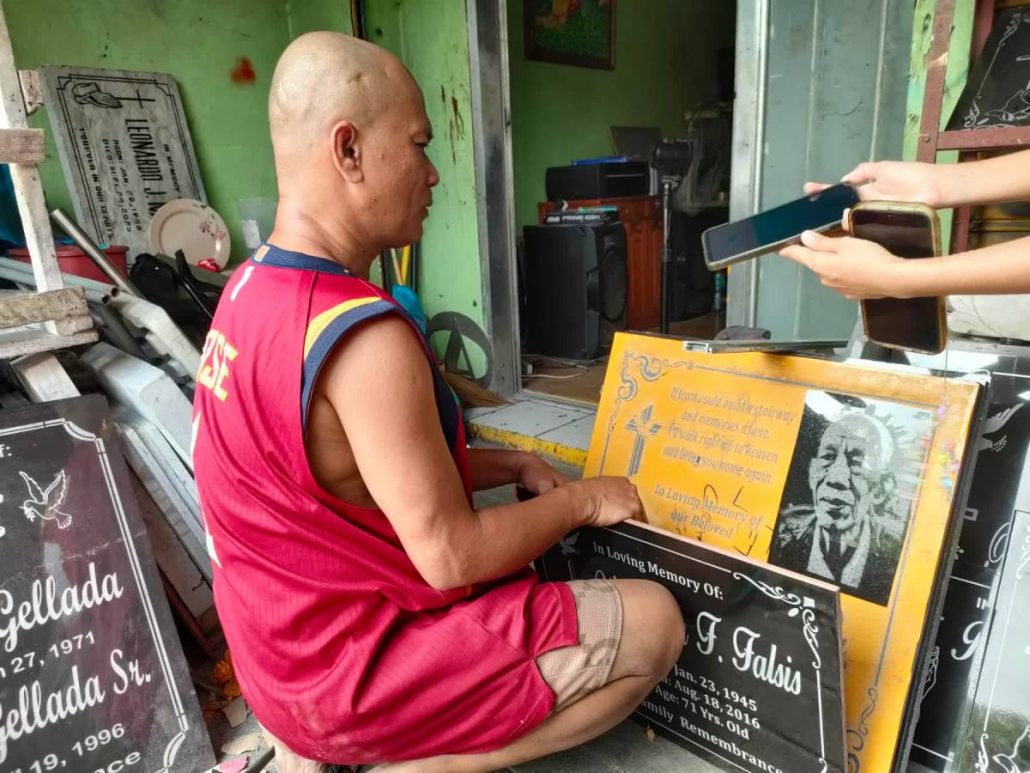
“Manuglimpyo lang ko sang una sa mga stainless nila (owner),” he recalls, smiling. “Pagtapos, nag-practice nako sang dusting, daw nakabalo nako.”
Montecalvo’s passion for his craft shines as he describes the process of lapida making—from traditional hand engraving on marble to the use of modern technology.
“Sang una, manual, mano-mano. Subong, may computer na kag daw ga-print nalang sa lapida daw stickers,” he explains, highlighting the blend of old and new techniques.
He notes that while marble is more challenging to work on due to its delicate manual process, ceramic tiles have become more popular because they are easier to maintain. “They prefer tile tombstones because all they need to do is wipe them down, unlike marble, which requires rigorous cleaning and painting every month or year,” he says in Hiligaynon.
Next is Ronald Macabata, 44, married with two children, from Mandurriao, Iloilo, who works at GMC LAPIDA Engraving. With 21 years of experience, he represents the rich heritage of manual engraving.

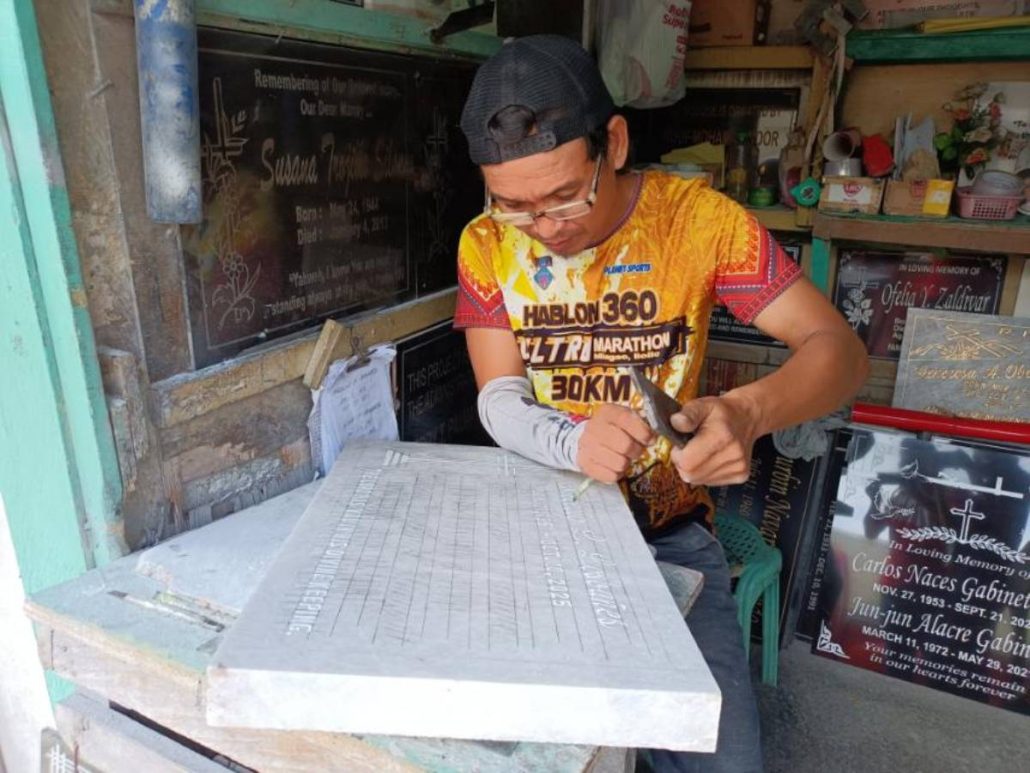
“21 years na ako nga naga-ubra. Wala gid ako background sa pag-ubra sini, nag-sugod ako sa practice-practice lang,” Macabata recalls. Hand stamping, an ancient method requiring skill and heart, remains his passion. Each strike of the hammer is deliberate, ensuring that the memories of loved ones are preserved with dignity.
Finally, Joey Rubia, 43, married with three children, has been in the trade since 1997. Born in Romblon and settled in Jaro, he began as a worker before establishing his own shop, Joey Lapida Maker, in 2005.

“Mas budlay ubrahon ang computerized (tiles), kay kon engrave lang (marble), basic lang na. Nakahibalo ko sa magulang ko sang bata ko,” Rubia shares, reflecting on the learning curve of modern techniques versus traditional craftsmanship.
Lapida making as their livelihood
All three artisans agree that the lapida business is inconsistent, with customer demand fluctuating according to season and occasion. October, ahead of All Saints’ Day, is their busiest period.
Montecalvo earns on commission, receiving about 100 pesos per lapida. On a good day, he can finish up to 10 lapidas, earning 1,000 pesos to support himself and his mother.
“Maka 1,000 ako kis-a, pero kis-a naga 500 or 700, depende kon madamo ang gapa-ubra. Wala kami ga sweldo bulan, commission kami kag libre man amon kaon duri (shop)… kag okay man kita namon,” he said.
Macabata similarly relies on commissions, earning 150 to 250 pesos per lapida, depending on complexity. He and his wife work together to support their children’s education.
Rubia emphasizes that the work has allowed him to send his children to college and meet daily family expenses. Yet he notes that competition and promotional deals from funeral homes have affected sales compared to the past.
“Nakabulig ni sa akon kay nakapatapos ako sang college..3 akon bata, subang ko tapos na. Depende sa customer akon maubra, kon wala..ti wala man,” he says.
Preserving memories through craft
Lapida, or memorial tablets, serve as tangible tributes to departed loved ones. While technology advances, the beauty of a hand-stamped inscription remains unmatched, capturing the essence of skilled artisans devoted to their craft and cultural heritage.
Prices range from around 800 pesos for smaller tablets to 2,500–3,000 pesos for larger memorial park models. Customers can personalize their lapida with designs, photographs, and a choice of materials including marble, ceramic, or glass—ensuring each piece is a meaningful tribute./PN
PHOTO FROM: AJ PALCULLO