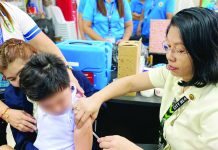



ILOILO — The Department of Health (DOH) is stepping up efforts to protect young girls in Western Visayas from cervical cancer, urging parents to take advantage of free human papillomavirus (HPV) vaccination before their daughters become vulnerable to the virus responsible for nearly all cases of the potentially deadly disease.
It emphasized that girls aged nine to 14 should receive the vaccine early to significantly reduce their risk of developing cervical cancer later in life.
The renewed campaign highlights the importance of preventing a disease that remains among the leading causes of cancer deaths among Filipino women, despite being largely preventable through vaccination and regular screening.
Health authorities stressed that administering the HPV vaccine before exposure to the virus provides stronger protection against high-risk HPV infections associated with cervical cancer.
Under its campaign slogan, “Proteksyon Karon, Paglaum sa Palaabuton,” DOH Region 6 is encouraging parents and guardians to consider vaccination an essential investment in their daughters’ health and future.
“Today, Inday is just a grade school learner, but in the future, she could become a doctor, teacher, engineer, artist, or professional,” DOH-6 stated in its advisory.
“Whatever her dream may be, let us help her grow up healthy and protected,” it added.
The agency underscored that protecting young girls against preventable diseases would allow them to pursue their education, careers and aspirations without the burden of illnesses that could have been prevented.
CERVICAL CANCER THREAT
Cervical cancer develops when abnormal cells grow uncontrollably in the cervix, the lower portion of the uterus connecting to the vagina.
Almost all cases are associated with persistent infections caused by high-risk types of HPV, particularly types 16 and 18, which account for the majority of cervical cancer cases.
Although HPV infections are common, certain persistent infections can eventually cause abnormal cellular changes that may develop into cancer if left undetected and untreated.
Health officials emphasized that early vaccination, combined with regular cervical cancer screening later in life, provides an effective defense against the disease.
“Regular screening and HPV vaccination are among the most crucial steps to prevent cervical cancer,” the agency added.
Screening procedures, including Pap smears and visual inspection with acetic acid, help detect abnormal changes in cervical cells before they progress into cancer.
FREE VACCINATION AVAILABLE
DOH-6 reminded parents that HPV vaccines are available free of charge through government health facilities, including local health centers, rural health units and school-based immunization programs.
Parents and guardians of girls aged nine to 14 are encouraged to coordinate with their nearest barangay health stations or municipal health offices to inquire about vaccination schedules, dosage requirements and available consultation services.
The agency stressed that vaccination during the recommended age range is particularly important because the vaccine works best when administered before exposure to HPV.
“Approach our local health centers to get vaccinated. Disease prevention begins with sound preparation for tomorrow—for every young girl, for every dream, toward a healthier future,” DOH-6 stressed./PN