




ILOILO City — A series of major developments this April has firmly positioned Iloilo City as one of the Philippines’ leading models for sustainable, climate-resilient urban development, gaining recognition not only at the national level but across Southeast Asia.
The city’s momentum culminated in its recognition during ASEAN Climate Week 2026, where it was showcased as a working example of how local governments can translate climate commitments into real, community-level impact.
National officials highlighted Iloilo’s integrated approach—combining environmental protection, climate resilience, and inclusive urban planning—as aligned with ASEAN’s broader sustainability agenda.
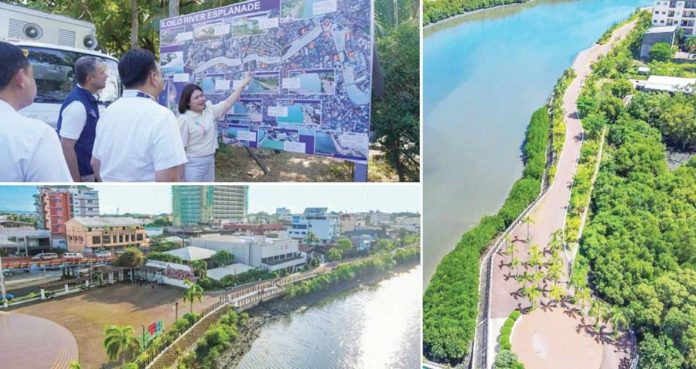
Department of Environment and Natural Resources (DENR) Undersecretary Jonas R. Leones pointed to Iloilo’s extensive urban greening efforts, particularly the Iloilo River Esplanade, a network of linear parks along the Iloilo River and one of the longest of its kind in the country.
“The LGU, the city of Iloilo, showcased their linear parks along the Iloilo River, which were actually very impressive in terms of the extent of urban greening they have achieved,” said Leones.
He further emphasized that these investments in urban greening and river rehabilitation not only improve environmental quality but also help reduce flooding risks, create accessible public spaces, and enhance overall livability.
Leones also underscored that these initiatives go beyond environmental gains and are designed to directly support communities.
“The point here was not only the greening or reforestation aspect, but also the livelihood of the people… Most of the seeds distributed were fruit-bearing, and these would later become part of the community’s livelihood,” he said, citing the recent distribution of thousands of seedlings under the “Handog ng Pangulo: Luntiang Bukas” initiative. The seedlings—including fruit-bearing and timber species—were provided through the Enhanced National Greening Program, further linking environmental restoration with sustainable income generation.
For Mayor Raisa S. Treñas, the recognition marks a meaningful win for all Ilonggos. She emphasized that the city’s programs reflect a shared commitment to resilience, environmental protection, and people-centered planning—values that continue to guide Iloilo’s path forward.
“Your support and platform help amplify how climate action can foster inclusive growth across our region. We deeply appreciate this acknowledgment and remain committed to building a more sustainable and resilient future together,” the mayor said, expressing her gratitude.
This recognition came on the heels of the national government’s rollout of “Handog ng Pangulo: Luntiang Bukas” in Iloilo, reinforcing the city’s role as a convergence point for climate, housing, and land reform programs.
Through the initiative, 820 land titles were distributed across Western Visayas, granting families long-awaited legal ownership of land—an essential foundation for long-term stability and economic growth.
In Iloilo City, Certificates of Entitlement were awarded to the initial 25 beneficiaries of a 100-unit, city-funded climate-resilient housing project in Batiano Village, Molo. Designed for families from flood-prone areas, each unit features a 27-square-meter loft-style layout.
In addition, approved housing loans from Pag-IBIG Fund were granted to beneficiaries of Kauswagan Residences in Jaro District. The Iloilo Residences Rental Housing Project in Sambag, Jaro—implemented in partnership with the DHSUD—has also expanded to 362 units, backed by a ₱640 million escrow fund.
DENR Secretary Juan Miguel T. Cuna underscored the broader significance of these efforts, noting that secure land tenure allows families to invest in livelihoods, improve their homes, and plan for the future with greater confidence.
Adding to the city’s growing stature, Iloilo also hosted the first Sustainability Summit held outside Luzon last week. The event gathered around 150 leaders, practitioners, and stakeholders from across sectors.
Organized by the Philippine Chamber of Commerce and Industry (PCCI) Iloilo Chapter and SustainabilityPH, the summit underscored the city’s emerging role as a hub for sustainability leadership in the Visayas.
SustainabilityPH co-founder Shawntel Nicole Martinez Nieto said Iloilo was deliberately chosen as host due to its proven track record.
“The city has shown that sustainability is not just a concept—it’s something that can be implemented successfully at the local level,” she said, citing Iloilo’s achievements in river rehabilitation and urban environmental management.
Mayor Treñas also emphasized that environmental sustainability is an ongoing journey that requires continuous learning and collaboration.
She cited last week’s forum, “Flowing Forward: The Iloilo Esplanade Journey as a Blueprint for Batiano,” where key stakeholders from local government units, national agencies, academe, and civil society convened to share insights from one of Iloilo’s most successful urban transformation initiatives.
The discussions highlighted how lessons from the Iloilo Esplanade can serve as a blueprint for rehabilitating the Batiano River into a waterway that is resilient, sustainable, and responsive to the needs of the people.
Iloilo’s progress is anchored on a clear principle: that economic growth must go hand in hand with environmental protection and inclusive development.
Taken together, these developments signal a strong trajectory for Iloilo City. From securing land tenure and building climate-resilient communities to hosting national programs and gaining recognition on the ASEAN stage, the city is demonstrating that sustainable urban development is not only achievable—it can deliver tangible benefits to people’s lives.
As the Philippines takes on a leadership role in ASEAN this year, Iloilo City stands as a compelling example of how local action can drive regional transformation—proving that when sustainability is embedded in governance, it becomes a catalyst for resilience, opportunity, and long-term growth./PN
