



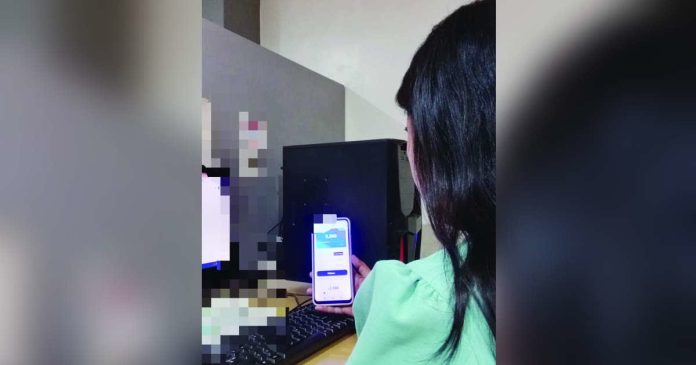
The Cybercrime Investigation and Coordinating Center (CICC) launched on February 27 a new campaign against unregistered online lending platforms as the number of Filipinos falling victim to illegal schemes continues to rise.
From January to February this year alone, the CICC received nearly six hundred complaints — higher compared to figures recorded in the same period in 2025.
Yet CICC Executive Director Renato “Aboy” Paraiso believes this issue is still very much underreported.
“Sa loob ng wala pang dalawang buwan ngayong 2026, mahigit P8 million na ang nanakaw sa bulsa ng ating mga kababayan dahil sa mga (online lending apps) na ‘to,” he said.
Many of the victims are women, like Sheena, not her real name, who resorted to online lending apps after her husband died, leaving her as the sole breadwinner of their family.
“Kapit sa patalim na lang siguro. Pambayad ko sa tubig tsaka ilaw. Pagpapakain pa, gamot pa sa anak ko na PWD (person with disability). E wala talaga ako mapagkuhanan,” she said.
Authorities have already taken down several notorious and unregistered online lending platforms.
But with new ones continuing to emerge, the CICC is now pushing to educate the public under a new awareness campaign.
The CICC warns the public to steer clear of online promotions that direct you to online lending websites, rather than actual apps, with automatic authorization or auto-collection features.
Because of this, scammers gain access to a user’s contact list or online friends, which they later use to harass and pressure borrowers.
Another thing to watch out for: excessive hidden charges, even when advertised interest rates appear low.
“If it’s too good to be true, it’s not true,” reiterated Paraiso. “According to the Securities and Exchange Commission, it should not exceed 15 percent per annum, lahat-lahat ng fees, including ‘yung interest, ‘yung mga operational fees, transaction fees,” he noted.
In terms of enforcement, the CICC is coordinating with the Philippine National Police Anti-Cybercrime Group and the National Bureau of Investigation to go after syndicates behind these scams. (ABS-CBN News)