


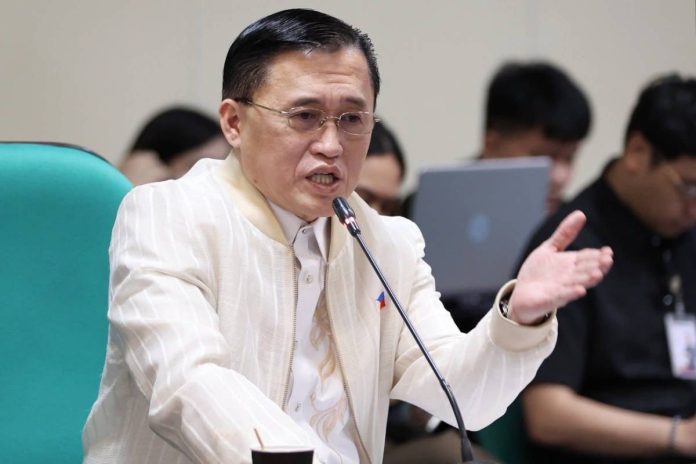
Senator Christopher “Bong” Go urged the Commission on Elections (Comelec) to improve overseas voting accessibility and intensify its information campaign among Filipinos abroad, expressing concern over the persistently low voter turnout of overseas Filipinos despite increasing electoral participation in the Philippines.
During the Senate deliberations on Comelec’s proposed 2027 budget on Monday, September 28, Go asked the poll body to examine possible barriers preventing overseas Filipino workers (OFWs) and other qualified Filipinos abroad from exercising their right to vote, including work schedules, accessibility and insufficient awareness of available voting mechanisms.
“Mayroon lang akong gustong i-suggest po sa inyo. Paki-check n’yo lang po. Napansin ko kahit na 82% yung voter’s turnout sa national natin, but sa mga overseas Filipino voters natin less than 50% po yung turnout,” Go said.
“So maaaring tingnan n’yo nang hindi na sila mahirapan na bumoto or maengganyo silang bumoto. Maaaring malayo o nahihirapan sila, baka makagawa kayo ng bagong sistema na mas magiging convenient para sa mga overseas Filipinos,” he added.
The senator raised the concern after noting the generally high voter participation recorded in recent Philippine elections. He welcomed the increasing turnout figures discussed during the hearing and expressed hope that electoral participation could eventually reach 90%.
“Napapansin ko tumataas na yung trajectory ng mga voter’s turnout from 2016, am I correct? 2019; 2022; 2025 until sa BARMM election. Pataas siya ’no, ibig sabihin nagpa-participate na po ang mga kababayan nating mga voters, tumataas na,” Go said.
Comelec Chairperson George Garcia acknowledged the senator’s observation and cited election automation, voter education and the participation of civil society organizations among the factors contributing to increased electoral participation.
On overseas voting, Garcia explained that Comelec introduced internet voting for the first time during the 2025 midterm elections to make the process more accessible to Filipinos residing and working abroad.
However, overseas voter turnout remained low at approximately 18% in 2025. Garcia noted that participation in midterm elections has historically been lower than in presidential elections, with overseas turnout reaching 40.59% during the 2022 presidential polls.
The Comelec chairperson also acknowledged that the internet voting system was relatively new and that overseas Filipinos were still familiarizing themselves with the process.
Go pointed out that even the higher turnout recorded during presidential elections remained below half of registered overseas voters.
“So less than 50% pa rin po,” he noted.
The senator emphasized the need to understand the practical circumstances of OFWs, many of whom work long hours and live considerable distances from Philippine diplomatic posts or other designated election facilities.
He suggested that Comelec strengthen its information dissemination efforts, particularly in explaining the availability and procedures of internet voting, to encourage more overseas Filipinos to participate in succeeding elections.
“Para naman mabigyan sila ng pagkakataon yung mga OFWs natin. Gustung-gustong bumoto no’n, kaya lang siguro, maaaring yung oras nila o yung saan sila pupunta o hindi nila alam na mayroon na tayong online voting,” Go said.
“Baka yung information campaign n’yo po mas mapaigting pa po. Salamat po,” he added.
Go’s appeal comes as Comelec prepares for future electoral exercises, including efforts to improve overseas voting mechanisms and encourage greater participation among Filipinos living and working in different parts of the world.
The senator underscored the importance of making the electoral process more convenient and accessible so that overseas Filipinos can exercise their voting rights despite the practical challenges of living and working away from home.