



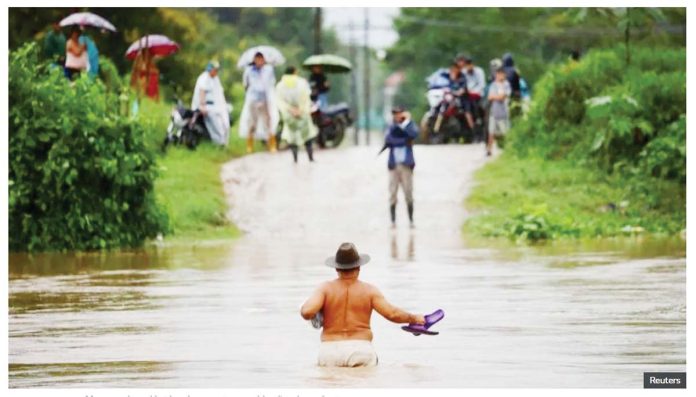
TEGUCIGALPA – Torrential rain caused by Tropical Storm Sara has cut off more than 1,700 communities in Honduras.
The storm caused widespread flooding across the Central American nation.
So far, Honduran officials have confirmed only one death but said that more than 110,000 people had been affected by the storm.
The tropical storm was extremely slow moving, dumping huge amounts of rain on northern Honduras for four days running before moving north to Belize and Mexico.
Some areas saw 500mm of rain fall causing rivers to swell.
Nine bridges were destroyed by fast flowing waters and another 19 damaged, Honduran emergency services said.
Several highways also became impassable following landslides.
Honduran President Xiomara Castro had warned citizens living near rivers to take shelter elsewhere and thousands heeded her call.
More than 2,500 homes were damaged and more than 200 destroyed, officials said.
Sara is the 18th named storm of the Atlantic hurricane season and the third this month.
Two weeks ago, Hurricane Rafael caused a nationwide blackout when it hit Cuba.
Meteorologists say the storms have been fuelled by high sea surface temperatures.
While hurricanes and tropical storms occur naturally, human-caused climate change is supercharging them and exacerbating the risk of major damage,” Kevin Trenberth, a distinguished scholar at the National Center for Atmospheric Research in Boulder, Colorado, has warned. (BBC)