


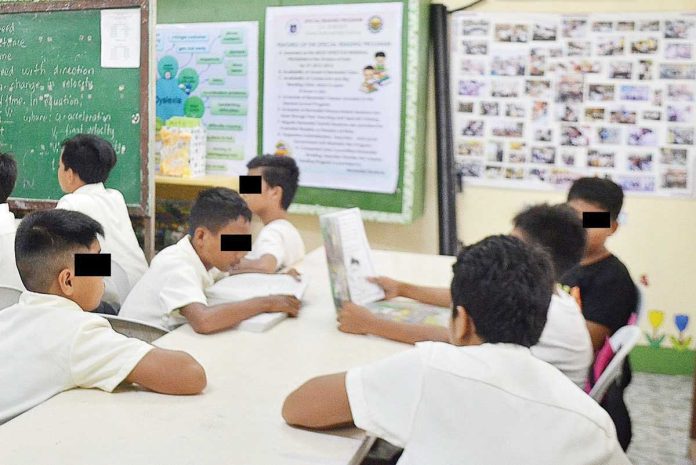
ILOILO – The Department of Education (DepEd) in Iloilo is raising red flags after a nationwide survey revealed that over 18 million Filipino students who graduated from junior and senior high school in 2024 cannot read or comprehend simple text — sparking urgent calls for reforms in education strategies.
The data, presented by the Philippine Statistics Authority (PSA) during a Senate hearing on April 30, stemmed from the 2024 Functional Literacy, Education, and Mass Media Survey, which further disclosed that more than 24 million Filipinos aged 10 to 64 are considered functionally illiterate, and 5.8 million are basically illiterate.
Dr. Nestor Pingil, chief education supervisor of the Curriculum and Teaching Division of DepEd-Iloilo, acknowledged the gravity of the situation, saying the department considers the data both alarming and a call to action.
“We are looking at it as a challenge. In DepEd, we have done what we should have done, but because of the PSA data, we need to review and revisit our practices and our teaching contexts,” he said.
Functional illiteracy, as defined by the PSA, refers to a person’s inability to read, write, compute, and understand beyond basic skills.
Basic literacy, on the other hand, is limited to reading and writing simple messages with understanding.
In light of the findings, the Senate has urged DepEd to introduce alternative learning systems tailored to students with poor comprehension skills, and to examine deeper socioeconomic contributors such as malnutrition and poverty, which may be undermining student performance.
While the DepEd-Iloilo did not provide localized figures, the national trend has prompted regional education officials to reassess instructional methods and support systems to prevent further learning deterioration.
The results come on the heels of earlier international assessments that placed the Philippines near the bottom in reading and comprehension rankings, reinforcing widespread concerns about the quality of basic education in the country./PN