


ILOILO – The provincial government of Iloilo is gearing up to implement globally-recognized strategies in addressing cervical cancer and HIV (human immunodeficiency virus) after its health experts joined world leaders in a high-level regional conference in Bangkok, Thailand.
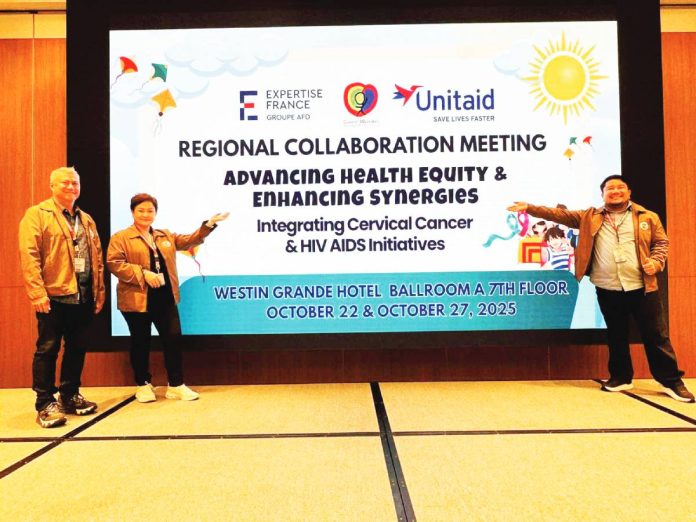
The Iloilo Provincial Health Office (PHO), represented its heads r. Maria Socorro Quiñon, Dr. Rodney Labis, and Dr. Francisco Ronnel Quiñon, participated in the Regional Collaboration Meeting titled “Advancing Health Equity and Enhancing Synergies – Integrating Cervical Cancer and HIV/AIDS Initiatives” held from October 22 to 27.
The conference, organized by the Cancer Warriors Foundation, Expertise France, and Unitaid, convened international health leaders to strengthen strategies that merge cervical cancer and HIV prevention programs — two health issues that disproportionately affect women in low- and middle-income countries.
“Our participation in this dialogue is essential not only for our learning but to ensure that we can bring back actionable strategies and frameworks that fit our local context,” said Quiñon.
Tackling Twin Threats
Cervical cancer, primarily caused by the Human Papillomavirus (HPV), remains the fourth most common cancer among women worldwide, killing around 311,000 annually according to the World Health Organization. Meanwhile, HIV continues to pose a global challenge, with over 38 million people infected as of 2021, based on data from UNAIDS.
Women living with HIV are particularly vulnerable to cervical cancer due to weakened immune systems, making integrated screening and treatment programs crucial.
Learning from Global Models
During the Bangkok meeting, Iloilo’s delegation learned about programs in other countries that successfully combined HIV testing with cervical cancer screenings, optimizing health resources and expanding access to care.
Discussions revolved around innovative collaborations, stronger policy support for integration, community engagement, and improved data sharing for research. Experts also urged governments to allocate more funding for integrated health services and to promote educational campaigns to combat stigma surrounding HIV and encourage regular screening.
Strengthening Iloilo’s Health Response
The Iloilo team expressed optimism that lessons from the international conference could be localized through partnerships and policy reforms. “By aligning our efforts with proven global models, we can make preventive care more efficient and inclusive,” said Quiñon.
The delegation will further reinforce its learnings at the upcoming International Human Papillomavirus (HPV) Conference, which aims to deepen global cooperation in vaccination and early detection strategies.
With sustained international collaboration and local innovation, Iloilo is positioning itself as a model province for integrated women’s health care — tackling cervical cancer and HIV with renewed vigor and global insight./PN