



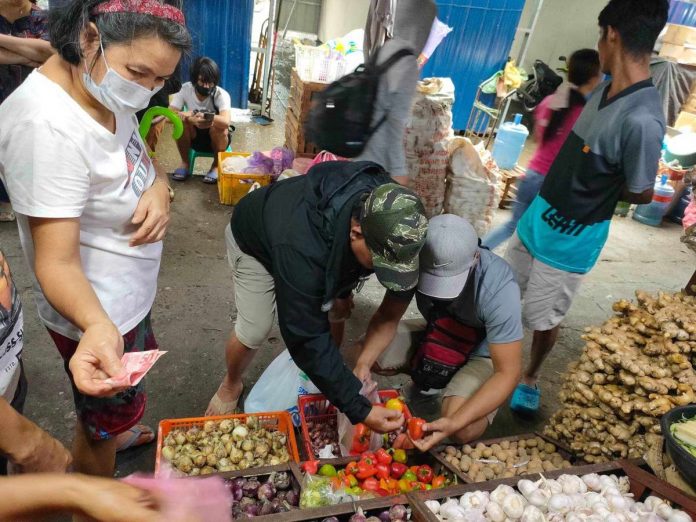
INFLATION further eased for a sixth consecutive month in July, the state statistics bureau said Friday.
The consumer price index rose 4.7 percent last month, which was slower than the 5.4 percent inflation rate reported in June, the Philippine Statistics Authority (PSA) said.
This was also within the 4.1 to 4.9 percent forecast of the Bangko Sentral ng Pilipinas.
However, it was still above the 2 to 4 percent target range of economic managers.
National Statistician and Undersecretary Dennis Mapa said the main contributors to slowing down inflation were slower increases in the prices of housing, electricity, gas and other fuels.
Food price hikes also slowed down at 6.3 percent in July 2023 from 6.7 percent in the previous month, the PSA said.
“The third main source of deceleration was transport, recording a faster annual decrease of -4.7 percent during the month from -3.1 percent in June 2023.”
The average inflation rate from January to July 2023 stood at 6.8 percent.
In June, economic managers revised their inflation forecast for 2023 to between 5 and 6 percent, which was lower than the 5 to 7 percent assumption they gave in April.
Inflation has been easing since hitting a 14-year high of 8.7 percent in January.
Mapa said core inflation, which strips out volatile food and fuel items, also slowed to to 6.7 percent in July from 7.4 percent in June.
“This brings the average core inflation from January to July 2023 to 7.6 percent’” the PSA said.
In July 2022, core inflation was observed at 3.9 percent, it added.
Mapa said they will continue to monitor the impact of Typhoon “Egay” on prices in the country.
“Normally naman, meron tayong impact kaagad doon sa vegetables for example. So nakita naman natin, may pagtaas na yung ating vegetables. So normally, ‘yun ang unang tumataas,” he said.
“But we will see kasi you will notice, medyo dynamic ‘yung ating movement ng 13 commodity groups.”
For his part, National Economic and Development Authority (NEDA) secretary Arsenio Balisacan said the Philippines must be vigilant about price increases, as more weather disturbances may hit the country.
He also noted that oil price hikes and trade restrictions on food may drive a spike in commodity prices.
“The government will implement necessary measures to prevent price spikes, protect the purchasing power of Filipino families, and sustain our economic recovery and momentum,” he stressed.
The economic manager earlier said he was confident that the government would hit the 2 to 4 percent target for inflation by the end of this year, despite the damage caused by Typhoon “Egay”to the country’s agriculture sector.
The Bangko Sentral ng Pilipinas (BSP), meanwhile, said they remain ready to adjust the monetary policy stance as necessary to ease price pressures.
The BSP said balance of risks to the inflation outlook continues to lean towards the upside amid higher transport costs and minimum wage adjustments, food supply constraints, the El Niño, and the possible effects of higher toll fees on agricultural prices.
Easing inflation has allowed the BSP to pause rate hikes during its last policy-setting meeting.
Finance Secretary Benjamin Diokno has said he is bullish about Philippine inflation, noting that it could fall below 2 percent by the first quarter of 2024. (ABS-CBN News)