



[av_one_full first min_height=” vertical_alignment=” space=” custom_margin=” margin=’0px’ padding=’0px’ border=” border_color=” radius=’0px’ background_color=” src=” background_position=’top left’ background_repeat=’no-repeat’ animation=”]
[av_heading heading=’Japan experts, local weavers see potential in Aklan’s ‘pakoe’ fiber’ tag=’h3′ style=’blockquote modern-quote’ size=” subheading_active=’subheading_below’ subheading_size=’15’ padding=’10’ color=” custom_font=”][/av_heading]
[av_textblock size=” font_color=” color=”]
Saturday, May 13, 2017
[/av_textblock]
[av_textblock size=” font_color=” color=”]
KALIBO, Aklan – Pakoe or pakol, a local banana fiber, is seen to bolster the local weaving industry and empower Aklanon weavers as “the next big thing.”
Anna India Legaspi, one of the founders of the Aklan Piña and Other Indigenous Fibers Manufacturers and Traders Association, Inc., said that last Jan. 27, experts from Japan visited and studied the weaving industry of the province.
“They visited the farm of the Aklan State University for an indigo project. There they saw the pakoe, which has similar characteristics to the abaca fibers of Okinawa, Japan,” she said.
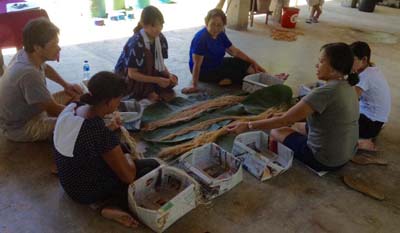
Legaspi said that local weavers are testing the pakoe fibers as a weaving material, with the initial results showing promising results.
The pakoe is said to be abundant in the hinterland of the province and grows together with abaca.
The province of Aklan is known to be a major supplier of abaca fibers nationwide. (PNA)
[/av_textblock]
[/av_one_full]