



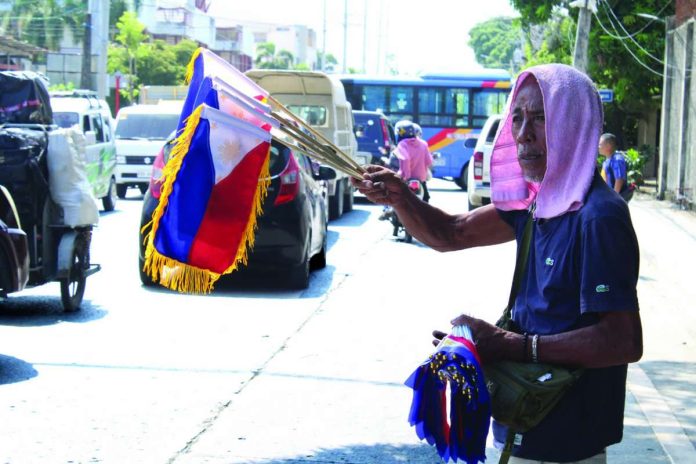
ON THE streets of Iloilo City, patriotism does not always arrive in grand speeches, military parades, or government ceremonies. Sometimes, it arrives rolled up in bundles, tied to bamboo sticks, and displayed under the scorching June sun by vendors hoping to earn enough money to get through another day.
This Independence Day, the Philippine flag once again becomes a familiar sight. It flutters from public buildings, hangs from vehicles, and adorns homes and establishments. Yet behind those flags are men whose lives mirror the very values the national symbol represents — resilience, sacrifice, perseverance, and hope. They represent an often-overlooked side of the national celebration.
While selling flags is a seasonal livelihood, it is also a tradition, a survival strategy, and, in many ways, a personal act of patriotism.
A Decade Of Dedication
At a roadside display in Iloilo City, Ricardo Parian patiently waits for customers. The 53-year-old resident of Barangay San Isidro Relocation Site in Jaro district has spent the last 10 years selling Philippine flags every June.
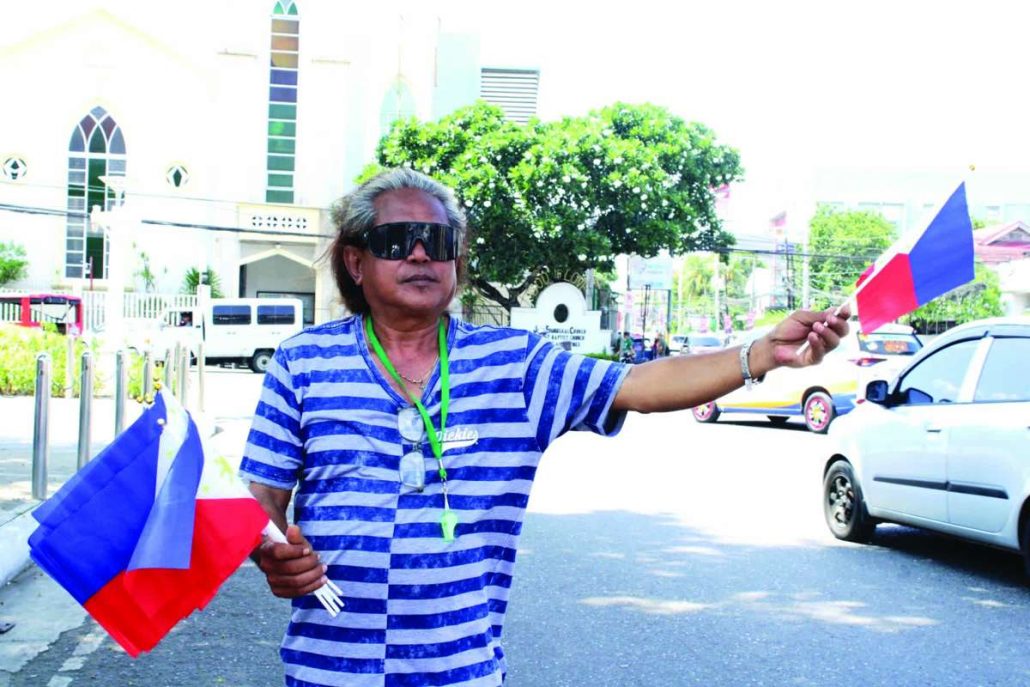
“Isa malang sa isa ka tuig. Samtang buhi pa ko, mabaligya ko eh,” Parian said.
For him, Independence Day is an annual opportunity to contribute to a tradition he believes should never disappear.
Parian knows that flag-selling will never make him rich. Yet every sale matters. Every peso earned helps put food on the table and contributes to the education of his child.
His business reflects the reality faced by many informal workers. Income is uncertain, customers are unpredictable, and survival often depends on creativity and persistence.
To supplement his earnings, he also sells bottled water.
“Gamay nga pangabuhian ah,” he said with a smile.
Behind that modest statement lies the reality of many Filipino families struggling to make ends meet amid rising costs and uncertain opportunities.
A Changing Culture
Parian has also witnessed a gradual shift in how Filipinos celebrate Independence Day.
Years ago, displaying the Philippine flag seemed almost automatic. Homes, jeepneys, tricycles, stores, and offices proudly flew the national colors. Today, he sees fewer flags across the city.
“Pag-start ka June 1, nag-start na ako baligya… mahina-hina. Wala gawa may gabutang ka flag,” he observed.
The decline concerns him.
To many Filipinos of his generation, displaying the flag was an expression of gratitude for the freedoms won through sacrifice and struggle.
Yet Parian remains hopeful that younger generations will rediscover the importance of these symbols.
Even when business is slow, he continues returning to his post every June, believing that the tradition remains worth preserving.
The Man With No Home
Few stories among Iloilo’s flag vendors are as moving as that of Roger Garcia.
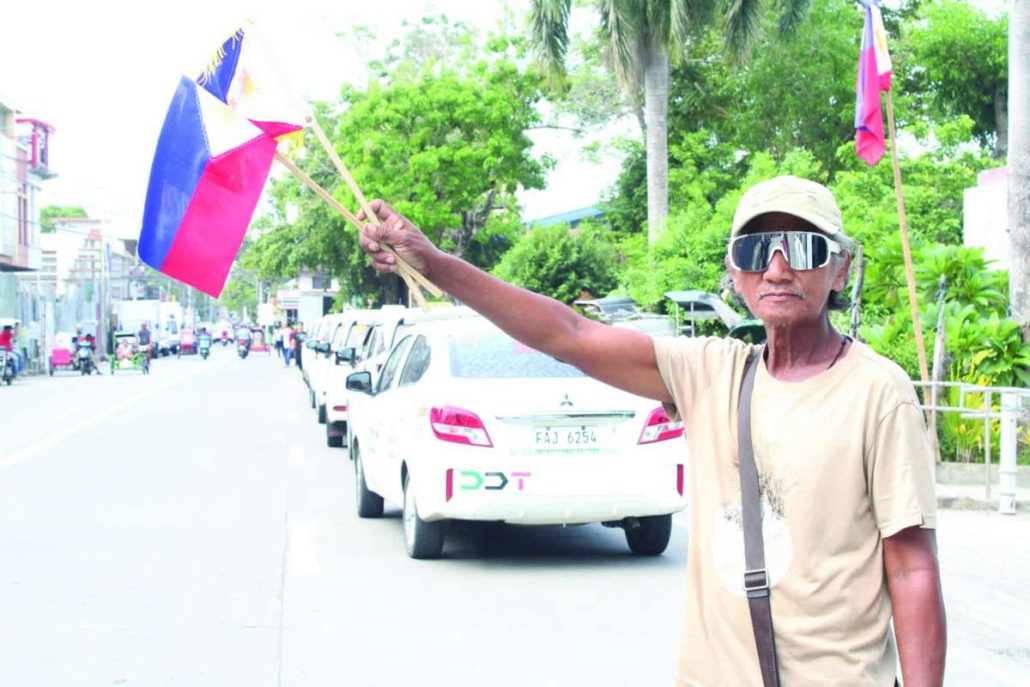
At 55, Garcia sells flags every June just like many others. But unlike most vendors, he has no permanent address to return to when the day ends.
“Kada June gid nagabaligya ako. Mga sobra na 10 ka tuig,” he shared.
His life story reads like a chronicle of survival.
“Wala pa gid ni natapos ang kalbaryo ko, wala ko nanay kag tatay. Di ko kilala mga ginikanan ko,” he said.
Abandoned and raised under difficult circumstances, Garcia spent much of his life navigating hardship largely on his own.
Today, he often sleeps inside parked jeepneys after securing permission from their owners.
“Sa jeep, sa sulod ka jeep ang tululugan,” he said.
Despite his circumstances, Garcia speaks without bitterness. Instead, he focuses on the opportunities available to him and expresses gratitude for the kindness shown by strangers who occasionally help him.
His determination is remarkable. During Independence Day season, he purchases flag supplies with money painstakingly saved from parking assistance jobs and odd work.
“Sa Oton ako gakuha ka supply. Ga-capital ako 1K sa bundles nga flag,” he said.
Some days bring good sales. Others do not. Yet he continues.
The Philippine flag that he sells each June has become, in a sense, symbolic of his own life story. Like the nation itself, Garcia has endured adversity and emerged with his dignity intact.
Three Decades Under The Colors
For Eddie Custodio, selling flags is a tradition spanning more than 30 years.
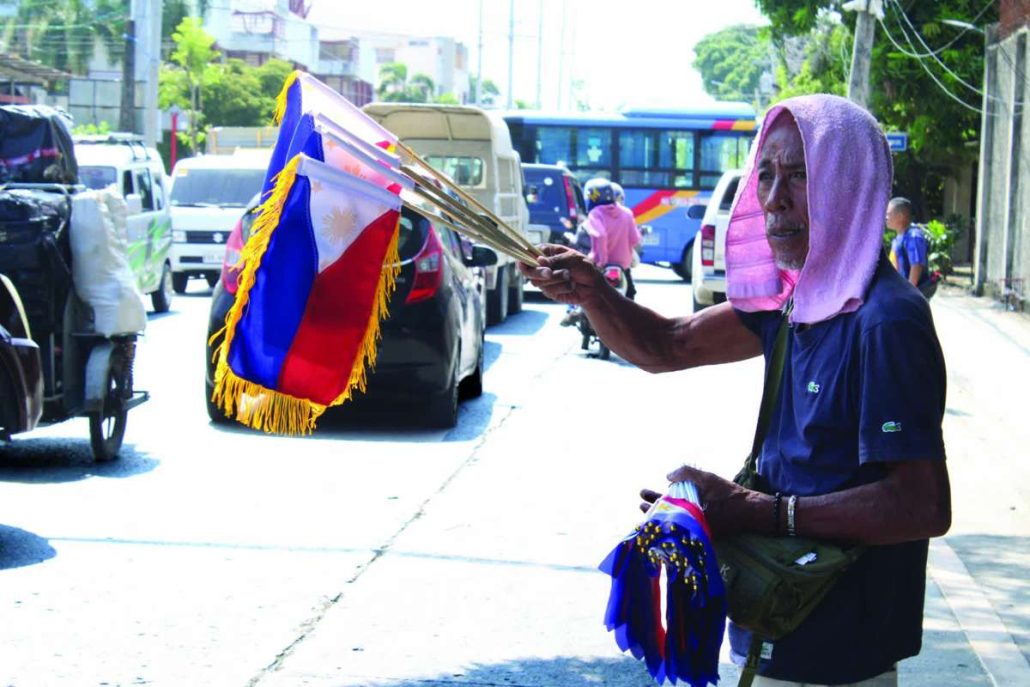
The 64-year-old vendor from Lapuz has witnessed Independence Day celebrations evolve across generations.
He remembers a time when demand for flags was significantly higher.
“Subong medyo mahina-hina. Gamay na lang gawa ang gabutang flag. Sang una, damo-damo gid na ya ang gabakal,” he recalled.
Even so, Custodio remains committed to the trade.
He travels between Lapuz, Jaro, and other locations, carrying his inventory and patiently waiting for customers.
His work helped support his family and contributed to the education of his children.
“Tatlo akon nga mga kabataan. Ang pagbaligya ko sini nakabulig man gamay kag nakatapos na sila eskwela,” he said proudly.
For Custodio, every flag sold means income and more – it represents continuity, a connection between past and present generations.
The True Cost Of Patriotism
The stories of Parian, Garcia, and Custodio are realities rarely discussed during Independence Day celebrations.
Behind every flag displayed in a home or vehicle is a network of ordinary Filipinos whose livelihoods depend on keeping the tradition alive.
They endure long hours under the sun.
They face uncertain earnings.
They navigate rising costs and declining demand.
Yet they continue.
Their commitment speaks not only to economic necessity but also to a deeper belief in the importance of remembering the nation’s history.
More Than A Flag
The Philippine flag has witnessed revolutions, wars, victories, tragedies, and triumphs.
It symbolizes the sacrifices of heroes whose names fill textbooks and monuments.
But it also belongs to ordinary Filipinos — the workers, vendors, parents, and dreamers who continue building the nation every day.
In Iloilo City, that truth is reflected in the lives of three men selling flags on sidewalks and street corners.
Their stories remind us that patriotism is not always loud.
Sometimes it is found in the quiet determination of a father trying to support his family.
Sometimes it appears in the resilience of a homeless man refusing to surrender to hardship.
Sometimes it lives in the steadfast commitment of a vendor who has spent three decades preserving a tradition.
As June 12 arrives and the Philippine flag once again waves proudly across the city, these vendors will continue doing what they have done for years.
They will stand beneath the same sun, greet customers with the same hopeful smile, and offer the same symbol of nationhood.
And in their own humble way, they help keep the spirit of Independence Day alive./PN