


ILOILO City – Iloilo, one of the Philippines’ fastest-growing cities, is facing a deepening water problem that threatens public health, disrupts livelihoods, and undermines investor confidence. Despite the billions committed by the joint venture of Metro Iloilo Water District (MIWD), 73% of Ilonggos still do not have reliable water supply.
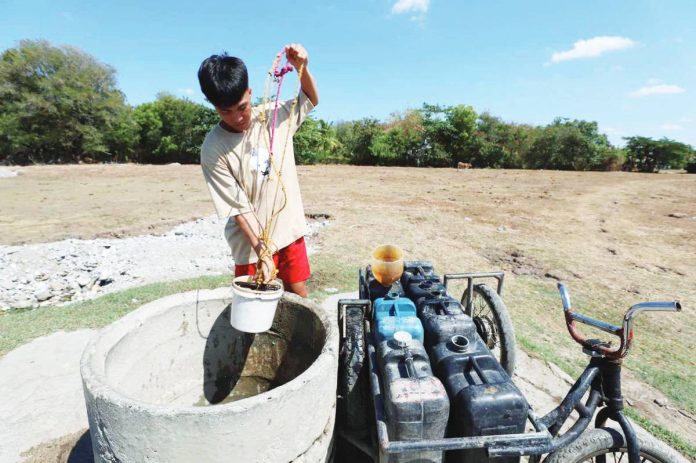
The situation on the ground is dire. Barangays report going for weeks without water, relying on erratic supply rotations. Some residents wake at 2 a.m. just to catch the pressure long enough to fill containers — with many dismayed to find brown, foul-smelling, undrinkable water. The burden falls hardest on low-income families forced to buy overpriced tanker water or rely on unsafe shallow wells.
Public health is already paying the price. The city has recorded more than 700 cases of Acute Gastroenteritis (AGE) in recent years, with at least seven confirmed deaths.
Councilor Rex Sarabia warned, “People in barangays are forced to extract water from shallow wells often contaminated by nearby septic systems. Water is a human right. When we compromise it, the cost is counted not just in pesos —but in lives.”
Small businesses and water-refilling stations fear collapsing. A comment from a concerned citizen captured the frustration: “Coordinate and update customers and small-scale enterprises. Many refilling stations have either closed or are losing money because of the supply problem — and tankering rates are three times higher than the norm. WRS businesses are dying.”
The business sector is equally alarmed.
“This shortage threatens operations, discourages future investment, and puts our growth at risk,” said Jessraf Palmares of the Iloilo Federation for Information Technology.
Emil Diez of the Iloilo Business Club added, “If we don’t act now, access to water — for our homes, farms, and industries — will only grow more uncertain. And when water is uncertain, everything becomes unstable.”
Despite promises made six years ago, only 27 kilometers of pipeline have been rehabilitated — far short of what was committed. No major new water sources have been added. Rollout of modular treatment plants, deep wells, and tankering services are being seen as stopgap, reactive measures triggered by public outrage — not a credible long-term solution.
The City Government has declared the situation a crisis and is urging national intervention. It has called for a fundamental rethinking of Iloilo’s water governance and is actively pursuing alternatives, including securing water rights and engaging in public-private partnerships that will allow it to take a direct role in delivering city-wide, sustainable water services.
This is where a crucial decision now lies.
“In our last meeting with NIA (National Irrigation Administration) senior deputy administrator Robert Suguitan, he relayed that Administrator Eduardo Guillen’s advice is for NIA, Iloilo City Government, and MIWD to enter into a tripartite agreement for the water rights assignment. The Iloilo City Government has every intention to acquire the water rights and work with NIA and MIWD,” remarked Atty. David Garcia, Public-Private Partnership Office of Iloilo City chairman.
The facts are clear:
* MIWD is underperforming — only 27% of Metro Iloilo has access to piped water, and 45% of water is lost to leakage and system inefficiencies.
* Public and local government unit confidence in MIWD has collapsed, and its performance over the last six years has only deepened the crisis.
* President Ferdinand “Bongbong” Marcos Jr. has been clear: Non-performing water districts and their joint ventures must be held accountable.
The city government is stepping up. Through the Public-Private Partnership (PPP) framework, it plans to bid out the Iloilo Bulk Water Supply Project, anchored on the water allocation from the Jalaur Dam. Assigning the permit to the Iloilo City government empowers the LGU to select a qualified private partner that can deliver — not delay — real solutions. This move would not only provide a sustainable, long-term fix but also ensure that the water crisis is finally resolved before the end of President Marcos’ term.
During a hearing held on May 26 by the Sangguniang Panlungsod, Metro Pacific Iloilo Water said the Asian Development Bank (ADB) – a leading multilateral lender known to support sustainable, inclusive, and resilient growth – is advising the NIA and reportedly favors a “government-to-government” approach to the water rights.
Considering the serious water situation in Iloilo City, ADB’s advice to the government should be more responsible and consistent with its development mandate, as lives and livelihoods are at stake.
The national government, regulators, and development partners are strongly urged to support the Iloilo City Government. LGUs are on the frontlines. They work the closest with communities and understand the urgency.
Give Iloilo City the water rights — and the trust — to succeed. With the right support, the LGU can deliver what the local water service provider has failed to: safe, reliable, and affordable water for all Ilonggos.
The choice is urgent. The solution is clear. Iloilo needs action — not more broken promises./PN